
Everything You Need to Know About Needle Palms
If you’re looking for the toughest palm on the planet, the Needle Palm (Rhapidophyllum hystrix) is the benchmark. While windmill palms often get the spotlight in cold-hardy landscapes, needle palms quietly outperform nearly everything else when it comes to cold tolerance and long-term survivability. This article covers the biology, growth habits, cultivation requirements, and realistic expectations for this unique palm—especially for growers in marginal climates like the Pacific Northwest.
1/19/20263 min read
What Is a Needle Palm?
Rhapidophyllum hystrix is a clumping, understory palm native to the southeastern United States. It is the most cold-hardy palm species known, with documented survival below -10°F (-23°C) once established.
Unlike most palms, needle palms:
Have no visible trunk (trunk remains subterranean)
Grow in dense clumps
Are armed with long, rigid spines (“needles”) emerging from the leaf bases
These needles—often 6–10 inches long—are not decorative. They are sharp, woody, and capable of penetrating thick gloves.
Cold Hardiness (Why This Palm Is Famous)
Needle palms are reliably hardy in USDA Zones 6–10, and in protected microclimates can persist even colder. Key factors behind their cold tolerance:
Underground trunk insulated from extreme cold
Slow metabolic rate
Thick, fibrous leaf bases protecting the growing point
Important distinction: Cold hardiness does not equal fast growth or instant landscape impact. Needle palms survive extreme cold well, but they do not grow quickly.
Growth Rate and Mature Size
Needle palms are slow growers, especially in cooler climates.
Height: 4–6 feet (rarely taller)
Width: 6–8+ feet over decades
Growth rate: Very slow for first 5–10 years
In the Pacific Northwest, expect a juvenile plant to focus on root establishment rather than visible top growth for several seasons.
Leaf Characteristics
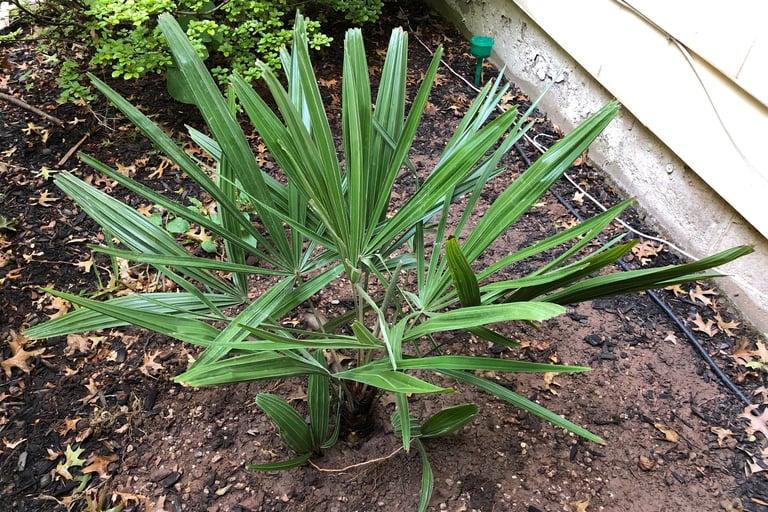
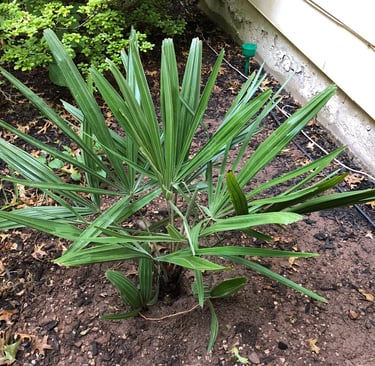
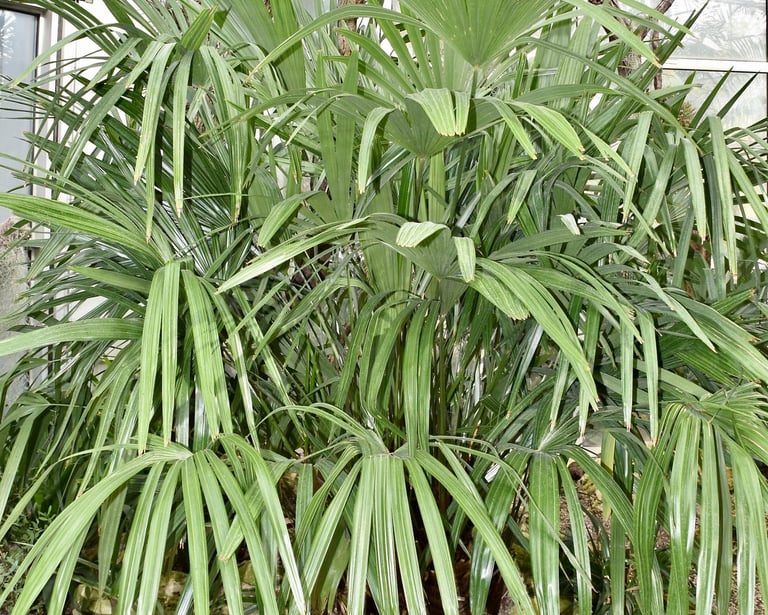
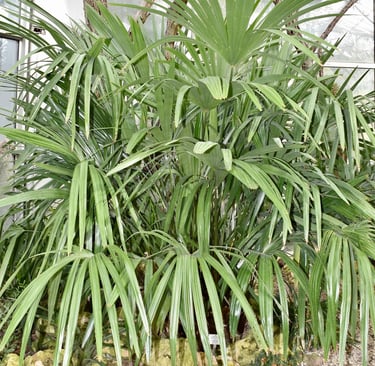
Fan-shaped (palmate)
Deep green to dark blue-green
Stiff texture compared to windmill palms
Excellent wind resistance
Leaves are held upright in younger plants and become more arching with age. Winter leaf burn is uncommon unless exposed to drying winds.
Sun, Shade, and Site Selection
Needle palms are naturally understory palms.
Ideal conditions:
Partial shade to filtered sun
Protection from winter wind
Well-drained soil
They tolerate full sun once established, but in cooler climates they often look best with afternoon shade.
Soil Requirements
Needle palms are adaptable but prefer:
Slightly acidic to neutral soil
High organic matter
Excellent drainage
They tolerate clay soils better than most palms, provided drainage is improved.
Water and Fertility
Water
Moderate water once established
Drought tolerant after several years
Avoid standing water
Fertilizer
Light feeder
Use a slow-release palm fertilizer once or twice per growing season
Avoid high nitrogen late in the year
Over-fertilizing will not speed growth and may cause leaf distortion.
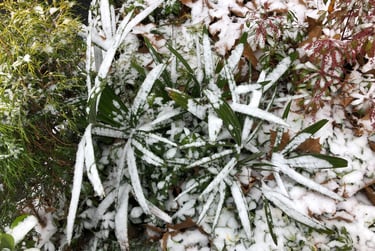
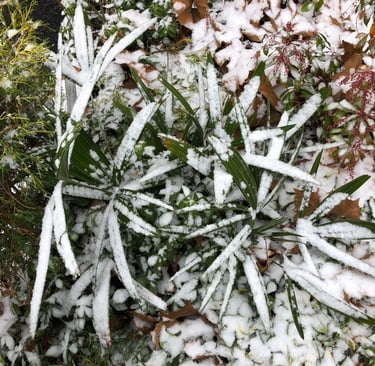
Cold Weather Performance in the Pacific Northwest
In PNW conditions, needle palms:
Handle wet winters better than many palms
Rarely spear-pull
Maintain foliage quality through cold snaps
They benefit from:
Overhead canopy or building protection
Mulching at the base
Wind protection
Flowering, Seed, and Propagation
Needle palms are dioecious (male and female plants).
Flowers are small and hidden within the crown
Female plants produce small, brown drupes
Seed production is slow and irregular
Propagation
Almost exclusively by seed
Germination can take several months
Seedlings grow extremely slowly
This slow propagation cycle is why needle palms are often expensive and scarce in the nursery trade.
Landscape Uses
Needle palms are best used as:
Foundation plants
Woodland garden specimens
Cold-hardy tropical accents
Barrier plantings (due to spines)
⚠️ Do not plant near walkways or play areas. The needles are a genuine hazard.
Common Mistakes
Expecting fast growth
Planting too close to paths
Overwatering in winter
Assuming it behaves like a windmill palm
Needle palms reward patience, not impatience.
Final Thoughts
Needle palms are not flashy, fast, or forgiving of poor placement—but they are unmatched in resilience. For growers pushing the limits of palm cultivation, especially in the Pacific Northwest, Rhapidophyllum hystrix represents durability over drama. If you want a palm that will still be alive decades from now, this is it.
For more cold-hardy palm knowledge, propagation insights, and region-specific growing advice, visit

Contact Us
© 2025. All rights reserved.
Terms and Conditions
Affiliate Disclosure
Some links on this site may be affiliate links. As an Amazon Associate I earn from qualifying purchases.