
Plants & Growing
A practical guide to palms, tropical plants, and growing success in temperate climates
Growing tropical-looking plants outside of the tropics isn’t about luck — it’s about understanding plant selection, soil, placement, and seasonal behavior.
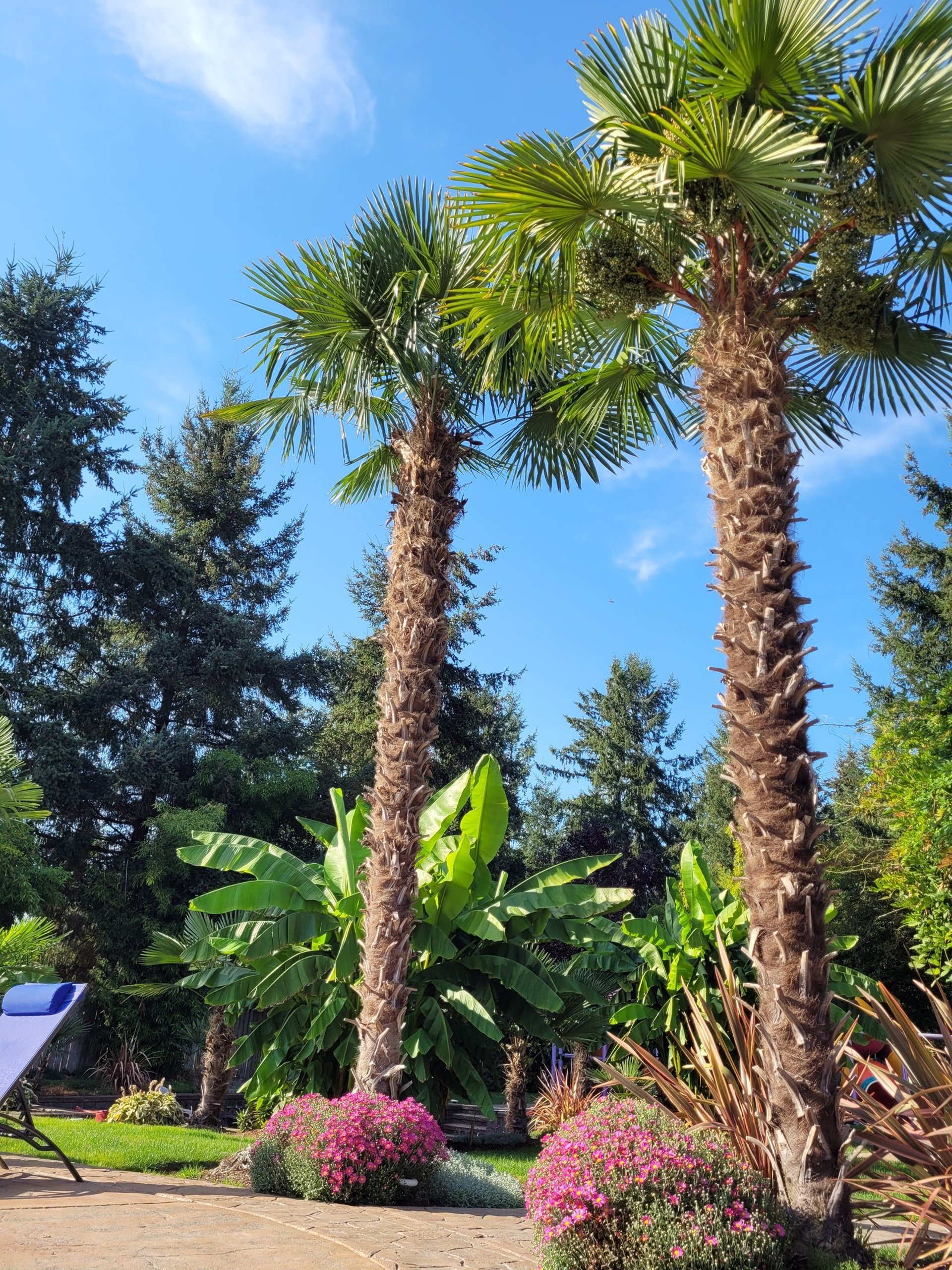
At Pacific Northwest Tropics, we focus on plants that look tropical but can realistically be grown, maintained, and enjoyed in temperate regions. This guide brings together our core plant knowledge, from palms and bananas to accent plants and soil strategy.
If you’re new here, this page is your foundation.
Understanding Tropical-Style Plants
“Tropical” describes appearance more than geography.
Large leaves, bold textures, upright forms, and strong silhouettes are what define tropical-style plants — not whether they come from a rainforest. Many of these plants adapt well to cooler climates when grown correctly.
This includes:
Hardy and semi-hardy palms
Fast-growing foliage plants
Clumping perennials with tropical form
Structural accent plants used in landscape design
Palms: The Backbone of Tropical Landscapes
Palms provide year-round structure that other plants can’t. Even when surrounding plants die back, palms maintain form, height, and presence.
In temperate climates, palms are chosen based on:
Cold tolerance
Drainage requirements
Wind exposure
Mature size and growth rate
Some palms are evergreen anchors, while others act as seasonal or container-grown features.
Broadleaf & Accent Plants
While palms give structure, accent plants create impact.
These include bananas, cannas, colocasia, gingers, and other bold-leaf plants that:
Grow quickly during warm months
Fill visual space fast
Create movement and density
Die back or slow down seasonally
Used together, they allow gardens to evolve through the year rather than looking static.
Soil, Drainage, and Root Health
Plant success starts below the surface.
Most tropical-style plants fail not from cold, but from poor drainage and compacted soil. Healthy roots require oxygen, moisture balance, and organic matter.
Key principles we focus on:
Amending native soil instead of replacing it
Avoiding waterlogged planting sites
Using mulch to regulate temperature and moisture
Matching soil structure to plant type
Seasonal Growth Patterns
Tropical-style plants do not grow evenly year-round in temperate climates.
Expect:
Rapid growth in late spring and summer
Slower growth or dormancy in winter
Leaf damage without plant loss
Regrowth from roots or crowns
Understanding this cycle prevents unnecessary plant removal and helps set realistic expectations.
Cold Tolerance (One Piece of the Puzzle)
Cold hardiness matters — but it’s only part of the equation.
Temperature, soil moisture, wind exposure, and plant maturity all influence survival. Some plants tolerate cold better once established, while others rebound quickly even after visible damage.
Cold tolerance should be viewed as risk management, not a binary yes-or-no trait.
Choosing the Right Plants for Your Space
Before planting, consider:
Available sunlight
Soil drainage
Wind exposure
Maintenance tolerance
Long-term size
A smaller number of well-placed plants almost always outperforms overplanting.
How This Guide Is Used
This page acts as:
A starting point for new readers
A navigation hub for plant-related content
A reference page for growing fundamentals
A trust signal for advertisers and partners
All plant-focused articles on this site connect back here.
Where to Go Next
If you’re deciding what to grow:
Start with palms for structure
Add accent plants for seasonal impact
Focus on soil and placement before variety
Adjust expectations, not ambition
INDEX
How to Choose Cold Hardy Palm Trees for Your Pacific Northwest Garden
Male vs Female Windmill Palms: How to Tell the Difference and How They Reproduce
Palm Tree Soil Mix Explained: What Actually Works in Cold, Wet Climates
Banana Palms: Growing and Propagating Bananas in a Tropical-Inspired Garden
New Zealand Red Flax (Phormium): Growing, Propagating, and Using It in the Landscape
Windmill Palm vs. Needle Palm: Which Is Better for Pacific Northwest Gardens?
Canna Lily Growing Guide for the Pacific Northwest: Bold Color in Zone 8 Gardens
Banana Palms in the Pacific Northwest: How They Transform a Tropical Landscape
Fatsia japonica vs Tetrapanax: Which Tropical Foliage Plant Works Best in Pacific Northwest Gardens?
Fatsia japonica: The Best Tropical Foliage Plant for Pacific Northwest Shade Gardens
Hostas: The Easy Tropical-Looking Shade Plant for Pacific Northwest Spring Gardens
Hosta vs. Fatsia japonica: Which Gives a Better Tropical Look in Pacific Northwest Shade Gardens?
Hardy Begonia: A Tropical-Looking Shade Plant for Pacific Northwest Gardens
Why Tropical Plants Fail After Planting in the Pacific Northwest (Late Spring Mistakes to Avoid)
Astilbe vs. Carex: Which Is Better for a Pacific Northwest Shade Garden?
Heavenly Bamboo: How to Grow and Properly Prune Nandina in the Pacific Northwest
Growing Wisteria in the Pacific Northwest: Planting, Pruning & Controlling Growth
Adam’s Needle Yucca: Growing and Maintaining Yucca in the Pacific Northwest
Adam’s Needle Yucca vs. New Zealand Flax: Which Is Better for a PNW Garden?
Contact Us
© 2025. All rights reserved.
Terms and Conditions
Affiliate Disclosure
Some links on this site may be affiliate links. As an Amazon Associate I earn from qualifying purchases.