
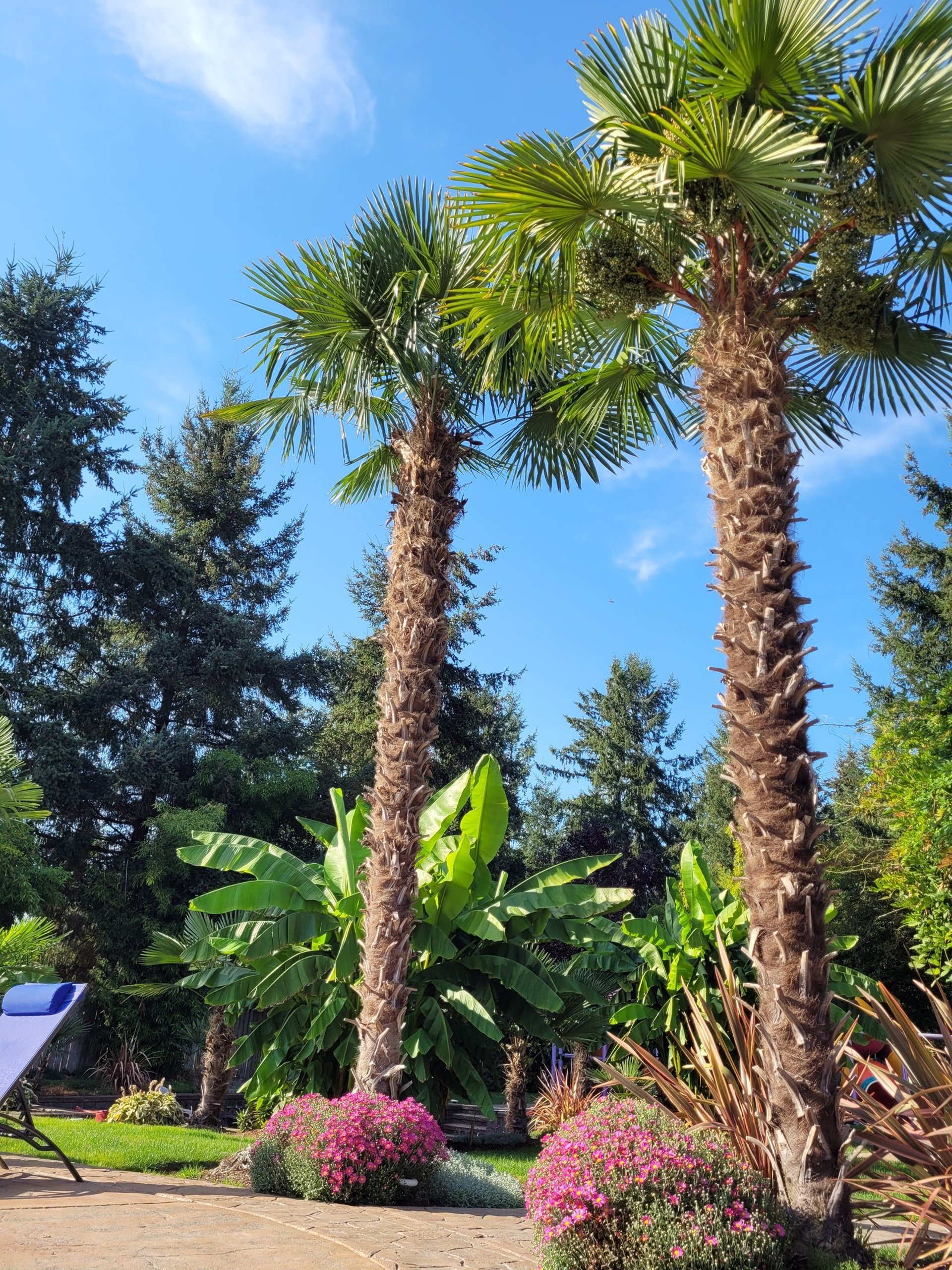
About Pacific Northwest Tropics
Growing Tropical Plants in a Climate That Tests Them
My name is Jeff, and I grow tropical and subtropical plants in Rochester, Washington — a small community in the Pacific Northwest where wet winters, occasional snow, and hard freezes are part of reality.
Pacific Northwest Tropics began more than five years ago after purchasing a home that already had several tropical-style plants in the landscape. Instead of removing them, I decided to learn how to help them survive — and thrive — in a climate that isn’t traditionally considered tropical.
That decision turned into years of hands-on experimentation, seasonal learning, and a growing passion for cold-hardy tropical gardening.
A Self-Taught Approach Built on Real Conditions
I am not formally trained in horticulture. Everything shared here comes from practical experience — observing what works, what fails, and what recovers after Pacific Northwest winters.
Over the past five years I have:
Managed tropical plants through snow and extended freeze events
Tested winter protection strategies for banana plants and palms
Evaluated how drainage, wind exposure, and microclimates affect survival
Propagated and cultivated plants for seasonal sale
Designed landscape layouts that create a tropical feel even during gray months
Growing tropical plants in Rochester, WA means dealing with:
Heavy winter moisture
Freezing rain
Short daylight hours
Temperature swings
These real-world conditions shape every article on this site.
What Pacific Northwest Tropics Focuses On
This is not a general gardening website.
Pacific Northwest Tropics concentrates specifically on:
Cold-hardy palm trees such as windmill palms
Banana plants grown in temperate climates
Structural foliage plants like New Zealand flax
Tropical-style landscape design for cool regions
Propagation techniques and plant division
Winter survival strategies
The goal is not to imitate Hawaii — it’s to understand how tropical plants behave in a Pacific Northwest environment.
Lessons Learned From Snow and Freeze Events
Some of the most important learning moments came during winters that included snow accumulation and freezing temperatures.
I’ve seen:
Leaf burn that looked fatal but wasn’t
Crown damage that required patience rather than panic
Plants that recovered stronger after a difficult season
Others that simply weren’t suited for this region
Those experiences inform the advice shared here. The guidance on this site reflects observation over multiple seasons — not one mild winter.
A Hybrid Model: Education, Experimentation, and Seasonal Sales
Pacific Northwest Tropics operates as a hybrid of:
Educational resource
Ongoing horticultural experiment
Gradually developing plant-growing operation
Seasonal plant sales are offered when availability allows. Growth is intentionally gradual and responsible. Scaling production without compromising plant health or overextending resources is a long-term priority.
The foundation of this project is sustainability — both horticultural and operational.
Original Photography and Real Gardens
Most images featured on this site are taken in real Pacific Northwest conditions. They are not stock representations of idealized climates.
Photography here reflects:
Mature plants after multiple winters
Real soil conditions
Real weather exposure
Actual landscape layouts
That authenticity is intentional.
Transparency and Site Support
Pacific Northwest Tropics may include advertising and affiliate links to help support the time and costs involved in maintaining the site.
When affiliate links are used, they are relevant to the topic being discussed. As required:
As an Amazon Associate I earn from qualifying purchases.
Revenue helps fund:
Continued plant experimentation
Photography
Website hosting
Development of new educational content
Content decisions are based on plant relevance and regional accuracy — not product promotion.
Why This Site Exists
There is increasing interest in tropical-style landscapes in cool climates, but much of the information available online is written for warm regions.
Pacific Northwest Tropics exists to provide guidance specifically for gardeners in:
Western Washington
Coastal and temperate climates
Regions with wet winters and periodic freezes
If you’re experimenting with bold foliage in a gray winter climate, you’re not alone.
The Long-Term Vision
The long-term vision of Pacific Northwest Tropics is to build a reliable, experience-driven resource for tropical gardening in temperate environments — combining:
Practical growing knowledge
Real climate testing
Thoughtful landscape design
Gradual business development
Tropical living in the Pacific Northwest is not about perfection. It’s about resilience, experimentation, and creating atmosphere within the limits of the climate.
Contact Us
© 2025. All rights reserved.
Terms and Conditions
Affiliate Disclosure
Some links on this site may be affiliate links. As an Amazon Associate I earn from qualifying purchases.