
Banana Palm Bearing Fruit
A first for Pacific Northwest Tropics our banana palms have fruit growing
7/13/20263 min read
A First at Pacific Northwest Tropics: Our Banana Plant Is Growing Fruit
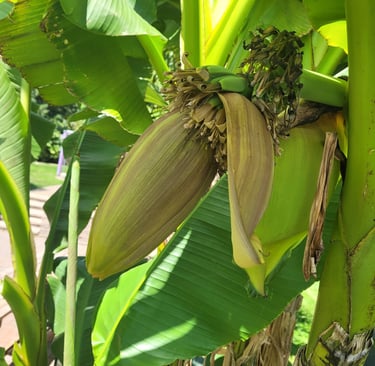
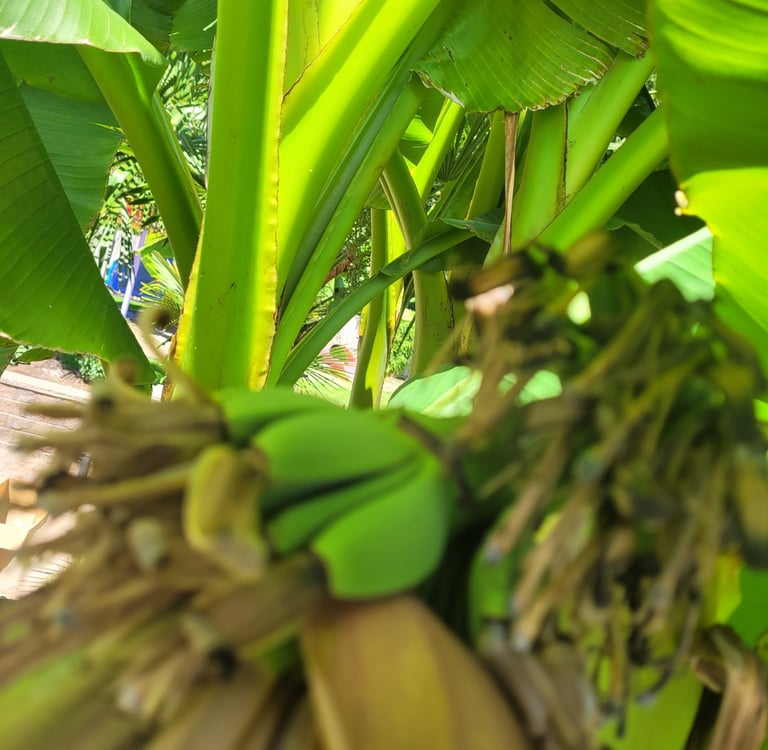
We have an exciting first at Pacific Northwest Tropics: one of our outdoor banana plants is producing fruit here in the Pacific Northwest.
Banana plants are usually grown in our Zone 8 climate for their large leaves and tropical appearance—not for bananas. Winter cold commonly kills the above-ground growth before a stem has enough uninterrupted growing time to flower. That makes seeing an actual bunch of fruit forming in our garden especially unusual.
What May Have Made the Difference?
Several factors may have contributed.
When preparing this plant for winter last year, I removed the leaves but left the full trunk-like stem standing. In previous years, I normally cut the plant all the way back to the ground.
Although it looks like a trunk, this structure is technically called a pseudostem. It is made from tightly wrapped leaf bases. Preserving more of that mature pseudostem may have allowed the plant to resume its development this spring rather than starting over completely from the ground.
We also experienced an unusually warm spring. The combination of a surviving mature stem, early warmth and an established root system may have given this plant the head start it needed to flower.
How Long Does a Banana Plant Take to Produce Fruit?
In consistently warm climates, many banana varieties can flower after roughly 10 to 18 months of strong growth. Hardy bananas grown in colder northern climates may need approximately 12 to 24 months of uninterrupted stem growth before flowering.
That is the challenge in Zone 8. A plant may return vigorously from its underground rhizome every spring, but if the pseudostem freezes or is cut to the ground each winter, its fruiting clock is effectively interrupted. Preserving the stem through winter can improve the possibility of flowering, although fruit production is never guaranteed.
Will These Bananas Be Edible?
That depends on the banana variety.
If this is a Japanese hardy banana, Musa basjoo, the plant can produce small yellow-green fruits. However, they typically contain many hard seeds and very little pulp, so they are considered ornamental rather than useful eating bananas. Hardy bananas generally need a long period of warmth to flower, which is why fruiting is uncommon in northern gardens.
Even after fruit appears, our Pacific Northwest growing season may not remain warm long enough for it to fully develop or ripen. For now, we are simply enjoying the opportunity to watch the process.
What Happens After Fruiting?
Each banana pseudostem flowers and fruits only once. Afterward, that individual stem gradually declines and dies. The underground rhizome remains alive, however, and produces new shoots—commonly called pups—to continue the plant.
We will document the fruit as it develops, including how quickly it grows, whether it begins to ripen and how the plant responds as cooler weather approaches.
Fall Storm Cleanup: What Our 20-Foot Banana Palms Taught Us About Winterizing
Return each week for updated photographs and progress reports from our first fruiting banana plant at Pacific Northwest Tropics.



07/12/26
07/12/26
07/12/26


07/15/26


07/15/26


07/27/26


07/27/26
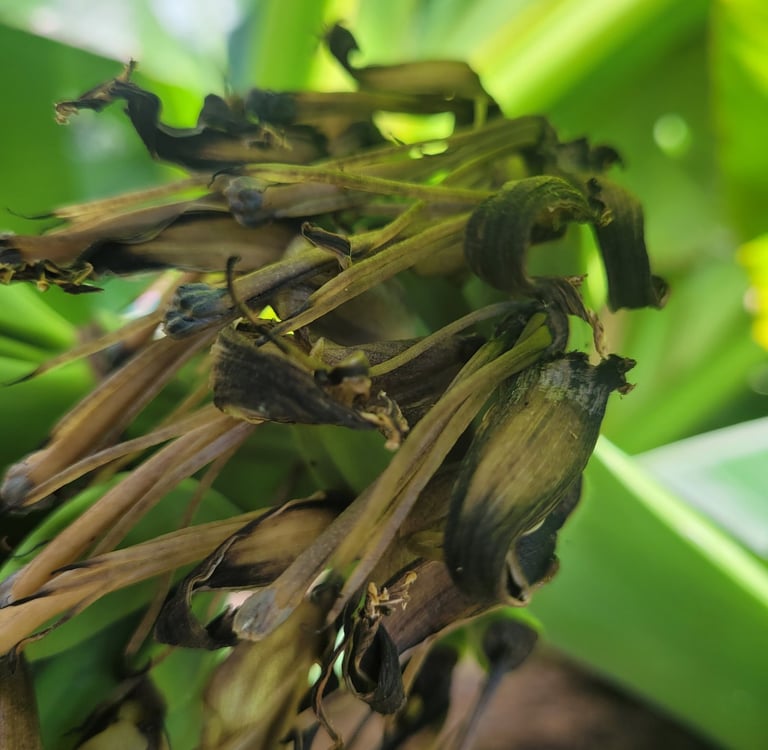
spent flowers and bracts


07/28/26


07/28/26


9/28/26
9/28/26
9/28/26
Contact Us
© 2025. All rights reserved.
Terms and Conditions
Affiliate Disclosure
Some links on this site may be affiliate links. As an Amazon Associate I earn from qualifying purchases.