
Banana Palm Cold Recovery & Early Spring Wake-Up
Learn how to revive cold-hardy banana palms (Musa basjoo) after winter in the Pacific Northwest. Pruning timing, root inspection, fertilization strategy, and early spring growth acceleration tips for Zone 8 growers.
2/16/20263 min read
Why Late Winter Is Critical for Banana Palms in Western Washington
Cold-hardy banana palms, particularly Musa basjoo, are one of the most dramatic tropical plants you can grow in the Pacific Northwest.
But winter survival and spring performance are not the same thing.
In western Washington, the real challenge isn’t whether the plant survives — it’s whether it rebounds aggressively enough to reach full height by mid-summer.
Late February through early April is the window that determines that outcome.
Step 1: Assessing Winter Damage Correctly
Before cutting anything, inspect:
Pseudostem firmness
Crown integrity
Base rot smell
Soil saturation level
A firm pseudostem often means viable internal tissue even if outer layers are brown.
If the stem is soft, collapsing, or smells sour — cut down to healthy tissue immediately.
In my experience growing bananas outdoors in wet PNW winters, early intervention prevents spring fungal spread.
Step 2: Proper Spring Pruning Strategy
Do not cut prematurely in February.
Wait until:
Severe freeze risk has passed
Night temps are consistently above 28–30°F
Then:
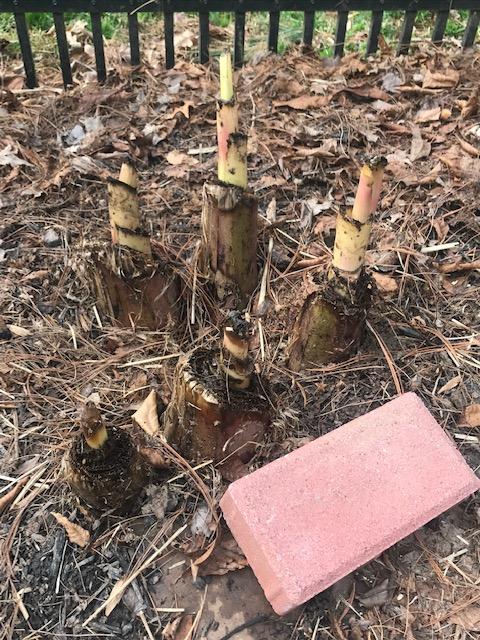
Remove fully dead outer layers
Cut damaged stems to solid interior
Leave intact green stems for earlier height advantage
If you overwintered with heavy mulch, pull it back gradually to warm the root zone.
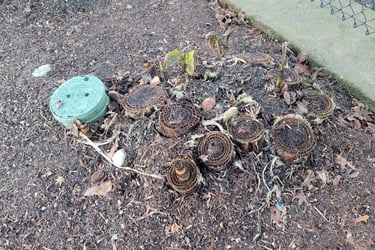
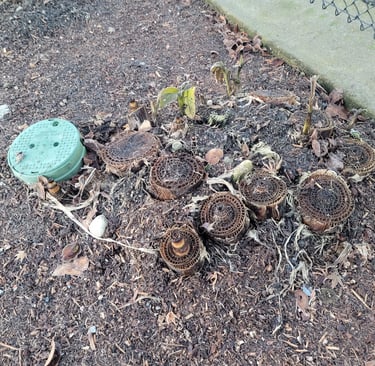
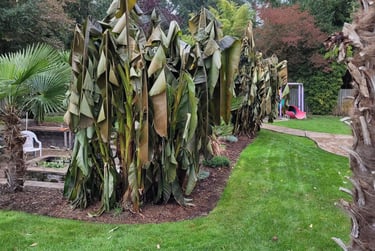
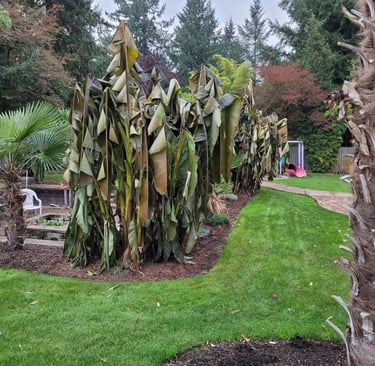
I have cut Banana Palms in late fall (after first freeze) but found it easier to handle and dispose of the stalks and leaves once they have dried out and lost a lot of their water weight. Stay tuned, I will be cutting my palms very soon. Il post a video.
Step 3: Soil Warming & Root Activation
Bananas are root-driven plants.
If soil stays cold, growth stalls.
Early-season acceleration tactics:
Remove excess mulch once deep freezes are gone
Lightly cultivate topsoil to increase aeration
Apply compost around drip line
If soil drains poorly, incorporate pumice or expanded shale to prevent spring stagnation.
A soil thermometer helps determine when the root zone consistently exceeds 50°F — that’s when true growth begins.
Step 4: Early Fertilization Timing (Critical for Size)
Do NOT fertilize too early.
Wait until:
Visible new growth appears
Soil temps consistently above 50°F
Then apply:
Balanced slow-release fertilizer
Or organic compost-heavy feeding
Bananas are heavy feeders once active, but early nitrogen in cold soil promotes rot.
For strong early push, a palm/banana balanced fertilizer with micronutrients performs well once growth begins.
Step 5: Irrigation Strategy in the Pacific Northwest
Spring rain often fools growers into thinking bananas don’t need irrigation.
However:
New growth requires consistent moisture
But standing water causes crown rot
Ideal method:
Deep watering once soil begins drying between storms.
As temperatures rise, irrigation frequency increases rapidly.
Common Early Season Mistakes
Cutting stems too early
Leaving mulch packed against pseudostem
Fertilizing in cold soil
Ignoring drainage
Assuming survival equals strong regrowth
The goal is not survival — it’s maximum summer canopy.
Expected Growth Timeline in Zone 8
If properly managed:
Shoots begin accelerating late April
Rapid leaf production by May
8–12 feet of height by late summer
If neglected:
Stunted 4–6 foot growth
Smaller leaves
Reduced tropical impact
Bananas reward aggressive but well-timed intervention.
More on Growing and Propagating
Recommended Tools for Banana Recovery
Soil thermometer
Balanced slow-release fertilizer
Pumice or drainage amendment
Breathable frost cloth (for surprise late freezes)
Why Banana Palms Are Worth the Effort in Western Washington
Few plants transform a yard as dramatically as a healthy banana stand.
In a climate where true tropical species struggle, Musa basjoo offers:
Reliable root hardiness
Explosive summer growth
Architectural foliage
Fast visual payoff
If you treat late winter and early spring correctly, bananas become one of the most dependable tropical statements you can grow in the Pacific Northwest.
See more on Banana Palms on our Plants & Growing section.
Contact Us
© 2025. All rights reserved.
Terms and Conditions
Affiliate Disclosure
Some links on this site may be affiliate links. As an Amazon Associate I earn from qualifying purchases.