
Banana Palms in the Pacific Northwest: How They Transform a Tropical Landscape
Banana palms grow surprisingly well in the Pacific Northwest. Learn how Musa basjoo behaves in real Zone 8 gardens and how to manage its dramatic growth.
3/10/20264 min read
Banana Palms in a Pacific Northwest Garden
Banana palms are one of the fastest ways to create a tropical look in a Pacific Northwest garden. Their enormous leaves, rapid growth, and bold structure immediately change the scale and atmosphere of a landscape. While many gardeners initially plant bananas as a novelty, they often become a central feature once they begin growing aggressively during the summer months.
In Western Washington’s Zone 8 climate, hardy bananas typically die back to the ground each winter, then re-emerge once soil temperatures begin warming in spring. By mid-summer they often produce towering foliage that rivals plants grown in much warmer climates. When planted in a sunny location with fertile soil, banana palms can easily reach ten to fifteen feet in a single growing season.
Why Banana Palms Thrive in the Pacific Northwest
Despite their tropical appearance, Musa basjoo is surprisingly well adapted to the Pacific Northwest climate. The plant tolerates cool spring temperatures better than many tropical species, and its root system is capable of surviving winter when properly mulched or protected.
What makes bananas especially successful here is the combination of long summer daylight hours and moderate temperatures. These conditions allow for consistent growth without the extreme heat stress that some tropical plants experience in hotter regions.
As a result, bananas often produce larger leaves and thicker stems in Pacific Northwest gardens than many people expect. More sun means bigger plants.
Understanding Banana Clumps
Banana palms grow as a clumping plant, meaning the main stem continuously produces new shoots from underground rhizomes. Over time this creates a dense stand of plants rather than a single trunk.
In a landscape setting this clumping behavior can be an advantage. Multiple stems produce a fuller tropical effect and increase the visual impact of the planting area.
However, clumps can expand rapidly. In many Pacific Northwest gardens a banana patch can double in size within a couple growing seasons. We thin out our plants every year, they do get big.
Gardeners typically manage this by periodically removing smaller shoots or dividing rhizomes when the clump becomes crowded. For more on Clumps and Propagating Banana Palms.
Placement Matters in a Tropical Garden
Where banana palms are planted has a major influence on how dramatic they appear in the landscape.
Because the leaves are so large, bananas work best when positioned where they can serve as a backdrop or focal point. They pair particularly well with plants that provide contrasting textures, such as palms or large-leaf perennials.
Many gardeners place bananas along fences, behind seating areas, or near water features where the foliage creates a lush wall of greenery. For more on Palm Design and Placement.
When planted this way, even a small group of bananas can transform an otherwise ordinary yard into something that feels much more tropical.
We have large Banana plants on the four corners of our sunken firepit and around the fence line of the yard.
Water and Fertility
Bananas are heavy feeders and respond quickly to fertile soil. In most Pacific Northwest gardens they benefit from regular watering and rich organic matter in the soil.
Compost and slow-release fertilizers help maintain vigorous growth throughout the summer months. When nutrients are plentiful, bananas produce noticeably larger leaves and thicker stems.
The difference between a lightly fertilized banana and a well-fed one can be dramatic.
Our landscape uses a irrigation system and runs five days a week during the summer months.
Using a good 16-16-16 fertilizer works well in our landscape.
Real Experience Growing Bananas in Western Washington
In our own garden, banana palms quickly became one of the most visually dominant plants in the landscape. Even after winter dieback, the plants rebound quickly once temperatures begin warming in late spring.
By midsummer the leaves create a canopy effect that completely changes the feel of the space. When combined with palms and large foliage plants like tetrapanax or cannas, the garden takes on a dense tropical appearance that surprises visitors who expect the Pacific Northwest to support only temperate plantings.
Propagating is easily done with a Sharp Shovel, sharpened on a grinding wheel.
Common Issues Gardeners Encounter
While bananas are vigorous growers, they are not completely maintenance-free.
Wind can occasionally tear the large leaves, especially in exposed locations. This is mostly cosmetic and does not harm the plant, but many gardeners prefer planting bananas where they receive some protection from strong winds.
Cold spring soil can also delay early growth. Once temperatures warm consistently, however, the plants typically accelerate quickly.
Check out our Banana Palm Bearing Fruit
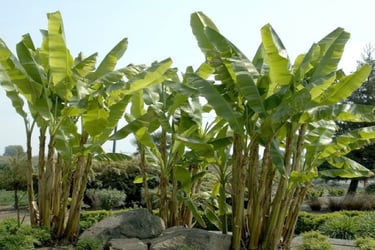
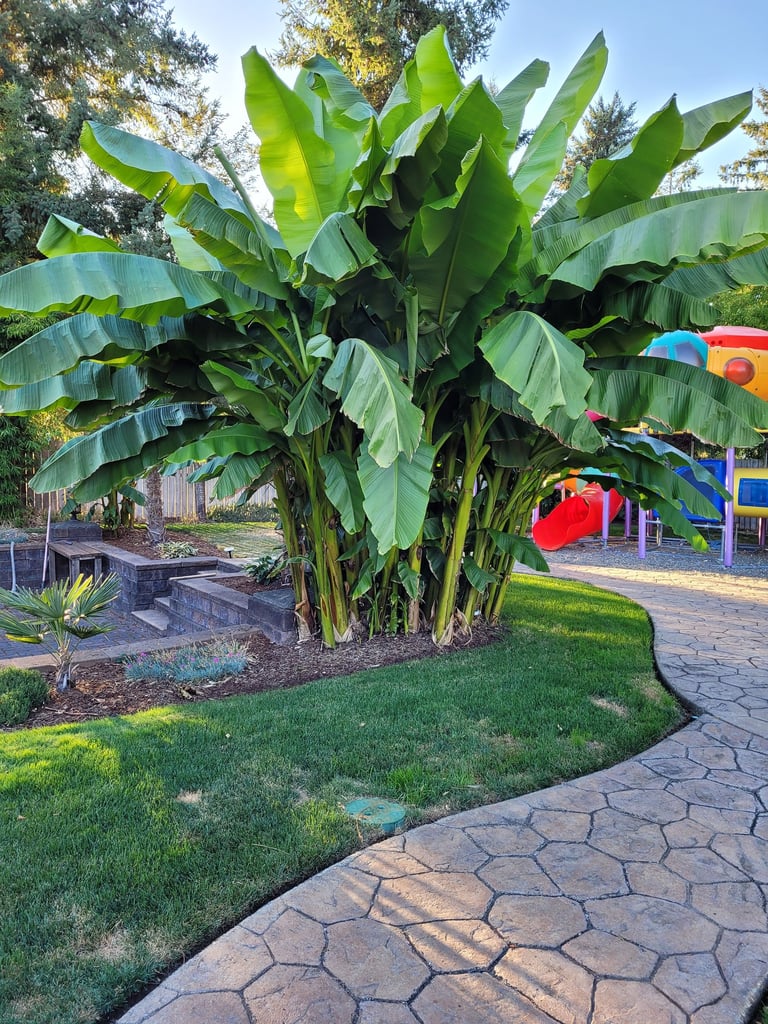
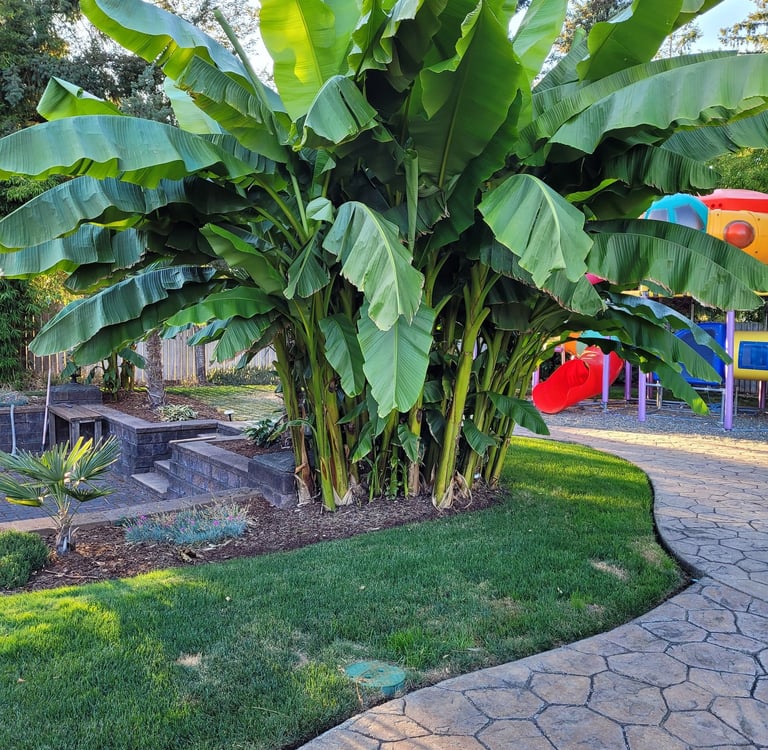
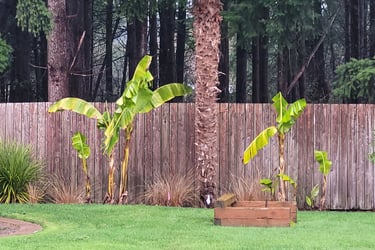
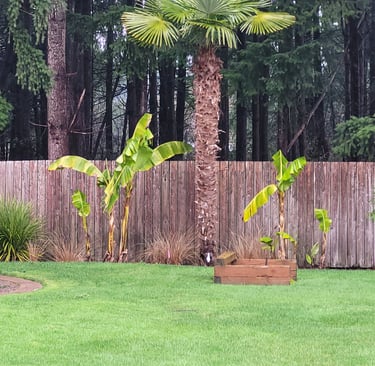
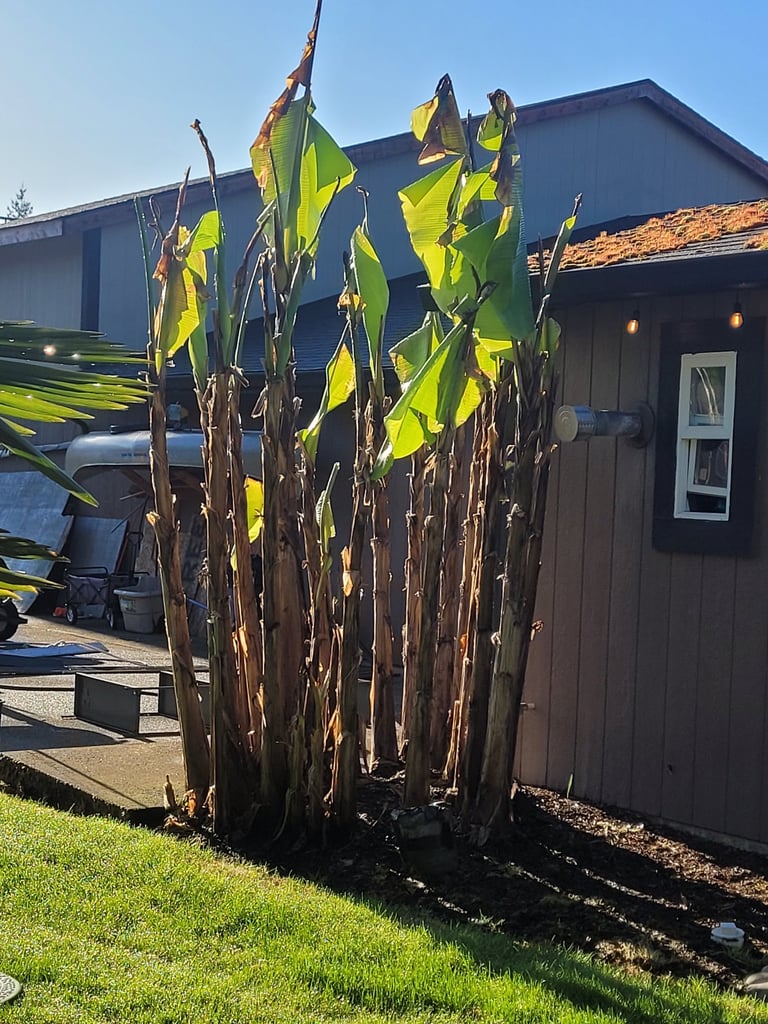
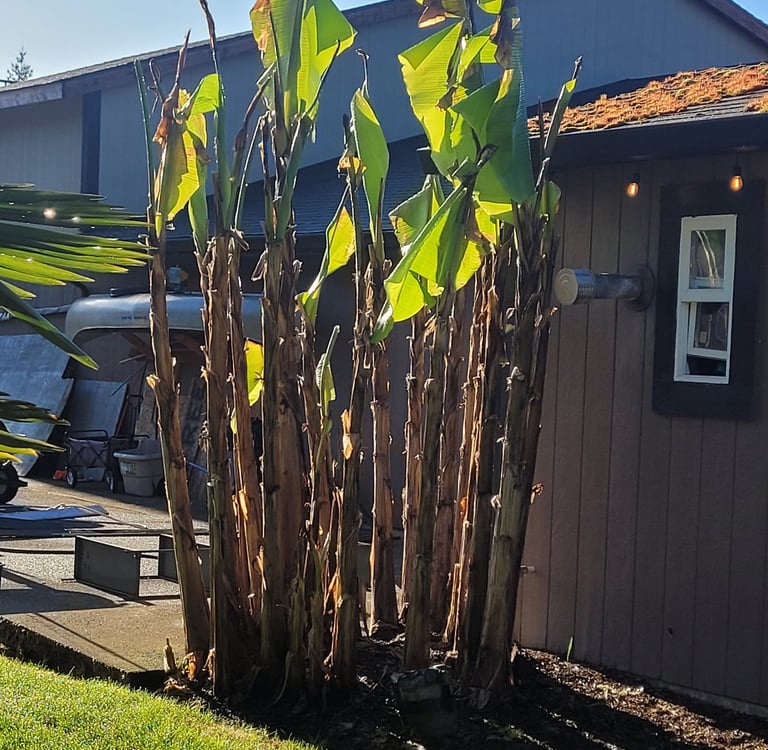
Our Bananas Early Spring

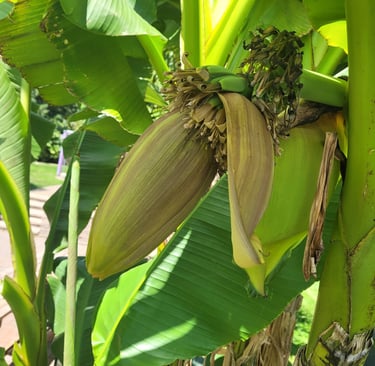
BEARING FRUIT 7/12/26
Contact Us
© 2025. All rights reserved.
Terms and Conditions
Affiliate Disclosure
Some links on this site may be affiliate links. As an Amazon Associate I earn from qualifying purchases.