
Male vs Female Windmill Palms: How to Tell the Difference and How They Reproduce
Learn how to tell the difference between male and female windmill palms (Trachycarpus fortunei) and understand how these cold-hardy palms reproduce by seed. This detailed guide explains palm flowering, pollination, seed development, and propagation—specifically for Pacific Northwest growing conditions.
1/16/20265 min read
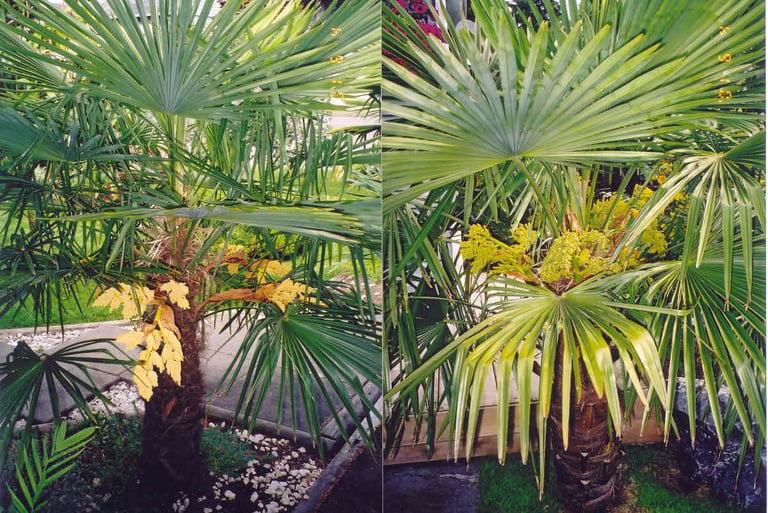
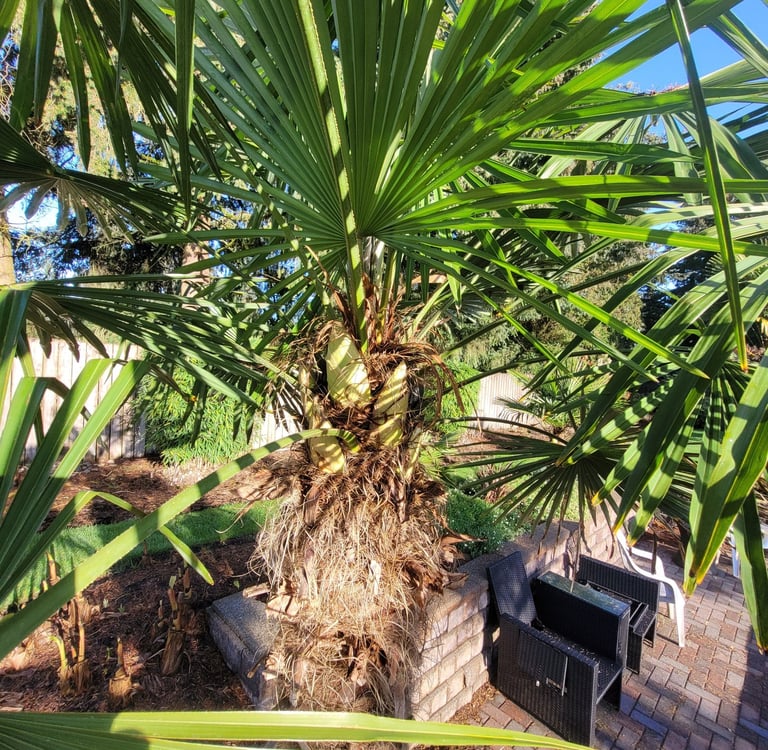
Seed Pods Growing Early Spring
Windmill palms (Trachycarpus fortunei) are one of the most dependable cold-hardy palms for Pacific Northwest gardens. But once they reach flowering age, many homeowners are surprised to learn that each palm is either male or female — not both.
That difference matters. Female palms can produce seed, volunteer seedlings, and future propagation stock, but only when a male palm is nearby and flowering at the same time. If your palm blooms every year but never makes seed, its sex may be the reason.
Quick Answer: Male vs. Female Windmill Palms
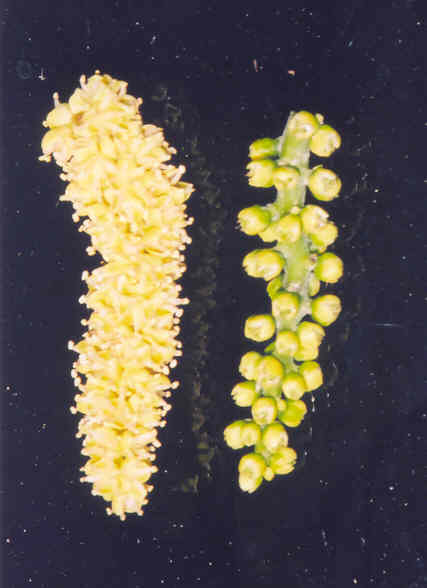
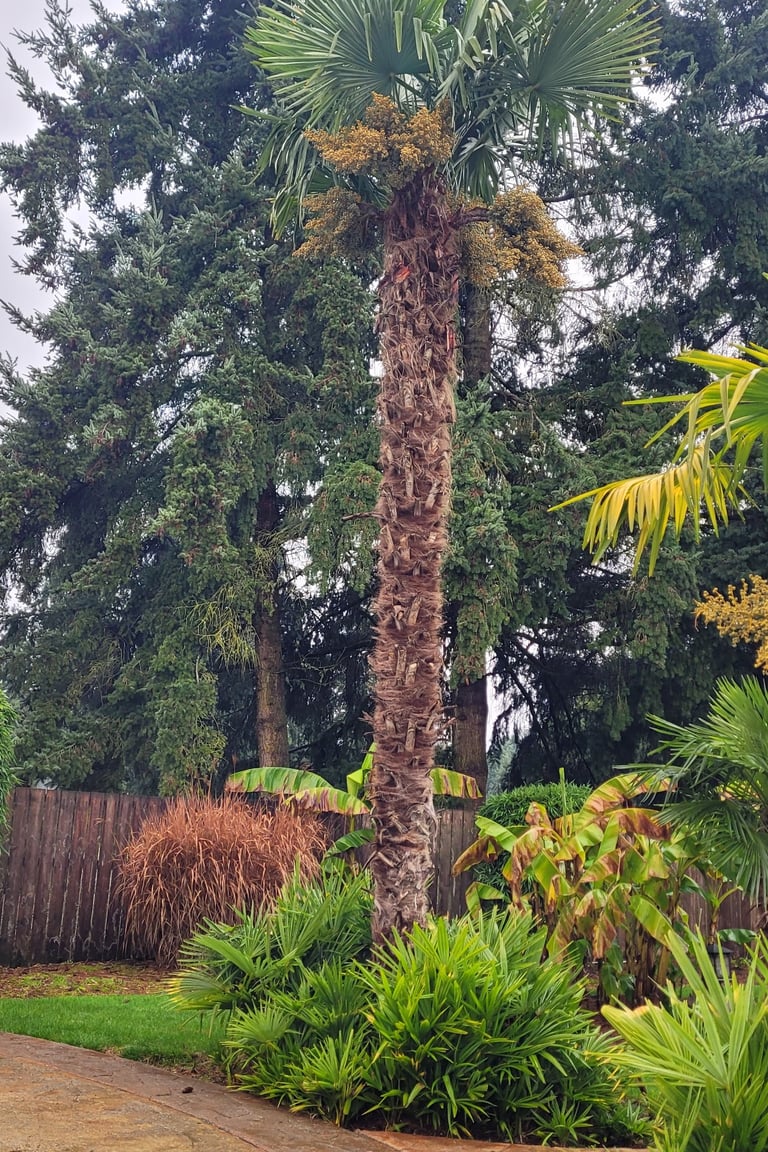
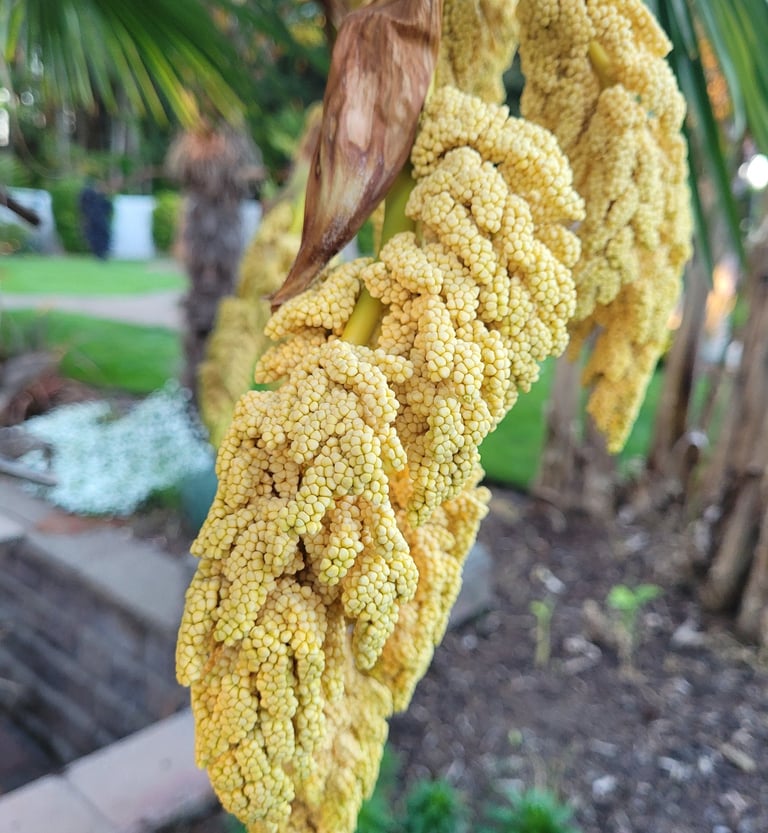
Male windmill palms produce the bright yellow, pollen-covered flower clusters that often look fuller and more powdery during bloom. They release pollen, then the flowers dry up and fall away. Male palms never produce seed.
Female windmill palms produce less showy greenish-yellow flower clusters. If pollinated by a nearby male palm, those flowers develop into green fruit that matures into dark blue-black seed clusters later in the season. Only female palms can produce seed.
Important: You usually cannot tell whether a windmill palm is male or female until it reaches flowering maturity, which often takes several years.
Are Windmill Palms Male or Female?
Windmill palms are dioecious, meaning:
Each individual palm is either male or female
A female palm will not produce viable seed unless pollen from a male palm reaches it during flowering
Male and female palms look virtually identical before they bloom
This is why two mature windmill palms of similar size may behave very differently: one may flower heavily but never develop seed, while another may hang with large clusters of dark fruit by late summer.
How to Identify a Male Windmill Palm
Male windmill palms produce pollen-bearing flower clusters. These flowers are often the more noticeable of the two because they are brighter and fuller during bloom.
Male flower traits
Flowers are small and bright yellow
Flower clusters look dense, fluffy, and powdery
When disturbed, they can release visible pollen
The blooms often have a noticeable fragrance
After pollen release, the flower clusters dry up and fall away
Male palms never produce seed
In many gardens, male palms are the first ones people notice in spring because their yellow flowers are showier than female blooms.
How to Identify a Female Windmill Palm
Female windmill palms produce the flower structures that can develop into seed, but only after successful pollination.
Female flower traits
Flowers are usually greenish-yellow, not bright yellow
Clusters appear less fluffy and less powdery than male flowers
After pollination, flowers begin forming round green fruit
Fruit continues enlarging through the season
Mature seed clusters eventually turn dark blue to black
Seeds hang in large, drooping bunches beneath the crown
A female palm that flowers but never develops fruit may simply not have a flowering male palm close enough to provide pollen.
How Windmill Palms Are Pollinated
Windmill palm pollination happens primarily through:
Wind
Insects, especially bees, which appear to play a secondary but noticeable role
For consistent seed production:
A male palm should be within reasonable distance — ideally on the same property or nearby
Male and female palms must be flowering at overlapping times
Palms growing in neighborhoods with multiple mature windmill palms may pollinate even when only one palm is present in your own yard
Field Note from Our PNW Garden
Bees are highly attracted to male windmill palm flowers. In peak bloom, a large palm can be loud with bee activity — you can sometimes hear them working in the flowers of a 30-foot-tall tree. We have also observed that palms growing in closer proximity seem to pollinate more consistently than isolated palms or palms in areas with very few nearby windmills.
Related Guide
Want to keep your windmill palm healthy enough to flower and mature well?
Read our Windmill Palm Care Guide for the Pacific Northwest
Windmill Palm Seed Development Timeline
Once a female flower cluster has been pollinated, seed development happens gradually over several months.
Typical progression
Flowers begin forming small green fruit
Fruit enlarges through spring and summer
Seeds mature by late summer into fall
Fully mature seeds turn dark blue to black
Green seeds are not fully mature and are generally not ready for collection.
How Windmill Palms Propagate by Seed
Windmill palms do not produce pups or offshoots. They reproduce only by seed.
Natural propagation
In landscapes with mature female palms:
Ripe seeds fall near the parent plant
Seeds settle into moist soil or mulch
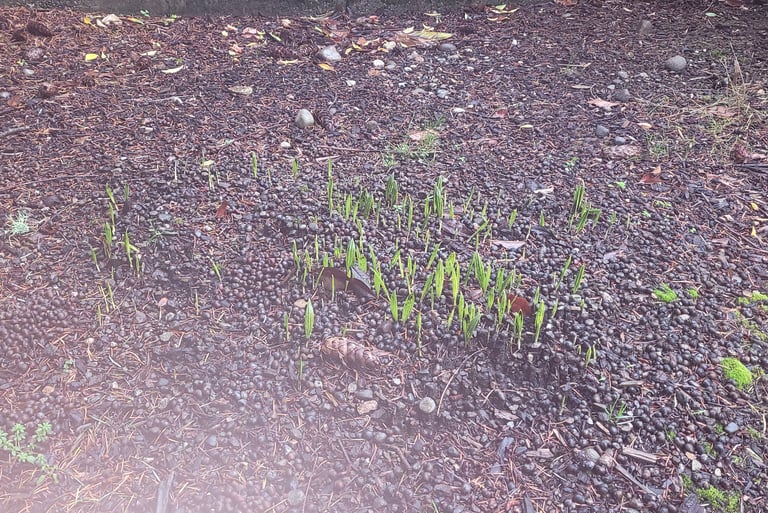
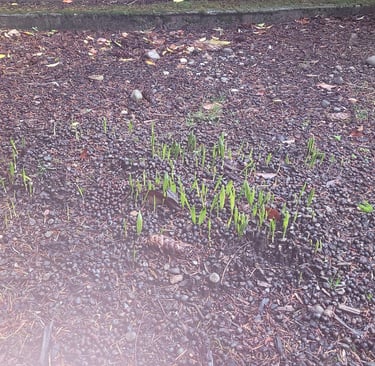
Volunteer seedlings may appear the following spring or summer
Intentional seed propagation
To start windmill palms from seed:
Collect fully ripe dark blue-black seeds
Remove the outer fruit pulp
Soak the cleaned seeds in water for 24–48 hours
Plant in a well-draining seed-starting mix
Keep the soil consistently moist, not soggy
Provide warmth and patience
Many propagation guides suggest temperatures around 70–85°F, and warmer conditions can help speed germination. However, in our experience, windmill palm seeds do not always require temperatures that high to begin sprouting, especially when kept evenly moist and given time.
Germination commonly takes 1–3 months, though some seeds may take longer.
Field Note
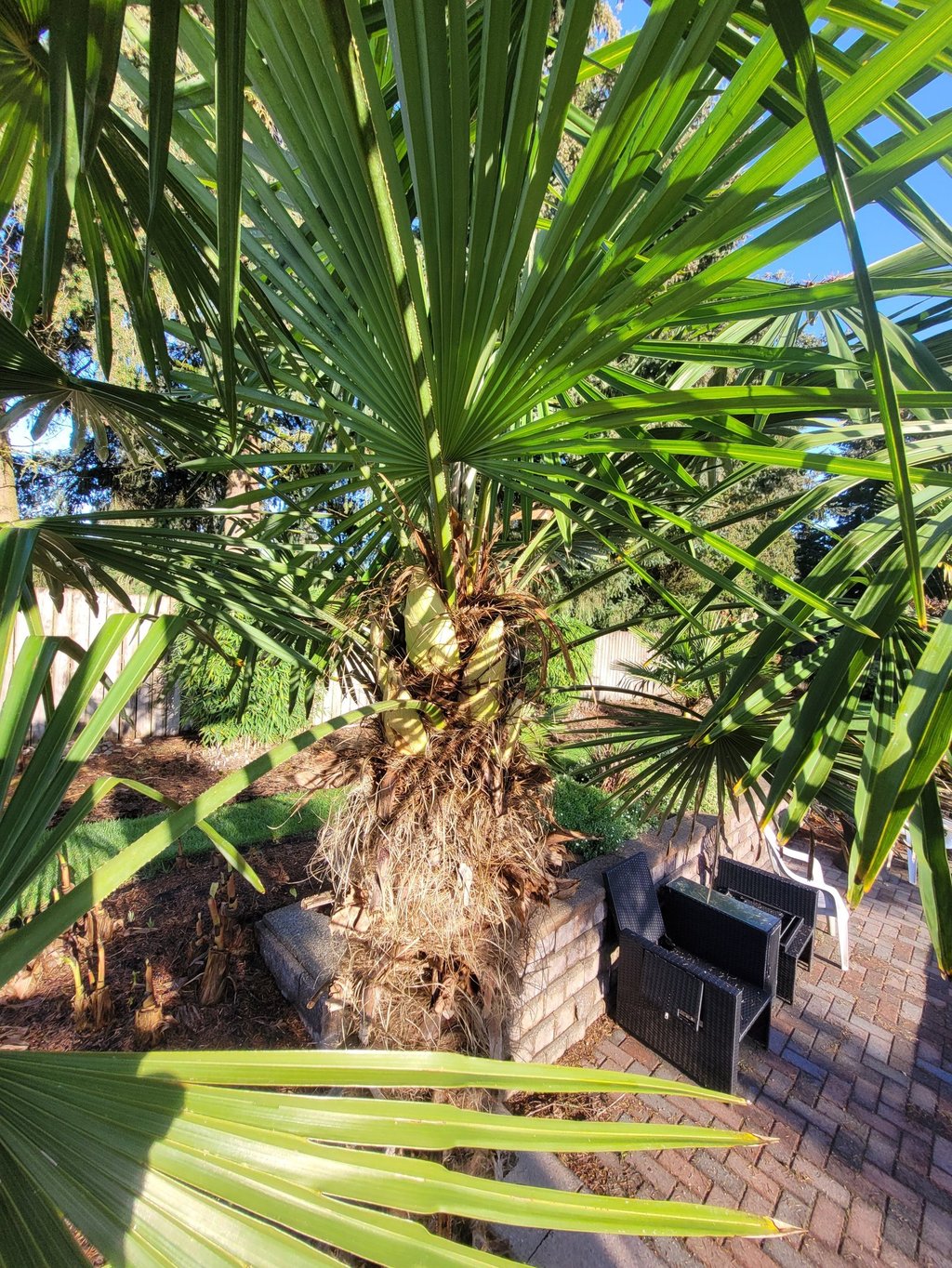
In our tropical landscape, the Windmill Palms are pollinated by bees. As the pollinated seeds mature they fall from the trees and take root in the ground below. Yearly removal of the seed pods are left in a secluded area of the yard and sprout naturally throughout the late fall and winter, producing hundreds of starts. For current inventory and pricing see our Plants For Sale page.
Why This Matters for Pacific Northwest Gardeners
Understanding the difference between male and female windmill palms helps you:
Know whether seed production is possible in your landscape
Understand why one flowering palm makes seed and another does not
Identify volunteer palm seedlings in garden beds
Select mature palms more intentionally if propagation interests you
Recognize the role of nearby palms in neighborhood pollination
It also explains why some windmill palms become heavy seed producers while others bloom beautifully every year and never form fruit.
Common Mistakes and Misunderstandings
Mistake 1: Assuming every flowering palm will produce seed
Only female palms can produce seed, and they still need pollen from a male palm.
Mistake 2: Trying to identify sex before flowering
Young windmill palms generally cannot be sexed visually before bloom.
Mistake 3: Harvesting seeds while they are still green
Seeds should be allowed to mature fully to dark blue-black before collection.
Mistake 4: Assuming a single palm cannot be pollinated
If other windmill palms are growing nearby, wind or insects may still carry pollen to your female palm.
Conclusion
Male and female windmill palms look the same for years, but once they flower, the difference becomes easy to recognize. Male palms produce bright yellow pollen-bearing flowers. Female palms produce the flower clusters that can become dark blue-black seeds after pollination.
For Pacific Northwest gardeners, this matters because seed production is the only natural way Trachycarpus fortunei reproduces. A mature female palm with nearby pollen access can become a valuable source of future cold-hardy palm seedlings for years to come.
Continue Exploring Cold-Hardy Tropical Plants
To keep building your tropical Pacific Northwest garden, read next:
Windmill Palm Care: How to Grow Trachycarpus fortunei in the PNW
How Windmill Palms Compare With Banana Plants in Pacific Northwest Landscapes
Windmill Palm vs. Needle Palm: Which Is Better for Pacific Northwest Gardens?
Contact Us
© 2025. All rights reserved.
Terms and Conditions
Affiliate Disclosure
Some links on this site may be affiliate links. As an Amazon Associate I earn from qualifying purchases.