
Polycarbonate vs Glass Greenhouses for Pacific Northwest Gardeners
Compare polycarbonate vs glass greenhouses for Pacific Northwest gardens. Learn which option handles rain, wind, cold, cost, and plant performance best.
3/20/20265 min read
If you garden in the Pacific Northwest, a greenhouse can extend your season, protect tropical-looking plants, and make propagation much easier. The problem is that many gardeners get stuck on the same question before they buy: should you choose polycarbonate or glass?
Both materials can work well, but they do not perform the same in wet, cool, windy Pacific Northwest conditions. Your best choice depends on your budget, your site exposure, how much winter heat retention you need, and whether your priority is maximum light transmission or easier year-round practicality.
For most Pacific Northwest home gardeners, polycarbonate is usually the better overall choice. Glass still has advantages, especially for appearance and light clarity, but it is often more expensive, heavier, and less forgiving in rough weather.
Quick Answer
Choose polycarbonate if you want:
better insulation
lower breakage risk
a more forgiving material in wind, hail, and falling debris
a more practical greenhouse for everyday Pacific Northwest conditions
Choose glass if you want:
the cleanest, clearest look
maximum direct light transmission
a more traditional or premium greenhouse appearance
long-term visual appeal as part of the landscape design
Why This Matters in the Pacific Northwest
Pacific Northwest gardeners deal with a very specific mix of conditions:
long wet seasons
frequent cloud cover
cool nights
winter wind events
moss, algae, and moisture buildup
occasional snow or ice depending on location
That means greenhouse materials should not be judged only by appearance. They need to be evaluated by how they handle insulation, condensation, durability, maintenance, and real-world usability over time.
Polycarbonate Greenhouses: Strengths and Weaknesses
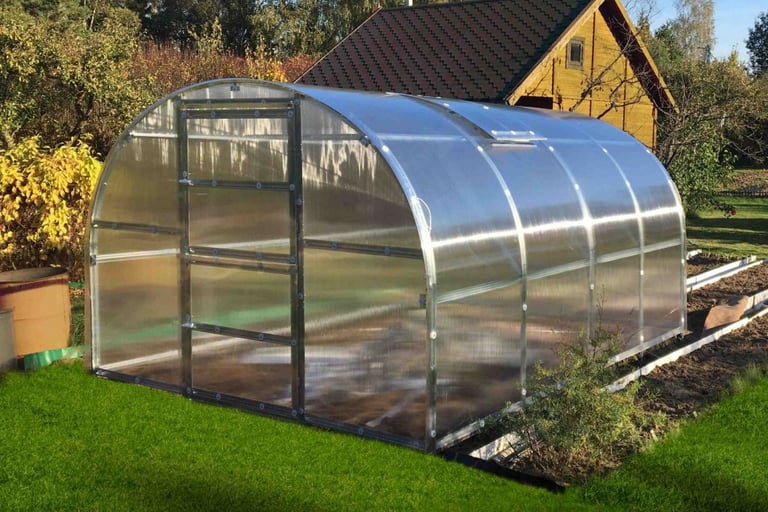
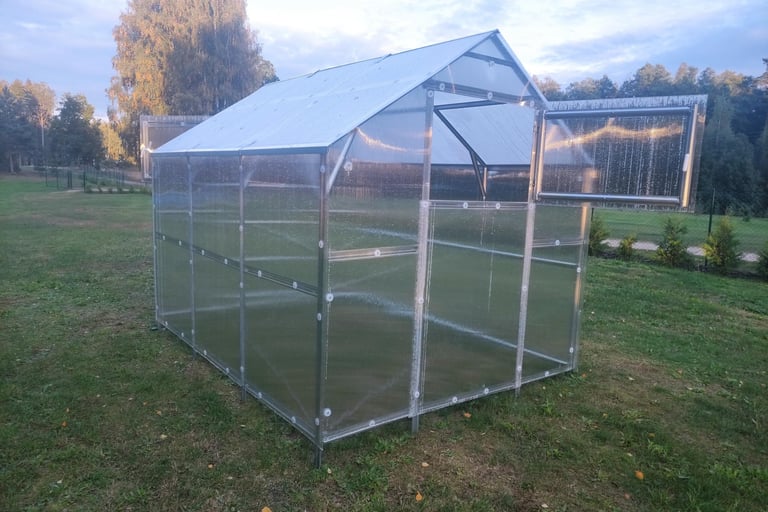
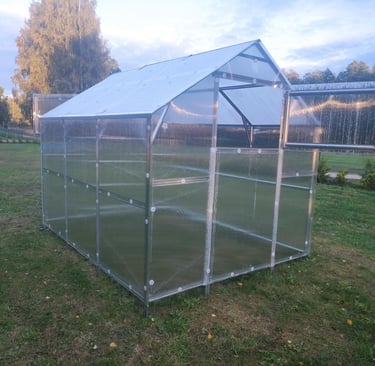
Polycarbonate panels are one of the most common choices for home greenhouses, especially in climates with cold nights and wet winters.
Pros of Polycarbonate
Better insulation
Twin-wall and multi-wall polycarbonate trap air between layers, which improves heat retention. That is a major benefit in the Pacific Northwest, where cool nights are common even outside winter.
More impact resistant
Polycarbonate is far less likely to shatter than glass. If you have tree branches overhead, occasional hail, kids, pets, or storm debris, this matters.
Lighter weight
Because it is lighter, polycarbonate often places less demand on the frame and can be easier to install.
Diffused light
Instead of harsh direct light, polycarbonate often softens and spreads light more evenly. That can reduce leaf scorch and hot spots inside the greenhouse.
Usually more budget friendly
For many home gardeners, polycarbonate structures are the more realistic entry point.
Cons of Polycarbonate
Less visual clarity
You do not get the same crisp, clear appearance as glass.
Can discolor or age over time
Lower-quality panels may yellow, haze, or become brittle faster.
Can look more utilitarian
If appearance is a top priority in a polished landscape design, polycarbonate may not give the same premium look.
Glass Greenhouses: Strengths and Weaknesses
Glass greenhouses are the classic choice and can be beautiful focal points in the garden.
Pros of Glass
Excellent clarity
Glass offers the cleanest, sharpest light transmission and a high-end appearance.
Timeless design appeal
A well-built glass greenhouse can become a major visual feature in the landscape.
Long-term surface stability
Glass does not yellow the way poor-quality plastics can.
Easy to clean well
Glass can often be restored to a very clean finish with regular maintenance.
Cons of Glass
Lower insulation value
Single-pane glass loses heat faster than twin-wall or multi-wall polycarbonate. In the Pacific Northwest, that can matter a lot during cool nights and winter use.
Higher breakage risk
Glass is more vulnerable to impact. Even tempered glass is still breakable.
Heavier and often more expensive
That usually means higher upfront cost and a more demanding structure.
Can create stronger direct light and heat pockets
Depending on setup and season, glass can create sharper sun exposure inside the structure.
Light Transmission: Which One Is Better?
If you only measure raw clarity, glass wins. It provides the most transparent view and excellent direct light.
But greenhouse performance is not just about how much light gets through. It is also about how that light behaves. Polycarbonate diffuses light, which can create a more even growing environment across the house. For many plants, especially foliage plants, starts, and tropicals that do not want extreme midday intensity, that even light can be a real benefit.
In the Pacific Northwest, where cloud cover is already common, some gardeners worry that polycarbonate will reduce light too much. In practice, good-quality greenhouse polycarbonate usually still provides very usable growing light while delivering much better insulation than basic glass.
Heat Retention: The Big Pacific Northwest Advantage
This is where polycarbonate usually pulls ahead for practical home use.
Pacific Northwest gardeners often need a greenhouse not to create tropical heat all winter long, but to:
buffer overnight lows
reduce frost exposure
hold daytime warmth longer
protect potted tropicals and starts from cold rain and wind
Polycarbonate does this better than standard single-pane glass. If your goal is season extension and realistic winter protection, insulation matters more than pure visual clarity. Digital Temperature Monitor
Durability in Wind and Storms
In many Pacific Northwest locations, greenhouse buyers should think about wind before they think about appearance.
Polycarbonate panels are usually the safer choice when:
your site is exposed
branches may fall during storms
you live in a windy corridor
you want lower risk of catastrophic breakage
Glass can absolutely work, but it demands a stronger overall build, careful siting, and more acceptance of breakage risk.
Maintenance and Cleaning
Both materials need cleaning in the Pacific Northwest because moisture, algae, pollen, and grime build up fast.
Polycarbonate maintenance
keep panels clean so light transmission stays high
avoid harsh abrasives
check seals and fasteners periodically
buy UV-protected panels from the start
Glass maintenance
clean regularly for best appearance
inspect glazing and seals
watch for cracked panes after storms or impact events
Glass usually keeps its visual finish longer, but polycarbonate is often easier to live with when gardening conditions are rough. Use a good quality Glass Cleaner and Microfiber Cloth
Cost Comparison
In most home-garden builds, polycarbonate wins on cost efficiency.
You are typically paying for:
the greenhouse itself
base and anchoring
shelving
ventilation Greenhouse Circulation Fan
temperature control
accessories
Because of that, many Pacific Northwest gardeners are better off putting money into a solid polycarbonate greenhouse with good vents, good anchoring, and better airflow rather than overspending on glass and cutting corners on the rest.
Compare pricing between Polycarbonate and Glass Greenhouses.
Best Choice by Gardener Type
Choose Polycarbonate If:
you want the best all-around value
you care about insulation
you need practical winter plant protection
your site gets wind or storm exposure
you want a forgiving first greenhouse
Choose Glass If:
appearance is your top priority
you want a classic garden-showpiece structure
your site is protected
your budget is larger
you are willing to trade insulation for aesthetics and clarity
My Recommendation for Pacific Northwest Gardeners
We use a shed type greenhouse with led lamps for seedlings and to protect plants during hard freezes, We feel polycarbonate is the smarter first choice.
It matches the region better. It handles cool nights more efficiently, stands up better to rough weather, and usually gives you more practical use for the money. Glass is still a great option for the right gardener, but in the Pacific Northwest, beauty alone should not outweigh insulation and resilience.
Final Verdict
If you want the most practical greenhouse for Pacific Northwest gardening, buy polycarbonate.
If you want the most visually refined greenhouse and are comfortable with higher cost and lower insulation, choose glass.
For most people trying to protect plants, start seedlings, and extend the season in a wet, cool climate, polycarbonate is the better match.
Shop High Quality DIY Greenhouse kits or Contractor Built Custom Greenhouses
Contact Us
© 2025. All rights reserved.
Terms and Conditions
Affiliate Disclosure
Some links on this site may be affiliate links. As an Amazon Associate I earn from qualifying purchases.