
Tetrapanax (Rice Paper Plant): The Ultimate Pacific Northwest Growing Guide
Learn how to grow Tetrapanax (Rice Paper Plant) in the Pacific Northwest. Cold hardiness, spread control, winter care, and landscape impact explained for Zone 8 gardeners.
2/24/20262 min read
What Is Tetrapanax?
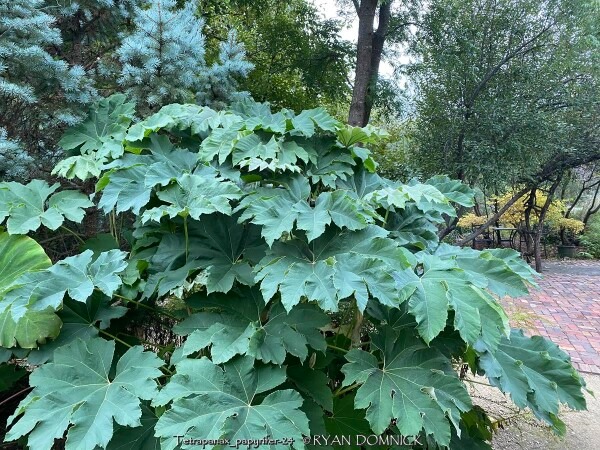
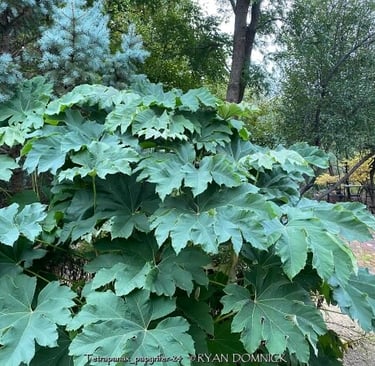
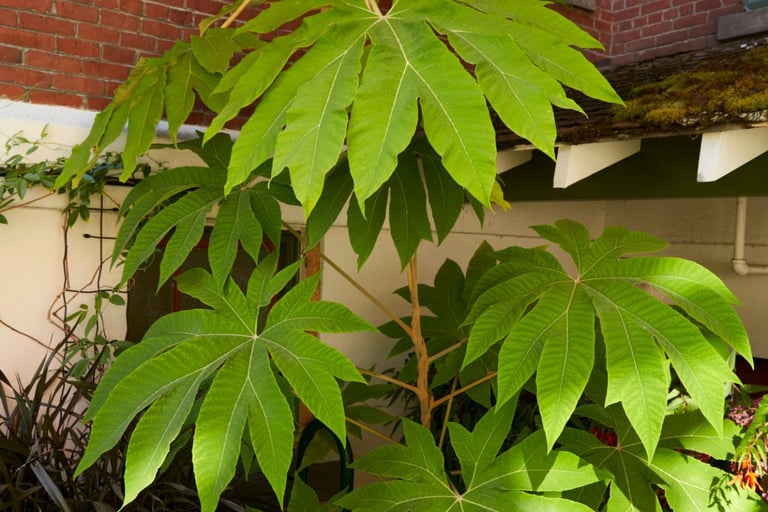
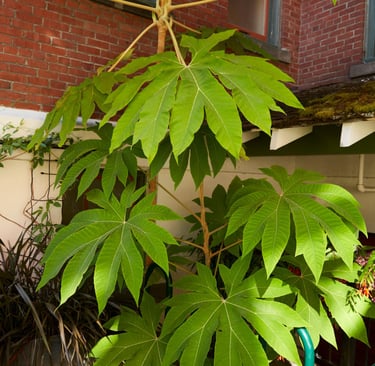
Tetrapanax papyrifer, commonly called Rice Paper Plant, is a bold, fast-growing architectural perennial grown for its massive tropical foliage.
Despite looking like something from Southeast Asia, it performs surprisingly well in western Washington.
Mature leaves can reach 2–3 feet across, creating instant jungle impact in a single growing season.
Is Tetrapanax Cold Hardy in the Pacific Northwest?
Yes — with nuance.
Tetrapanax is root hardy to approximately 0–10°F once established. In most Zone 8 PNW gardens:
• Top growth dies back in hard freezes
• Roots survive underground
• New shoots emerge aggressively in spring
In milder winters, stems may remain partially intact.
How Fast Does It Grow?
Very fast.
In ideal conditions (moist soil + partial sun), Tetrapanax can grow:
• 6–10 feet tall in one season
• Spread 6+ feet wide
• Send out underground runners
This is not a slow ornamental. It fills space quickly.
Sun and Light Requirements
Best performance in:
• Bright shade
• Morning sun
• Filtered light
Too much hot afternoon sun can scorch leaves, especially during dry spells.
In western Washington, east-facing exposure is ideal.
Soil Requirements
Tetrapanax prefers:
• Moist, well-draining soil
• Rich organic matter
• Protection from extreme winter wet
It tolerates clay better than many tropical-looking plants, but drainage still matters.
Amend heavy soil with compost before planting.
Is Tetrapanax Invasive?
This is the most important question.
Tetrapanax spreads via underground rhizomes. It can send up shoots several feet away from the original plant.
It is not classified as invasive in Washington, but it is aggressive.
Control methods:
• Install root barrier
• Grow in contained bed
• Remove suckers as they appear
If you want a controlled specimen, plan containment from the beginning. As with Bamboo we recommend a 24-36" root barrier if control is needed.
If you want to keep Tetrapanax contained, installing a heavy-duty root barrier at planting time makes long-term maintenance much easier. A 24–30 inch HDPE root barrier prevents underground runners from spreading into lawn or adjacent beds.
👉 25ft x 24in x 60mil Tree Root Barrier
Winter Care in Western Washington
Minimal intervention required.
After first hard frost:
• Cut stems back to 12–18 inches
• Mulch heavily (3–4 inches organic mulch)
• Protect crown in exposed areas
Do not overwater in winter. Wet + cold soil is the real risk.
Landscape Design Uses
Tetrapanax excels in:
• Tropical-themed gardens
• Back-of-border anchor plantings
• Privacy screening
• Microclimate building
It pairs well with:
• Hardy bananas
• Windmill palms
• Fatsia japonica
• Gunnera
• Bamboo
One plant can create the visual weight of an entire planting group.
Flowering and Mature Appearance
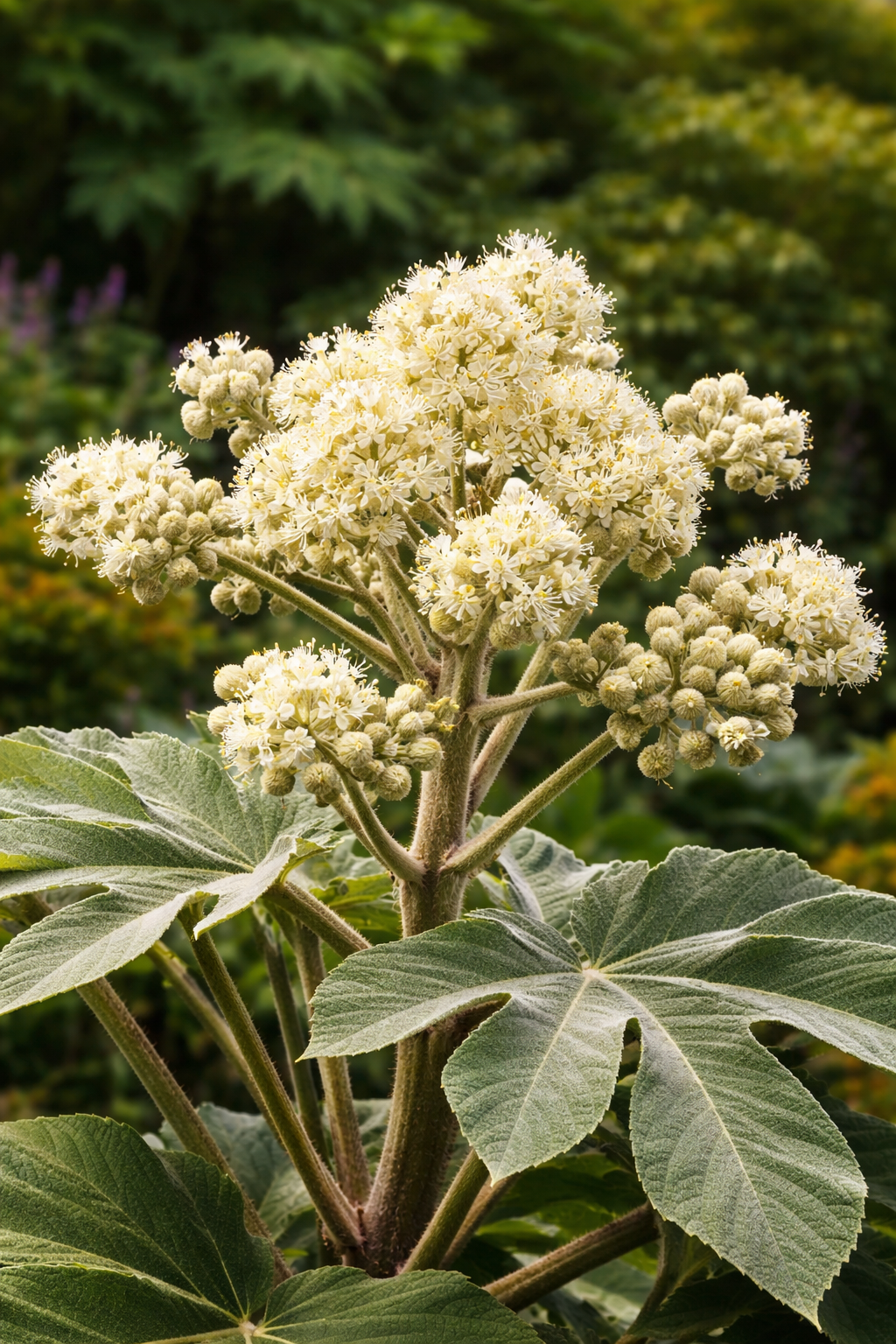
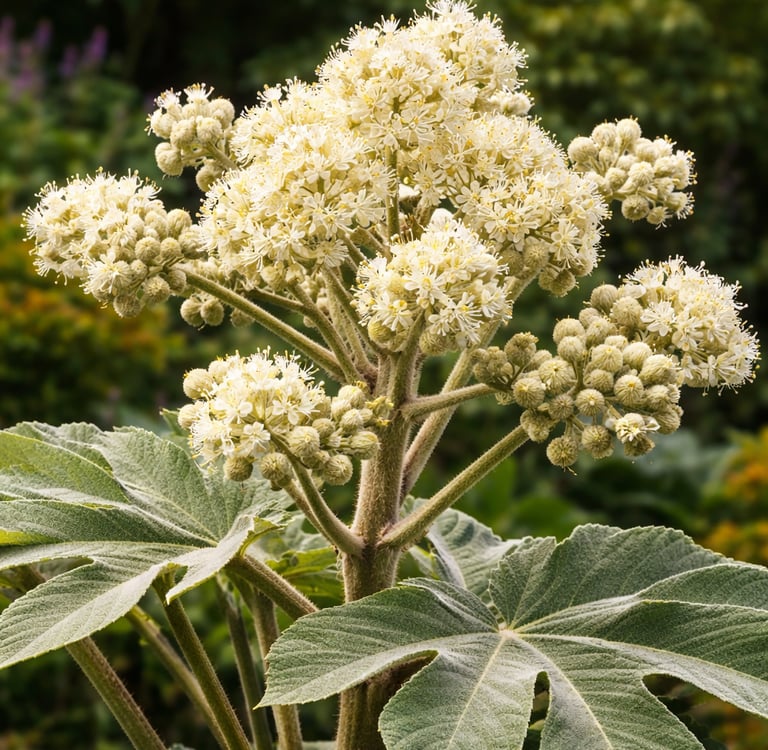
In late summer to fall, mature plants may produce large creamy-white flower plumes.
These appear more reliably on established plants (3+ years old).
However, most growers value Tetrapanax for foliage, not flowers.
Pros and Cons
Pros
• Massive tropical foliage
• Extremely fast growth
• Cold hardy root system
• Dramatic landscape presence
Cons
• Spreads aggressively
• Requires space
• Top dies back in colder winters
Final Recommendation for Zone 8
If you want bold tropical structure in the Pacific Northwest without greenhouse protection, Tetrapanax is one of the strongest performers available.
Just plan for its spread.
Give it room — or give it boundaries.
Contact Us
© 2025. All rights reserved.
Terms and Conditions
Affiliate Disclosure
Some links on this site may be affiliate links. As an Amazon Associate I earn from qualifying purchases.