
Windmill Palm vs Mediterranean Fan Palm for the Pacific Northwest
Compare Windmill Palm and Mediterranean Fan Palm for Pacific Northwest gardens. Learn which palm handles wet winters, grows taller, and performs best in Zone 8 landscapes.
2/20/20262 min read
Windmill Palm vs Mediterranean Fan Palm in Western Washington
Both Windmill Palm (Trachycarpus fortunei) and Mediterranean Fan Palm (Chamaerops humilis) are marketed as “cold hardy.”
But in the Pacific Northwest, cold hardy is only part of the equation.
Wet winters, heavy soils, and occasional arctic air events separate dependable performers from riskier plantings.
If you’re choosing between the two for a Zone 8 garden, the differences matter.
Cold Hardiness: Temperature vs Real-World Performance
On paper:
Windmill Palm is rated to approximately 10–15°F once established.
Mediterranean Fan Palm is rated to around 15°F.
Those numbers look similar.
But western Washington is not a dry cold climate.
Windmill Palm tolerates wet winters far better than Mediterranean Fan Palm. That difference alone often determines long-term survival.
See more on Windmill palms.
Moisture Tolerance in the Pacific Northwest
Windmill Palm adapts well to Pacific Northwest rainfall when planted in properly drained soil.
Mediterranean Fan Palm prefers Mediterranean-style dry winters. In heavy clay or consistently saturated beds, it can struggle with spear rot or root issues.
If your property has slow drainage, Windmill Palm is typically the safer choice.
Palm tree soil mix explained.
Growth Habit and Design Impact
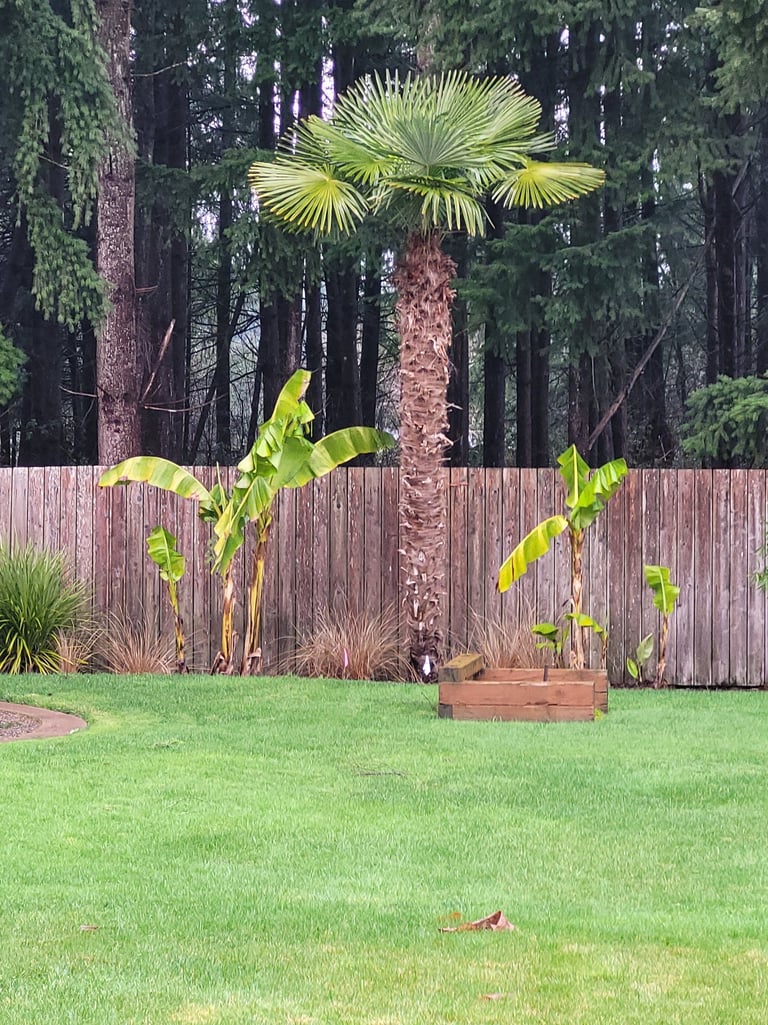
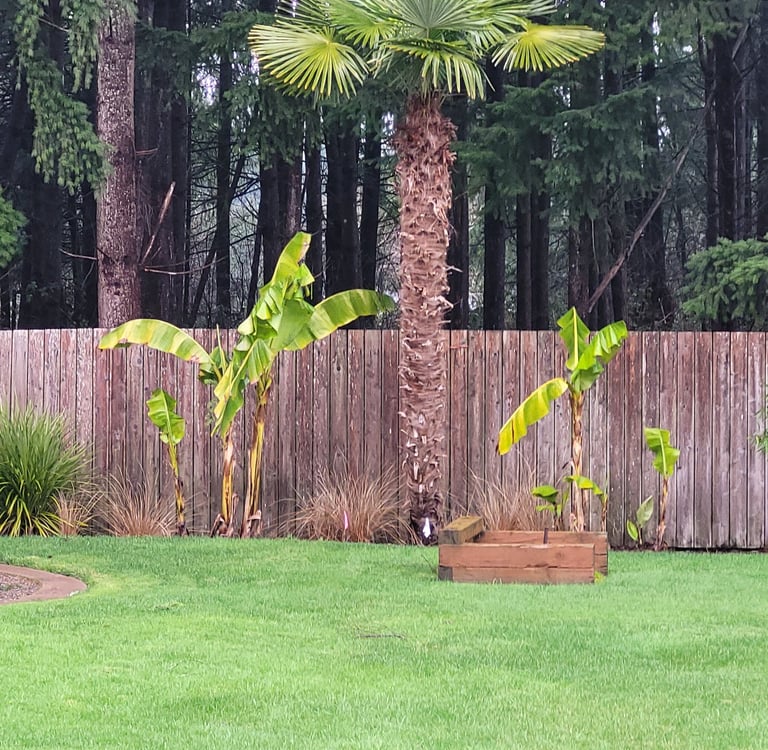
Windmill Palm:
• Single upright trunk
• Strong vertical architectural presence
• 20–30 feet over decades
• Classic tropical silhouette
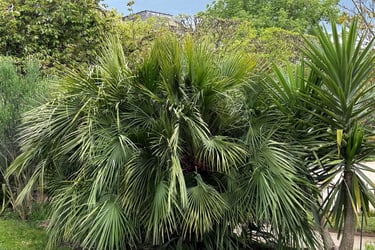
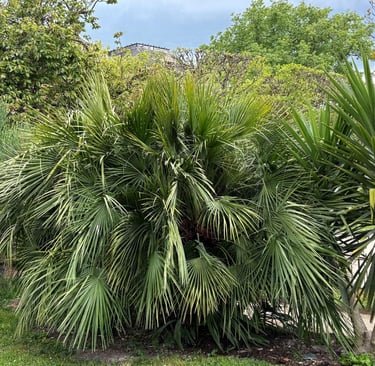
Mediterranean Fan Palm:
• Clumping multi-stem form
• Shorter and wider footprint
• 8–15 feet mature height
• Dense, shrub-like mass
If you want height and structure in your tropical design, Windmill Palm delivers more dramatic impact.
If you want a compact, low-profile palm that fills space, Mediterranean Fan Palm may fit better.
Maintenance Differences
Windmill Palm:
• Minimal pruning (remove brown fronds)
• Generally low winter intervention
• Easier to maintain long term
Mediterranean Fan Palm:
• More grooming due to clumping growth
• Can become dense and difficult to clean out
• Requires excellent drainage to avoid issues
From our experience Windmill Palms are typically easier for most homeowners in western Washington, requiring copious amounts of water and light fertilizer twice a year.
Microclimate Considerations
In protected south-facing courtyards with excellent drainage, Mediterranean Fan Palm can perform well.
In exposed, rain-heavy, or clay-heavy sites, Windmill Palm consistently outperforms.
Placement often matters more than plant label hardiness.
Which Palm Should You Choose?
Choose Windmill Palm if:
• You live west of the Cascades
• You have average to heavy soil
• You want reliable winter performance
• You want tall vertical tropical structure
Choose Mediterranean Fan Palm if:
• You have exceptional drainage
• You prefer a compact clumping look
• You can provide a slightly drier microclimate
Final Recommendation for Zone 8
For most Pacific Northwest gardens, Windmill Palm remains the safer long-term investment.
Mediterranean Fan Palm can succeed — but only with careful site selection and drainage control.
If you’re building a tropical landscape in western Washington, reliability should come first.
Contact Us
© 2025. All rights reserved.
Terms and Conditions
Affiliate Disclosure
Some links on this site may be affiliate links. As an Amazon Associate I earn from qualifying purchases.