
Create a Tropical Garden in the Pacific Northwest: Design Inspiration for Cooler Climates
Learn how to design a lush tropical garden in the Pacific Northwest. Layering strategies, water features, plant combinations, and microclimate design tips for Zone 8 landscapes.
2/18/20263 min read
Why Tropical Garden Design Works in the Pacific Northwest
A true tropical garden is not defined by climate — it’s defined by structure, layering, texture, and density.
In western Washington, we may not have year-round heat, but we do have:
Ample rainfall
Mild winters
Long growing seasons
High summer daylight hours
That combination makes the Pacific Northwest uniquely suited for lush, jungle-inspired landscapes — if they are designed correctly.
The goal is not to mimic Florida.
The goal is to create tropical impact using cold-hardy structure.
Start With Structure: The Backbone Layer
Every successful tropical garden in a temperate climate begins with structural anchors.
In Zone 8, these are your workhorses:
Fatsia japonica
Large evergreen shrubs
Structure creates year-round presence — even when softer plants die back.
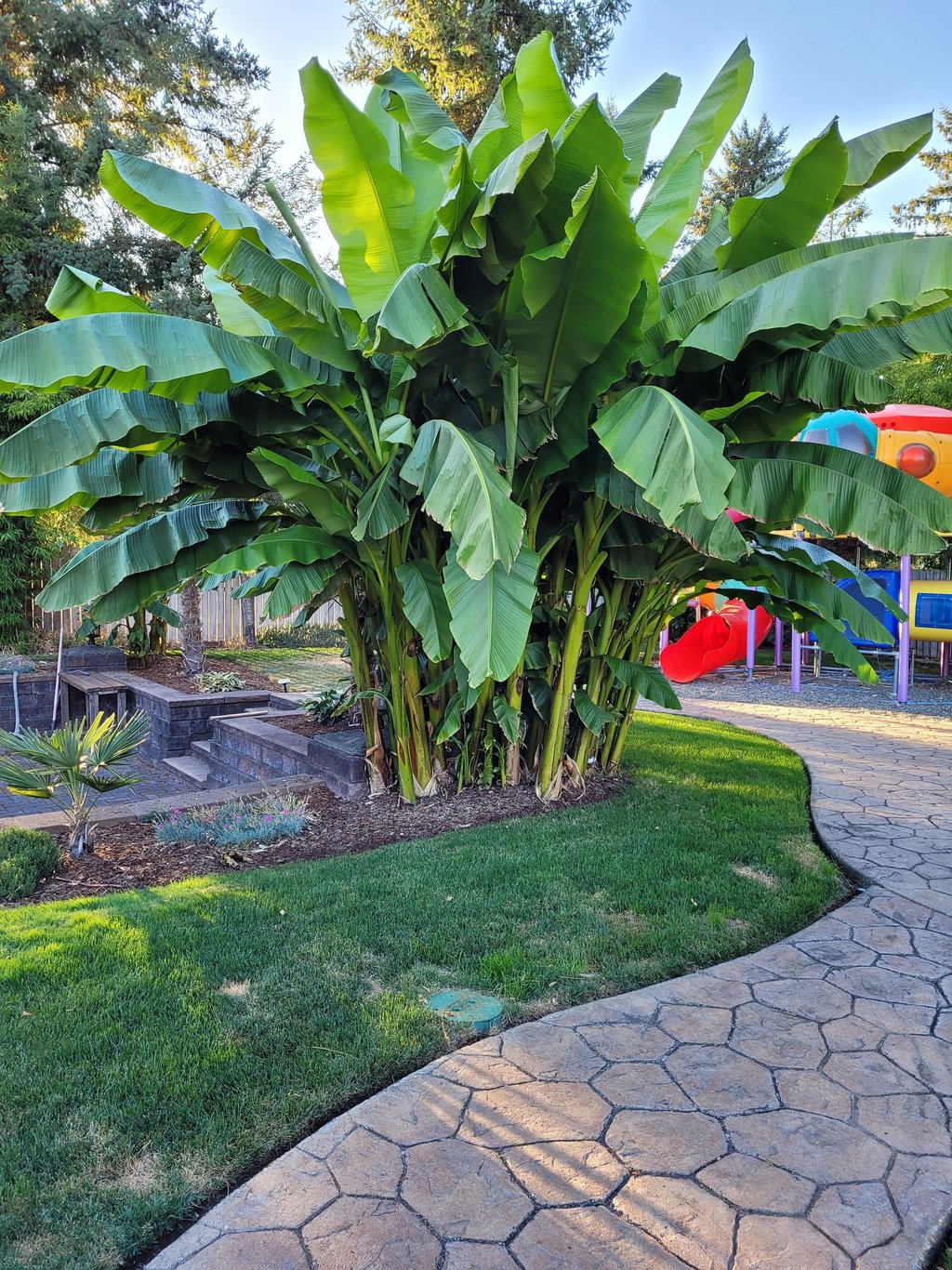
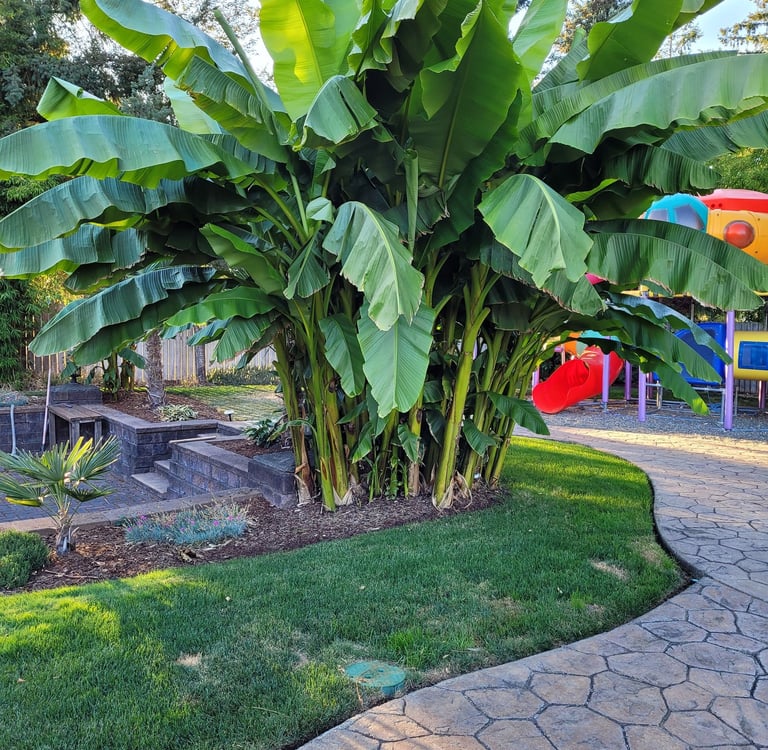
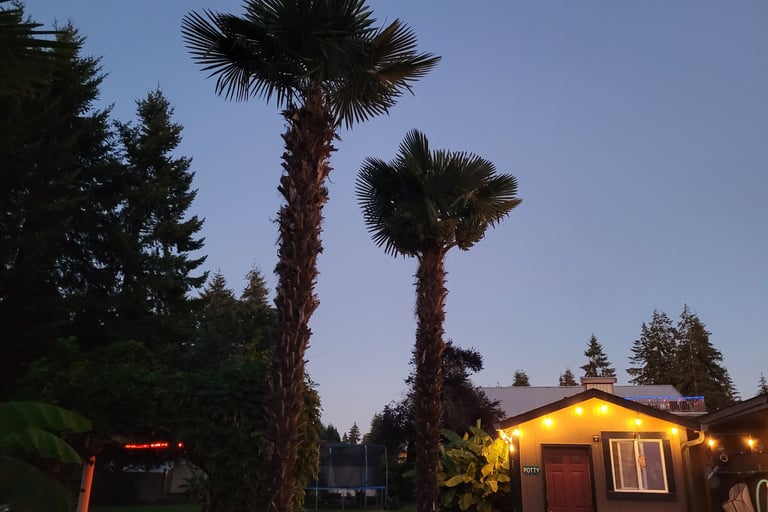
In my own Pacific Northwest landscape work, palms and bananas define vertical lines first. Everything else fills around them.
Without structure, tropical design collapses in winter.
Layering for Jungle Density
The difference between “a few tropical plants” and a true tropical garden is layering.
Use three tiers:
Upper Canopy:
Palms, bananas, taller evergreens.
Mid Layer:
Hardy hibiscus, cannas, fatsia, large-leaf perennials.
Ground Layer:
Ferns, creeping sedums, ornamental grasses, hosta.
Overlapping foliage is key.
Visible soil is the enemy of lushness.
Layer plants tightly enough that foliage touches by mid-summer.
Water Features Amplify Tropical Atmosphere
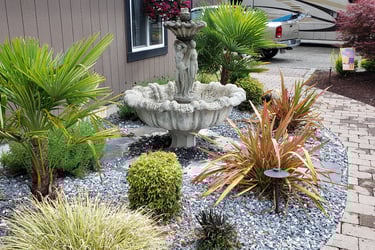
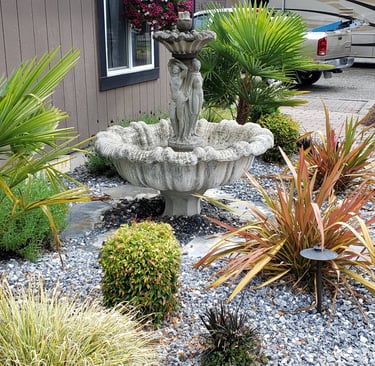
Nothing transforms a temperate garden into a tropical environment faster than moving water.
Even in cooler climates, a modest water feature:
Adds humidity
Softens hardscape
Introduces sound
Reflects light
Cascading rock waterfalls work especially well in Pacific Northwest landscapes because they feel natural in our environment.
If you’re designing from scratch, position water features where they can be viewed from indoor living spaces — especially during gray months.
Hardscape Choices Matter More Than You Think
To reinforce tropical energy:
Avoid:
Harsh geometric layouts
Bare gravel expanses
Light-colored stone
Use:
Curved pathways
Dark pavers
Natural stone
Layered planting beds
Soft edges create immersion.
Straight lines create suburban.
Microclimate Engineering
In western Washington, microclimates determine success.
South-facing walls create warmth pockets.
Fencing blocks cold wind.
Dense evergreen backdrops protect bananas and hibiscus.
A tropical garden in Zone 8 is less about plant selection and more about placement.
Plant tender-looking species where heat collects.
Use structural plants as wind buffers.
This is how you push the envelope safely.
Lighting Extends the Tropical Feel
Summer evenings in the Pacific Northwest are long — use that.
Warm uplighting on palms and bananas:
Highlights leaf structure
Adds drama
Creates resort atmosphere
Avoid cool white lighting.
Use warm LED landscape lights to mimic sunset tones.
Strategic lighting often makes the difference between “nice yard” and “destination space.”
Seasonal Expectations in a Temperate Tropical Garden
A tropical-inspired PNW garden will evolve through the year.
Spring:
Structural plants dominate while soft foliage emerges.
Summer:
Full density. Maximum impact.
Fall:
Color shifts and texture contrast increase.
Winter:
Structure carries the design.
Design with all four seasons in mind — not just July.
The Real Secret: Density Over Variety
Many gardeners over-collect species.
The stronger approach?
Repeat bold plants in groups.
Clusters of bananas.
Mass plantings of ferns.
Repetition of palms.
Tropical design is about bold repetition — not botanical diversity.
For more landscape ideas see our Gallery and Database pages.
Why Tropical Living Works in the Pacific Northwest
The Pacific Northwest climate actually supports lushness better than many hot climates.
Moisture + moderate heat = aggressive summer growth.
If you engineer structure and layering correctly, a tropical garden in western Washington can rival warmer regions in visual impact.
You don’t need a tropical climate.
You need a tropical design mindset.
Contact Us
© 2025. All rights reserved.
Terms and Conditions
Affiliate Disclosure
Some links on this site may be affiliate links. As an Amazon Associate I earn from qualifying purchases.