
Winterizing Banana Palms in the Pacific Northwest: What Actually Works
Banana palms can survive Pacific Northwest winters, but only if they’re prepared correctly. Unlike cold-hardy palm trees, banana plants are herbaceous perennials, meaning their above-ground growth often dies back in winter while the underground rhizome survives to regrow in spring. This guide focuses specifically on winterizing banana palms in PNW conditions, including wet soil, freeze–thaw cycles, and prolonged cold snaps. The goal isn’t to promise perfect results every year—it’s to help you reduce losses and improve spring recovery.
12/30/20253 min read
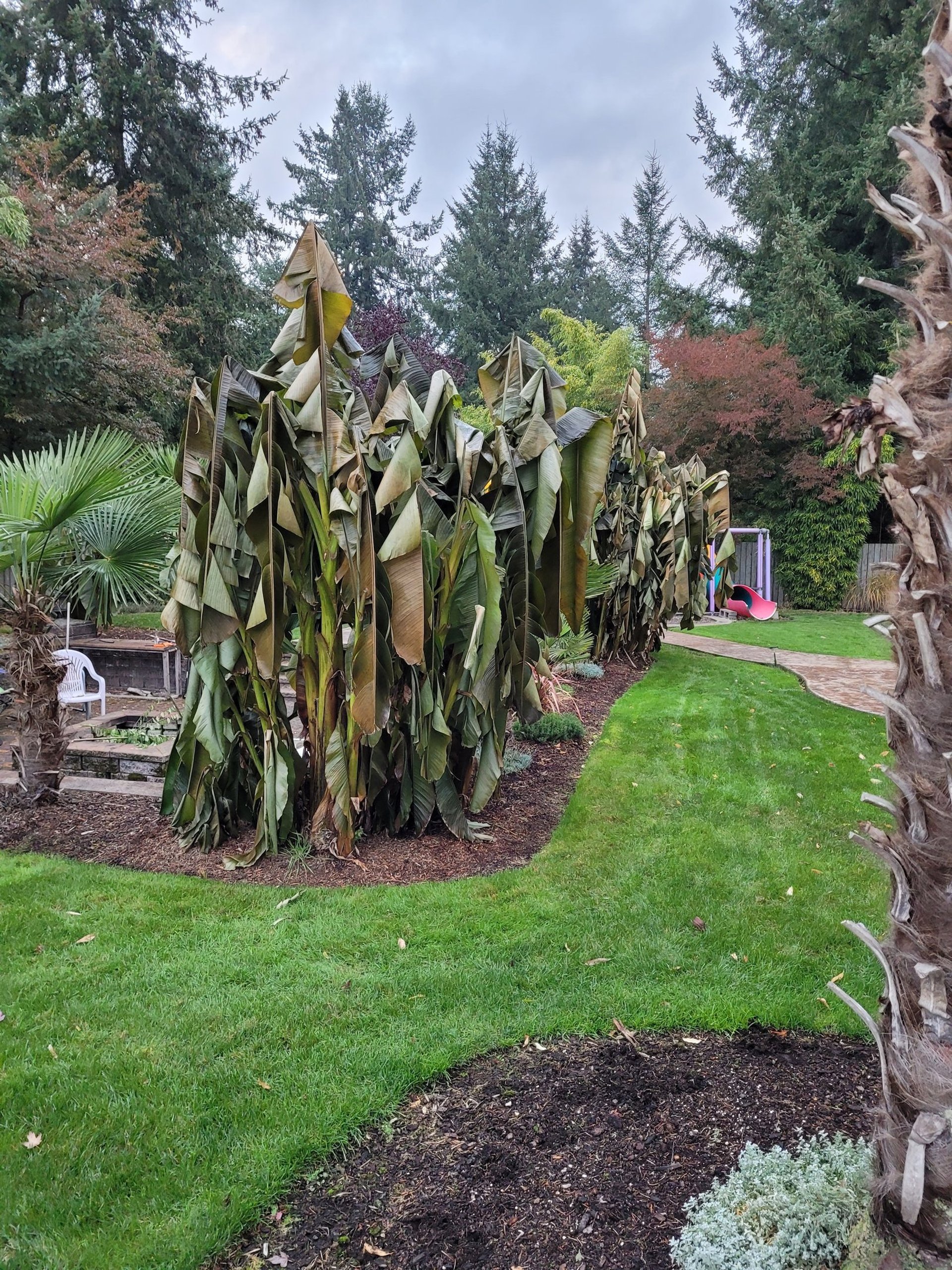
Why Banana Palms Need Winter Protection in the PNW
Most cold-hardy banana varieties tolerate short cold periods, but Pacific Northwest winters create unique challenges:
Extended soil saturation
Repeated freeze and thaw cycles
Cold temperatures without consistent snow insulation
Banana plants are more likely to rot from excess moisture than freeze outright. Successful winterizing is about managing moisture as much as temperature.
When to Start Winterizing Banana Palms
Timing matters more than most people realize.
In the Pacific Northwest, winterizing should begin after the first light frost but before sustained hard freezes. Cutting back too early can weaken the plant, while waiting too long risks freeze damage to the rhizome.
I will usually start trimming back the lower leaves in late fall as the nights get colder and the tips start to brown, leaving the final trimming for after the first sustained freeze.
Step 1: Cutting Back Banana Plants for Winter
Once frost damages the leaves:
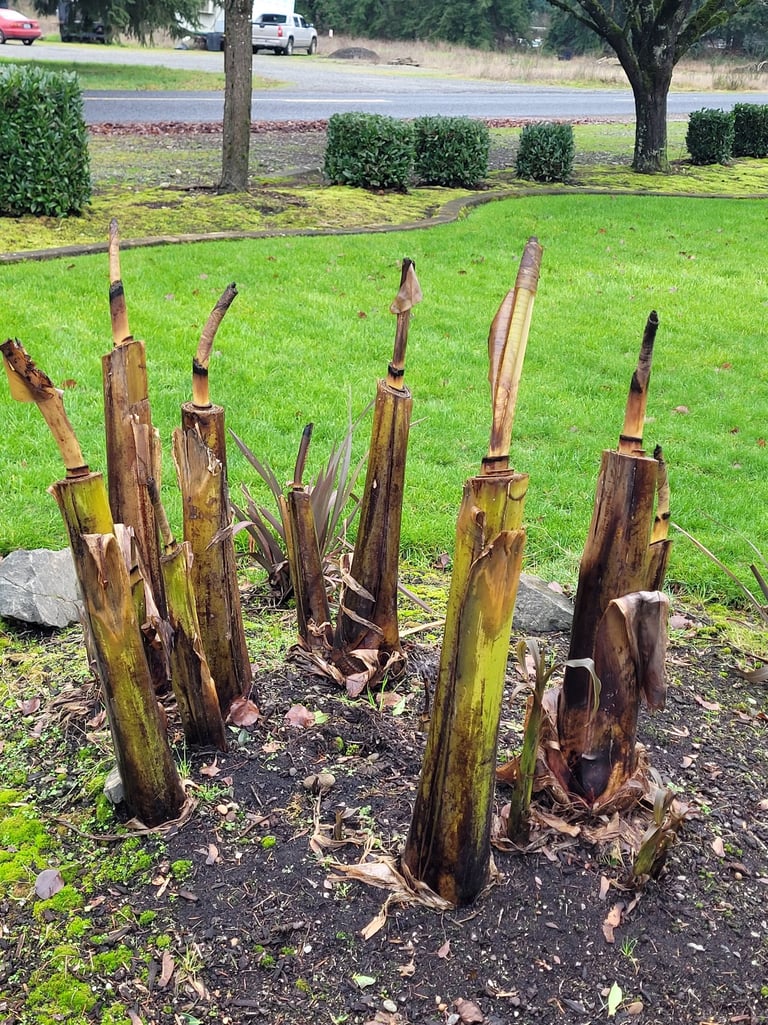
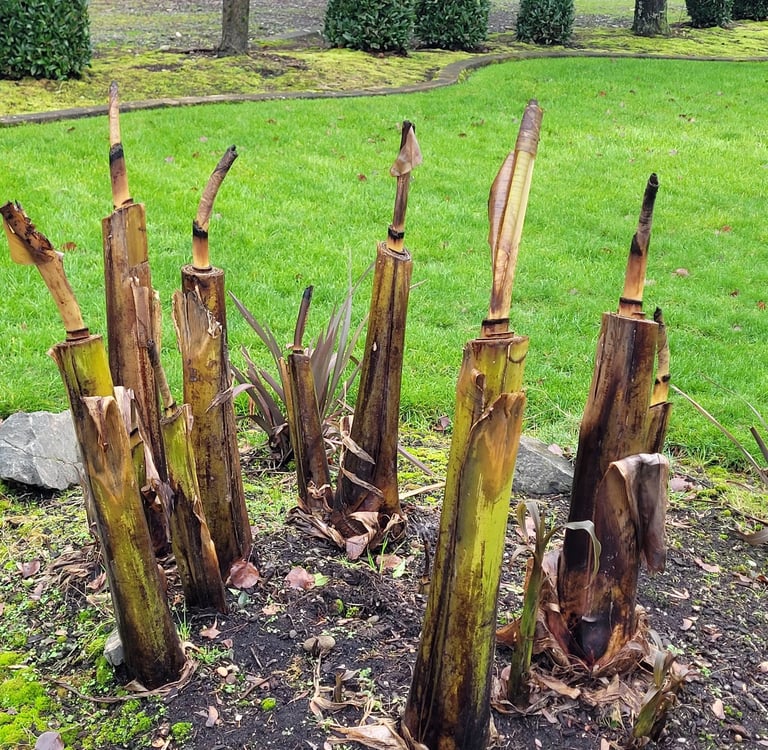
Cut the pseudo stem down to 12–24 inches
Use clean, sharp tools
Remove all soft or damaged material
Leaving a short stump helps protect the crown while reducing moisture buildup.
My go to is to cut the stem close to the ground. I have heard from other growers that they get a boost in spring trimming them up higher. I am experimenting with some existing crops to verify this theory.
Step 2: Mulching for Insulation and Drainage
Mulch is the most important layer of protection.
Effective mulch materials include:
Straw
Dry leaves
Bark mulch
Wood chips (used carefully)
Apply mulch thickly (8–12 inches) over the root zone, but avoid packing it tightly against the cut stem.
Our winters are mild with short bouts of freezing and not a lot of snow. Even during our hardest rain and deepest snow levels I have not lost plants due to the weather.
Step 3: Moisture Management (Often Overlooked)
Excess water is the #1 killer of overwintered banana plants in the PNW.
Helpful strategies:
Slightly mounded planting sites
Temporary rain covers during prolonged wet periods
Well-draining soil amendments before planting
Avoid plastic directly on soil—it traps moisture and encourages rot.
With about 168 days of rain a year, I have had no adverse effects on the plants from the rain.
Step 4: Protecting Plants During Hard Freezes
During extended cold snaps or arctic events:
Add extra mulch or insulation
Use breathable coverings (frost cloth, burlap)
Avoid sealing plants airtight
The goal is moderation, not complete heat retention.
What to Expect in Spring
Even well-protected banana palms often:
Appear lifeless in early spring
Regrow later than expected
Push new shoots once soil temperatures warm
Patience is critical. Avoid digging too early—many plants recover when left alone.
I don't think I have ever lost a plant to weather. Mothers do die out after producing may daughter plants (I'll explain more in future articles). I have green housed some over the winter, however it did not seem to change the overall growth for the season.
Common Winterizing Mistakes to Avoid
Cutting plants back too early
Trapping moisture against the crown
Using plastic without ventilation
Expecting evergreen growth (bananas are seasonal)
Learning what not to do often matters more than following perfect steps.
Final Thoughts: Banana Palms Are a Long Game in the PNW
Growing banana palms in the Pacific Northwest requires realistic expectations and hands-on experience. Winter losses happen, but with proper preparation, survival rates improve dramatically over time.
This guide is based on real outdoor growing conditions, not greenhouse assumptions. As with all tropical-style plants in marginal climates, observation and adjustment from season to season are key.
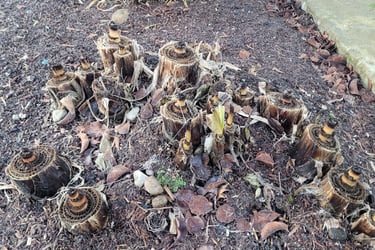
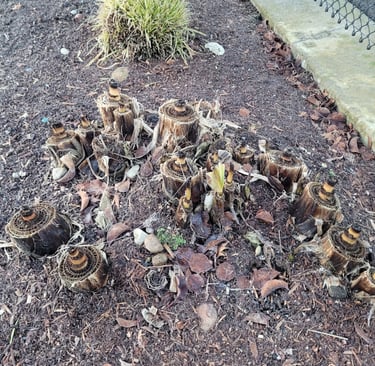
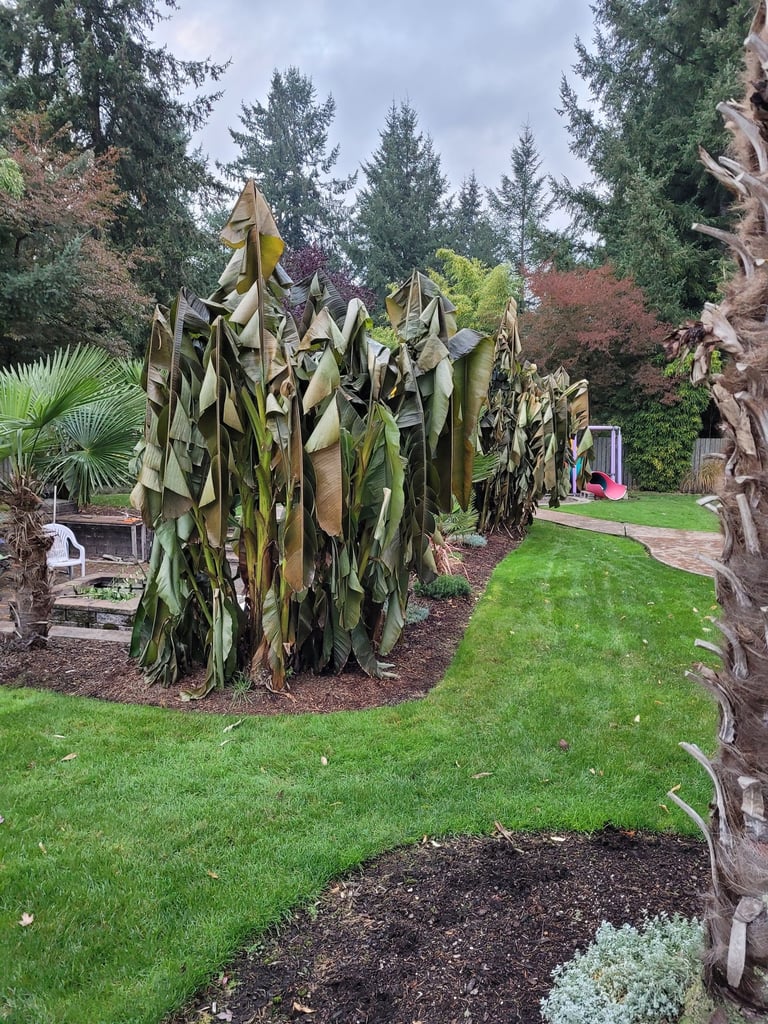
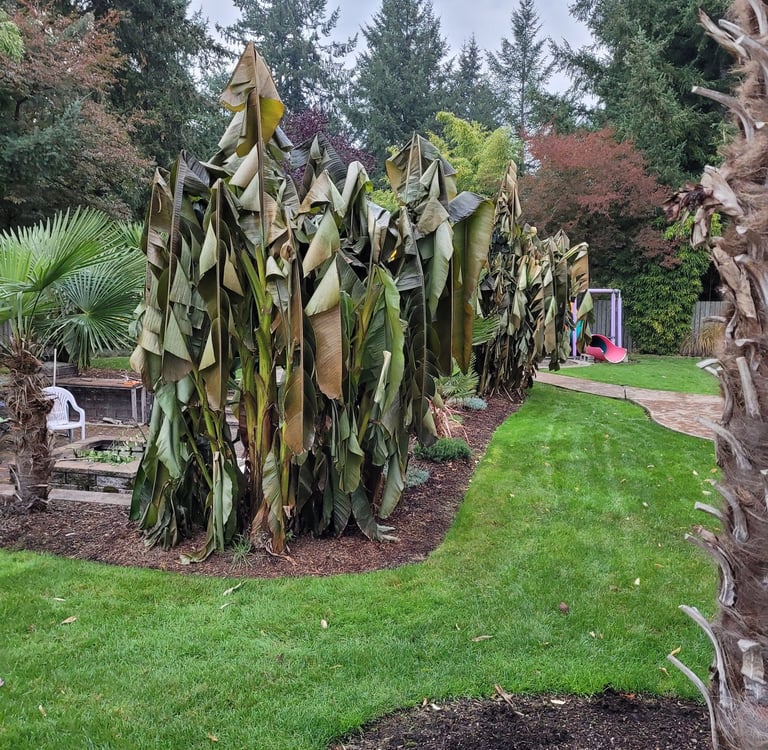
Cut to early before first solid freeze
Contact Us
© 2025. All rights reserved.
Terms and Conditions
Affiliate Disclosure
Some links on this site may be affiliate links. As an Amazon Associate I earn from qualifying purchases.