
Fatsia japonica vs Tetrapanax: Which Tropical Foliage Plant Works Best in Pacific Northwest Gardens?
Compare Fatsia japonica and Tetrapanax papyrifer for Pacific Northwest gardens. Learn which tropical foliage plant works best for shade, size, and maintenance.
3/13/20263 min read
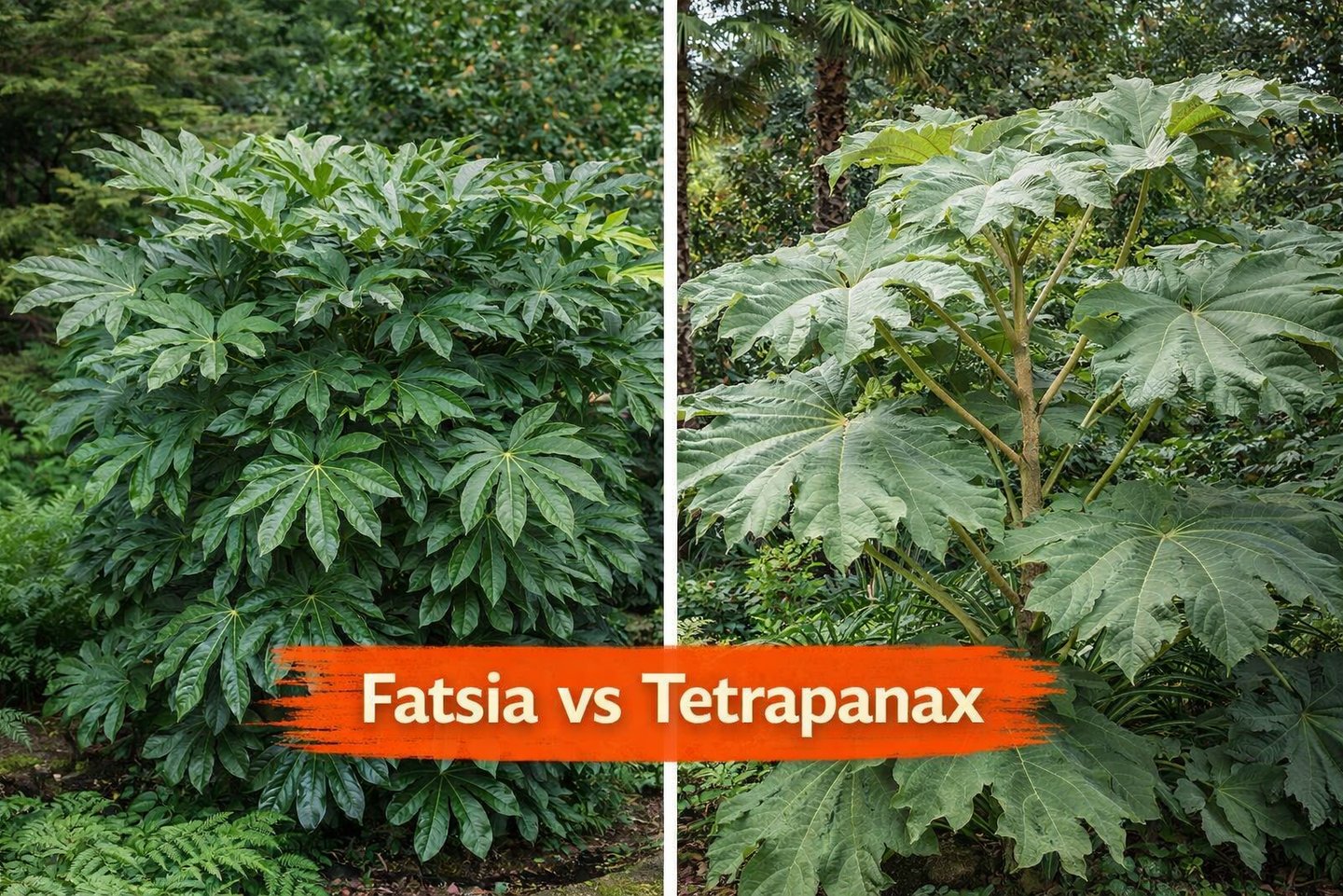
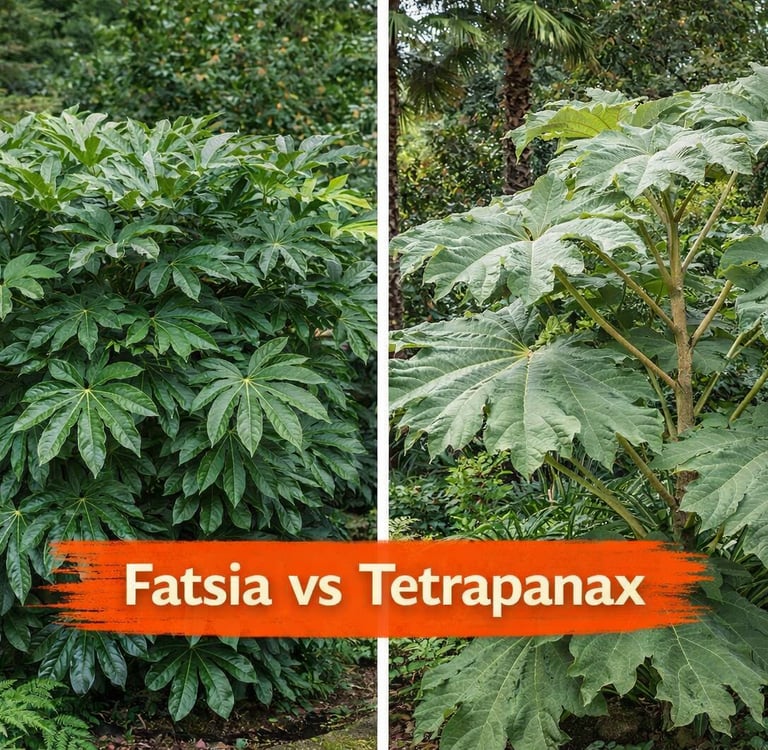
Gardeners in the Pacific Northwest are always searching for plants that deliver bold tropical foliage while still tolerating our cool, wet climate. Two plants that frequently appear in tropical-style landscapes are Fatsia japonica and Tetrapanax papyrifer, often called the rice paper plant. At first glance they appear similar: both produce large dramatic leaves that immediately give a garden a tropical atmosphere. However, they behave very differently in the landscape.
Understanding how these plants grow, spread, and tolerate shade will help determine which one fits best into a Pacific Northwest garden.
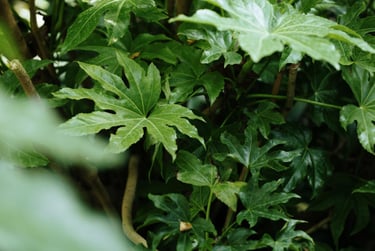
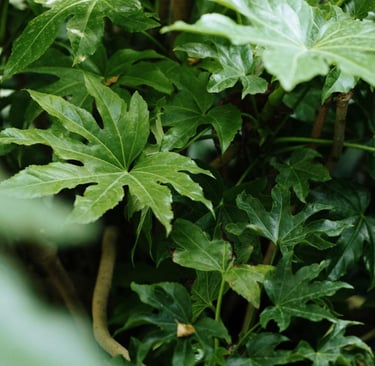
Fatsia japonica is one of the most reliable tropical-looking foliage plants for shady landscapes. Native to Japan and Korea, it thrives in the same cool maritime climate that many Pacific Northwest gardens experience. The plant forms a dense shrub with glossy palmate leaves that can reach 12 inches or more across. In winter, mature plants often produce clusters of small white flowers followed by black berries.
In most gardens, Fatsia grows between six and eight feet tall and gradually forms a rounded shrub. Unlike many bold tropical plants, it tolerates deep shade remarkably well. This makes it extremely useful for planting beneath trees, along north-facing walls, or in shaded courtyard gardens where large foliage plants are otherwise difficult to grow.
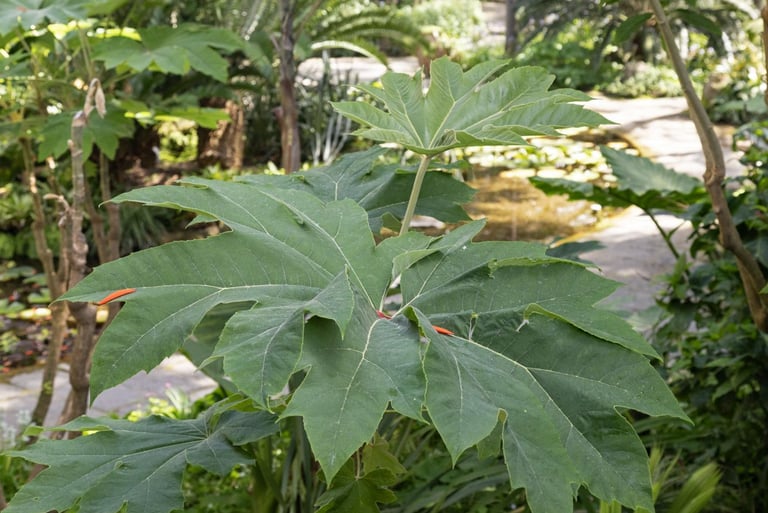
Tetrapanax papyrifer creates a very different effect. Instead of forming a shrub, Tetrapanax behaves more like a small tropical tree with enormous leaves that can easily reach two to three feet across. The foliage is covered with a soft felt-like texture and often develops a silvery underside that adds visual interest when the leaves move in the wind.
In the Pacific Northwest, Tetrapanax usually dies back partially during winter, especially after cold snaps. Trim off dead leaves with sharp pruning shears. My go to is the Fiskars Bypass Pruning Shears. In spring it quickly resprouts from the base and can grow six to ten feet in a single season. Because of this rapid growth, it creates an immediate tropical canopy in summer gardens.
However, Tetrapanax spreads aggressively through underground runners. Gardeners should plan space accordingly or install root barriers if they want to keep the plant contained.
When choosing between these two plants, the most important consideration is garden space and maintenance style.
Fatsia japonica behaves predictably and remains where it is planted. It works well in foundation beds, shade gardens, and smaller landscapes where controlled growth is important.
Tetrapanax, on the other hand, excels in larger gardens where dramatic scale is desired. Its enormous leaves and rapid seasonal growth make it one of the most visually striking tropical plants that can be grown outdoors in the Pacific Northwest. Both plants respond to a good Organic Fertilizer.
FEATURE FATSIA TETRAPANAX PAPYRIFER
GROWTH TYPE EVERGREEN SHRUB LARGE HERBACEOUS TROPICAL
HEIGHT 6-8 FEET 8-12 FEET IN SEASON
LEAF SIZE 8-12 INCHES UP TO 3 FEET
SHADE TOLERANCE EXCELENT MODERATE
WINTER HARDINESS VERY RELIABLE OFTEN DIES BACK
SPREAD NON-INVASIVE SPREADS BY RUNNERS
Which Plant Should You Choose?
Choose Fatsia japonica if:
• Your garden has heavy shade
• You want an evergreen structure plant
• You prefer low-maintenance shrubs
Choose Tetrapanax if:
• You want maximum tropical impact
• Your garden has room to spread
• You enjoy large dramatic foliage plants
Many tropical gardeners eventually grow both because each contributes something unique to the landscape.
For more tropical ideas see our Tropical Living & Design destination.
Contact Us
© 2025. All rights reserved.
Terms and Conditions
Affiliate Disclosure
Some links on this site may be affiliate links. As an Amazon Associate I earn from qualifying purchases.