
How to Use Landscape Lighting to Create a Tropical Backyard Mood
Learn how to use landscape lighting to create a warm tropical backyard mood in the Pacific Northwest with palms, bold plants, paths, and patio zones.
4/16/20264 min read
A tropical backyard does not disappear when the sun goes down. In fact, in the Pacific Northwest, evening is often when the space can look its best.
The right landscape lighting can make palms feel taller, broadleaf plants feel richer, and patios feel more inviting without requiring a major remodel. It also helps a tropical-style yard feel intentional instead of unfinished.
This is one of the best upgrades for homeowners who already have the plants but want the space to feel warmer, more polished, and more useful at night.
Quick Plan Box
To create a tropical evening look, focus on four layers:
Light one or two tall structural plants
Add soft glow near seating
Define paths or bed edges
Use warm light sparingly, not everywhere
The goal is atmosphere, not brightness.
Why lighting matters so much in a tropical-style yard
Tropical planting relies on shape, texture, and contrast. Those things often get lost at dusk unless the yard has lighting placed where it matters.
In the Pacific Northwest, where evenings can be cool, overcast, or damp, warm landscape lighting helps a garden feel more comfortable and more finished. It turns a planted backyard into an outdoor destination.
A good lighting plan can:
highlight palms and large foliage
make patios feel more welcoming
improve visibility and safety
create visual depth in small spaces
help your yard stand out even when flowers are not in bloom
PNW design rules for tropical lighting
1. Use warm light, not harsh light
A tropical backyard should feel relaxed. Warm lighting usually looks better than bright white light, especially around wood, mulch, foliage, and stone.
2. Light focal plants, not every plant
Trying to light every plant usually makes the yard look busy. Pick the most architectural plants and let them carry the scene.
Good focal plants:
windmill palms
fatsia
cordyline
banana in protected summer displays
bold containers near seating
3. Create layers of glow
The best tropical lighting is layered:
uplighting on structure
soft lighting near seating
low path or edge lighting
optional accent lighting on containers or decor
4. Hide the fixtures
The effect should be visible, not the hardware. A tropical garden loses some of its mood when every fixture is obvious from the patio.
Where to place lighting for the best effect
Uplight tall structure
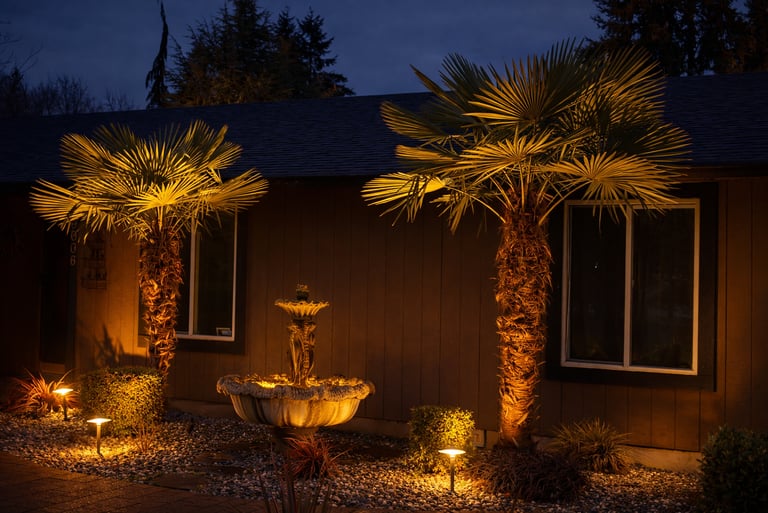
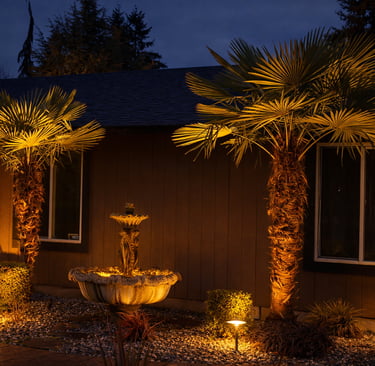
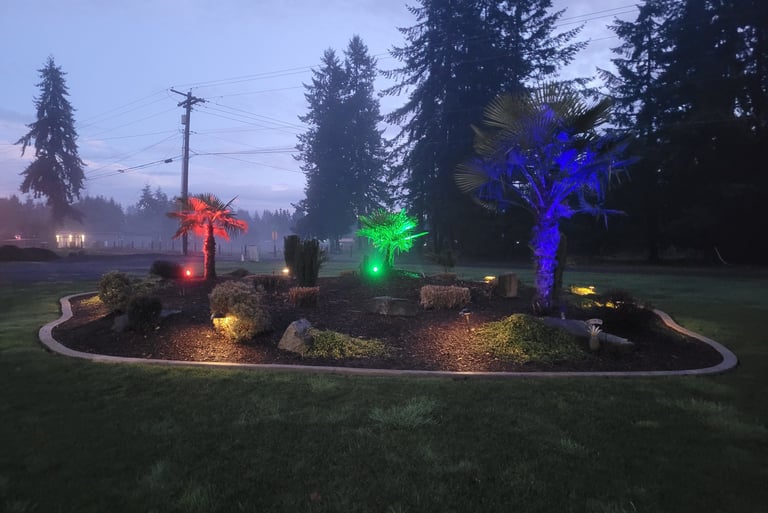
If you have a windmill palm or another structural plant, place a warm uplight low enough to cast light up through the trunk and into the canopy. That gives the plant a stronger silhouette and instantly makes the yard feel more dramatic.
Windmill palms are one of the easiest plants to spotlight because their upright structure and fan leaves respond so well to evening light. Windmill Palm Care guide
Highlight broadleaf foliage
Broadleaf plants catch and reflect light differently than narrow foliage. A fatsia or similar bold-leaf plant can look almost twice as impressive at night when lit from the side or slightly below.
[INTERNAL LINK]
If you want a broadleaf plant that adds tropical texture in lower light areas, Fatsia japonica is one of the best choices for Pacific Northwest gardens. Fatsia japonica article
Add a seating-zone glow
The sitting area should feel softer than the planting beds. You want enough light to make the area usable, but not so much that it feels exposed.
Good options include:
warm low-voltage path lights nearby
string lights used lightly
lantern-style fixtures
soft downlighting near a wall, pergola, or fence
Define paths and transitions
If the lighting plan only hits plants, the yard can still feel incomplete. A few subtle lights along a path, bed edge, or transition into the patio help the whole design feel connected.
Best lighting formula for a tropical backyard
A simple formula that works well is:
1 to 2 lit structural plants
1 lit broadleaf grouping
2 to 4 subtle path or edge lights
1 soft seating-area light source
That is usually enough for a backyard to feel warm and inviting without looking overdesigned.
Budget, mid-range, and premium setups
Budget version
Use a few warm low-voltage or solar fixtures only where they will have the biggest visual impact.
Example:
one palm uplight
one broadleaf accent light
two path lights near patio access
This is the best starting point for testing the look before expanding.
A basic warm low-voltage spotlight kit is often enough to highlight your main tropical focal plants without overcomplicating the setup.
low-voltage spotlight kit
Mid-range version
Add more consistent layering and improve the seating area.
Example:
two focal uplights
three to four path lights
one seating-area glow source
cleaner cable management and spacing
Low-voltage path lights can help define the space while keeping the backyard safer and more polished after dark.
low-voltage path lights
Premium version
Build the lighting as part of the full backyard experience.
Example:
multiple plant uplights
better fixture concealment
seating-zone lighting
container accents
coordinated hardscape integration
This version works especially well when the goal is to make the yard feel like an outdoor room.
Common mistakes to avoid
Using cool white lighting
This tends to fight against the warm tropical feeling most people want.
Overlighting the whole yard
Too much light flattens the planting and removes the sense of depth.
Ignoring the tallest plants
If the tallest structural plants disappear at night, the backyard loses much of its tropical character.
Placing fixtures where they shine into eyes
Lighting should support the scene, not create glare from seating or walkways.
Skipping the sitting area
A tropical yard should not just look good from indoors. It should feel inviting once you step outside.
Field notes / personal experience insert
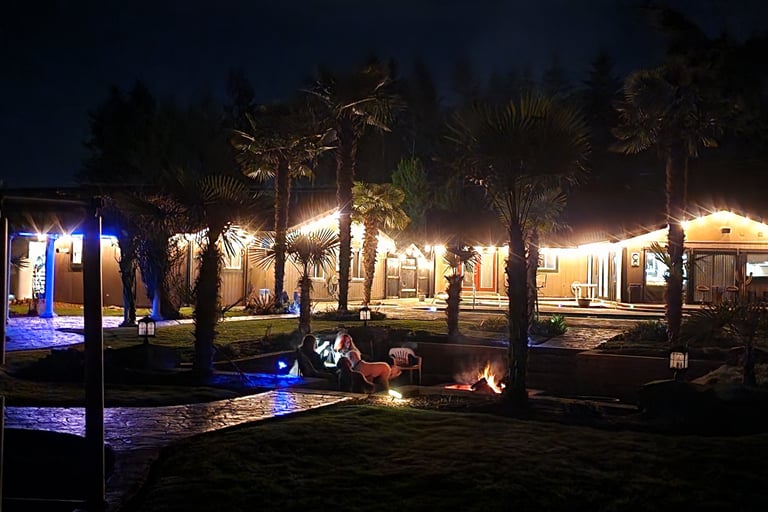
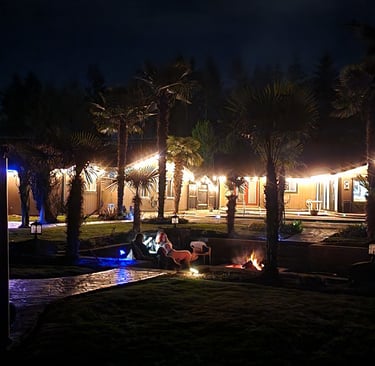
Field notes: In Pacific Northwest yards, I think lighting often does more to create a tropical atmosphere than adding one more plant. A single palm or broadleaf focal point lit well at dusk can make the whole yard feel more intentional, especially when the rest of the planting stays simple. Our landscape uses low voltage path and accent lights in the front yard and string and striplights in the back yard. We are looking to extend the low voltage accent lights to the back yard this summer.
Best places to use this idea
This lighting approach works especially well:
around patios
beside palms and broadleaf planting beds
along paths leading into a seating area
near container groupings
around tropical focal corners
in backyards that feel flat after sunset
Final takeaway
If you want a Pacific Northwest backyard to feel more tropical without rebuilding the whole space, landscape lighting is one of the best upgrades you can make.
Start by lighting one structural plant well. Add a little glow near the seating area. Define the path. Keep the light warm and restrained. That is usually all it takes to make a tropical-style garden feel richer, more inviting, and more memorable after dark.
For more plant ideas that pair well with tropical lighting, browse our Plants & Growing guides.
Contact Us
© 2025. All rights reserved.
Terms and Conditions
Affiliate Disclosure
Some links on this site may be affiliate links. As an Amazon Associate I earn from qualifying purchases.