
Bamboo in the Pacific Northwest
Bamboo can create a lush tropical screen in the Pacific Northwest, but choosing the right type and containment method matters.
4/28/20267 min read
Bamboo has one of the strongest tropical looks you can add to a Pacific Northwest garden. It is evergreen, upright, fast-growing, and excellent for privacy. Used correctly, it can make a backyard feel sheltered, lush, and intentional.
But bamboo also deserves caution. In the wrong spot, or without a containment plan, it can become one of the most frustrating plants in the yard. Some bamboo types stay in a tighter clump. Others spread by underground rhizomes and can move far beyond where you planted them.
The key is not simply asking, “Can bamboo grow here?” In much of the Pacific Northwest, the answer is yes. The better question is: which bamboo should you grow, where should you put it, and how will you control it before it becomes a problem?
Bamboo is part of the grass family, and new edible shoots are young canes harvested before they mature. Washington State University notes that bamboo shoots are harvested while still young, generally before they are two weeks old or about one foot tall.
Why Bamboo Works So Well in Pacific Northwest Gardens
Bamboo fits the Pacific Northwest because many varieties appreciate mild winters, winter rainfall, and protection from extreme heat. In the right location, it can stay green through the year and provide a strong vertical screen when deciduous shrubs are bare.
For tropical-style gardens, bamboo brings three major benefits:
First, it creates height quickly. A young planting can become a noticeable screen much faster than many broadleaf evergreen shrubs.
Second, it adds movement and sound. Bamboo canes and leaves move in the wind, which gives the garden a relaxed, resort-like feel.
Third, it works as a backdrop. Bamboo can make palms, bananas, fatsia, hibiscus, and other bold foliage plants stand out.
That said, bamboo should be treated as a structural plant, not a casual filler. Once established, it is much harder to correct a bad planting decision.
Clumping Bamboo vs. Running Bamboo
The most important decision is whether to plant clumping bamboo or running bamboo.
Clumping bamboo grows from a tighter root mass and expands more slowly from the base. It is usually easier to manage in a residential garden. Some clumping types still get large, but they generally do not send long underground runners across the yard the way running bamboo can.
Running bamboo spreads by rhizomes. These underground stems can travel away from the original planting and send up new shoots in unexpected places. This is the type that causes most bamboo complaints.
For a normal home landscape, especially near fences, driveways, lawns, patios, septic areas, or property lines, clumping bamboo is usually the safer choice.
Simple rule:
If you cannot confidently contain it, do not plant running bamboo in the ground.
Is Bamboo Invasive in Washington?
Bamboo can be aggressive, especially running bamboo, but not every bamboo is automatically listed or regulated the same way as official noxious weeds. The Washington State Noxious Weed Control Board maintains the official noxious weed list for plants landowners may be required to control.
Even when a plant is not on a noxious weed list, it can still become a serious landscape problem. Bamboo is one of those plants where the practical issue is often not state regulation — it is containment, property lines, neighbor conflict, and removal difficulty.
Oregon State University Extension notes that preventing unwanted bamboo growth is easiest when a root barrier is installed between the bamboo grove and the area where bamboo is not wanted. They also note that complete eradication can require intensive effort over multiple years.
That is the part many people underestimate. Bamboo is much easier to plan for than to remove.
Best Places to Use Bamboo
Bamboo works best where it has a clear purpose.
Good uses include:
Privacy screening along a wide property edge where containment is possible.
Backdrop planting behind palms, bananas, fatsia, or other tropical foliage.
Container accents near patios, decks, or entryways.
Wind-softening screens in protected areas where the plant will not dry out badly.
Bamboo is not ideal for every spot. Avoid planting running bamboo directly beside a neighbor’s fence, under shallow utilities, next to pavement, near foundations, or anywhere you cannot access the planting area for future maintenance.
Best Bamboo Strategy for a Pacific Northwest Home Garden
For most Pacific Northwest homeowners, the best strategy is simple:
Use clumping bamboo first. Use containers second. Use running bamboo only with serious containment.
Clumping bamboo gives you the tropical look with less risk. It still needs space, water, and pruning, but it is usually more manageable than running types.
Container bamboo can also work well, especially near patios or walkways. The tradeoff is that container bamboo needs more watering, feeding, and occasional root maintenance. A small pot will not work long-term. Bamboo needs a large, heavy container that can hold soil volume and resist tipping.
Running bamboo can be beautiful, but it should be treated almost like a permanent landscape installation. Before planting, decide exactly where the grove can spread, install proper barrier material, and inspect it regularly.
If you are building a full tropical-looking garden, start with our Plants & Growing section for more cold-hardy plant ideas.
If your goal is privacy, atmosphere, or a backyard retreat, see our Tropical Living & Design section.
How to Contain Bamboo
If you plant running bamboo, containment is not optional. It should be part of the original installation.
A bamboo barrier should be installed around the planting zone, with enough depth to intercept rhizomes and enough material above grade so rhizomes cannot simply grow over the top. A 2025 Ask Extension response recommends a bamboo barrier at least 36 inches wide, with 8 inches above grade to keep rhizomes from walking over the barrier as mulch and organic matter build up.
That above-ground lip matters. If mulch, soil, or leaf litter piles against the barrier, bamboo can sometimes cross the top and keep going.
A good containment routine includes:
Inspecting the edge of the planting area at least twice a year
Cutting escaping rhizomes immediately
Keeping the barrier lip visible
Avoiding deep mulch piled against the barrier
Thinning older canes so the grove stays open and manageable
Bamboo containment is not a one-time job. It is a maintenance commitment.
If you decide to plant running bamboo, research a heavy-duty bamboo root barrier before the plant goes in the ground.
How to Grow Bamboo Successfully
Bamboo likes consistent moisture, especially while it is getting established. Pacific Northwest winter rain helps, but summer drought can stress young plants. During the first few summers, water deeply during dry stretches.
Most bamboo prefers rich, well-drained soil. It does not need soggy ground, but it does appreciate organic matter. A mulch layer helps keep roots cool and moist, but keep mulch from burying the top of any rhizome barrier.
For best appearance:
Remove dead or weak canes
Thin crowded growth
Keep the base clean enough to inspect
Water during dry summer periods
Avoid planting where winter wind will shred the leaves badly
Bamboo can look messy if ignored. The best groves are maintained lightly but consistently.
Bamboo in Containers
Container bamboo is a good option if you want the look without committing to an in-ground grove.
Use a large, heavy container with drainage holes. Bamboo in a small pot will dry out quickly and become stressed. A larger planter gives the roots more room and helps the plant stay upright during wind.
Container bamboo needs more regular care than in-ground bamboo. Expect to water during summer, feed lightly during the growing season, and eventually divide or root-prune the plant when it becomes crowded.
For patios, container bamboo can be excellent. It gives instant height, evergreen texture, and a tropical screen without letting roots travel through the yard.
For patio bamboo, use a large heavy-duty planter rather than a lightweight decorative pot that may tip over in winter wind.
Plants That Pair Well With Bamboo
Bamboo looks best when it is part of a layered tropical planting, not standing alone.
Good Pacific Northwest pairings include:
Windmill palm for evergreen height and a true palm look.
Banana plants for huge summer leaves and bold seasonal drama.
Fatsia japonica for glossy tropical foliage in shade.
Hardy hibiscus for late-summer flowers.
Phormium for sharp upright texture and color contrast.
Japanese forest grass or mondo grass for softer ground-level texture.
For a stronger evergreen tropical backbone, pair bamboo with our Windmill Palm Care guide.
For bold summer foliage, add banana plants and follow our Banana winter care guide.
Common Bamboo Mistakes
The biggest mistake is planting running bamboo without containment. It may look harmless when young, but the problem usually shows up later after the root system is stronger.
The second mistake is planting bamboo too close to a property line. Even if you like it, your neighbor may not.
The third mistake is using bamboo as a quick fix for privacy without thinking about long-term access. If you cannot walk behind it, thin it, inspect it, or cut runners, it may become a problem.
The fourth mistake is assuming all bamboo behaves the same. Clumping and running bamboo are very different landscape decisions.
The fifth mistake is planting bamboo in a small decorative pot and expecting it to stay lush without regular watering.
Field Notes From a Pacific Northwest Garden
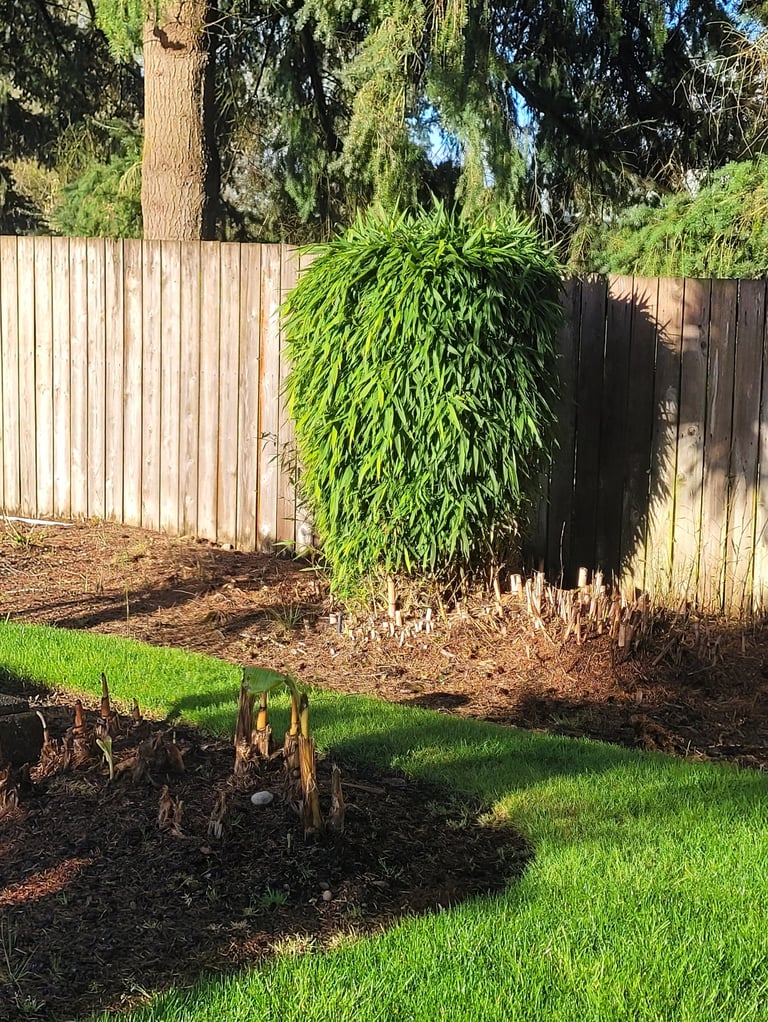
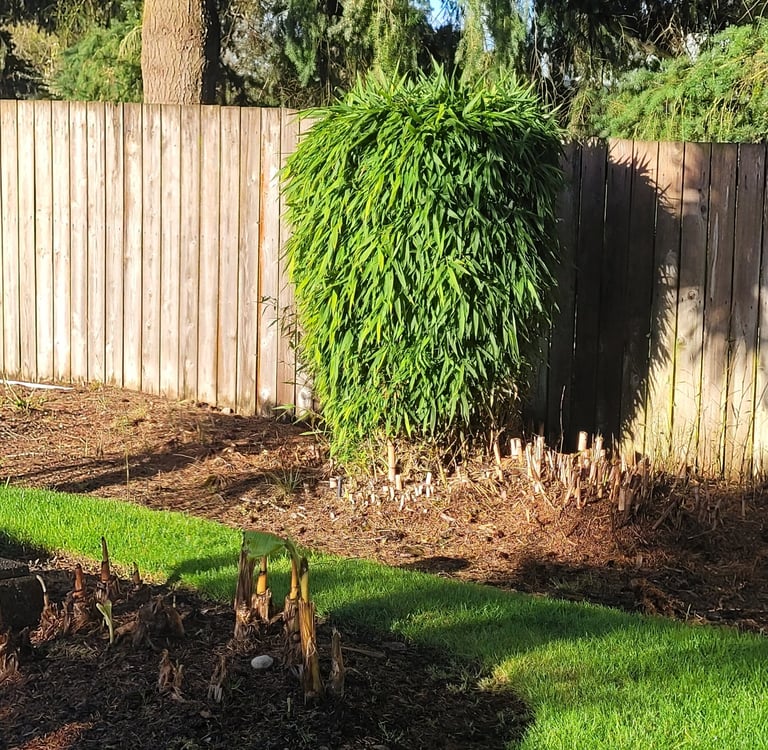
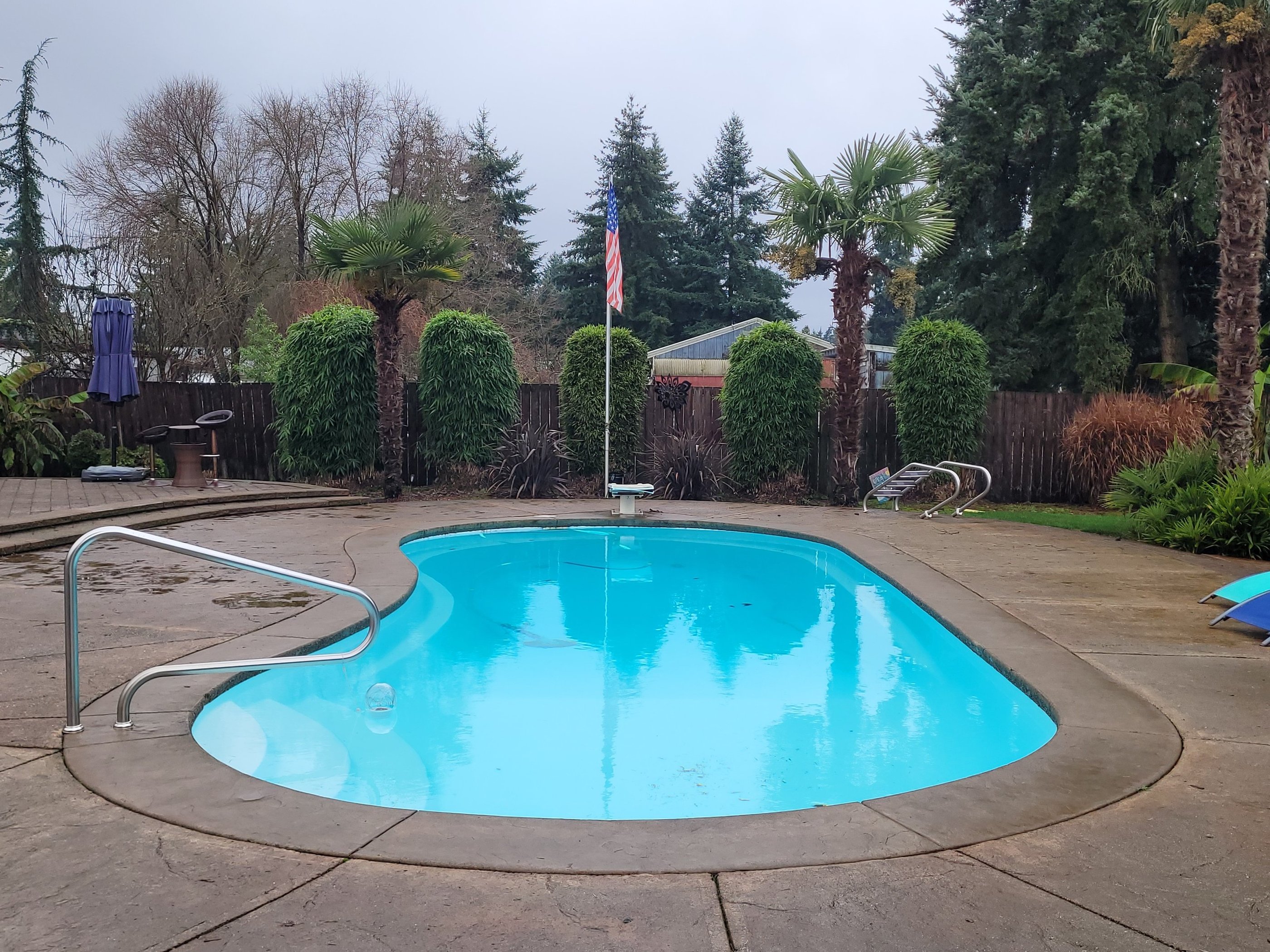
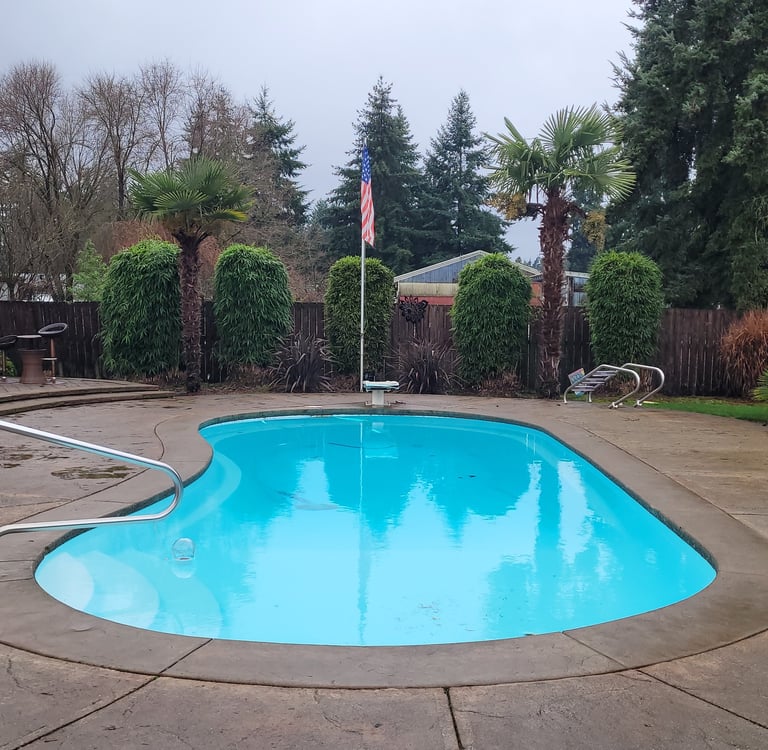
After purchasing my house with 10 large bamboo plants, they quickly became out of hand. 30' tall and runners coming up everywhere. I was able to cut them down to a manageable height (5'-6') and 3'-5' in diameter. i keep the runners under control with weekly spraying of weed killer. Trimming many times a year seems to keep the new growth to a minimum. The biggest struggle is keeping it out of the lawn, mowing two times a week keeps the new sprouts down. Using a good pair of Pruners or loppers helps keep canes thinned out.
Final Recommendation
Bamboo can be a great Pacific Northwest tropical-style plant, but it should be chosen carefully. For most home gardens, clumping bamboo or container bamboo is the safest way to get the look without creating a long-term maintenance problem.
If you want a clean tropical screen, bamboo can work beautifully. Just make the containment plan before you plant, not after the bamboo has already started moving.
The best bamboo planting is not the fastest one. It is the one you can still manage five years from now.
Contact Us
© 2025. All rights reserved.
Terms and Conditions
Affiliate Disclosure
Some links on this site may be affiliate links. As an Amazon Associate I earn from qualifying purchases.