
Tropical Garden Pathways
How to Design Walkways That Feel Like a Resort in the Pacific Northwest
3/11/20263 min read
Introduction
One of the most overlooked elements in a tropical-inspired landscape is the garden pathway. While plants provide the bold foliage and exotic atmosphere, the pathways are what guide people through the space and allow the garden to unfold visually.
In the Pacific Northwest, pathways do more than connect parts of the yard. They help manage wet conditions, define planting areas, and create the feeling that the garden is larger and more immersive than it actually is.
A well-designed tropical pathway can transform an ordinary backyard into something that feels closer to a botanical garden or island resort.
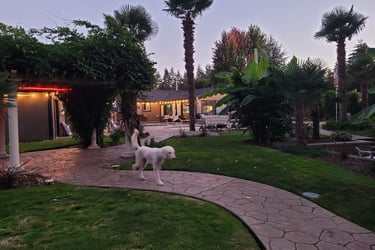
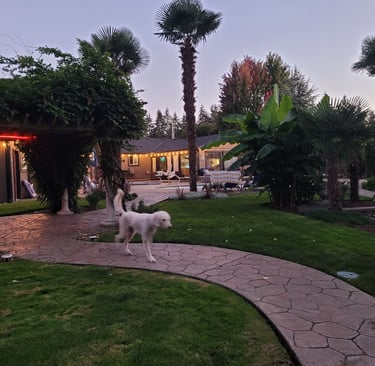
In my own garden, pathways have become one of the most important structural elements. They allow the bananas, palms, and large-leaf plants to surround the walkway so visitors feel like they are moving through the landscape rather than just looking at it.
Why Pathways Matter in Tropical Garden Design
Tropical landscapes rely heavily on layers of plants. Without structure, those layers can quickly feel chaotic.
Pathways solve that problem by organizing the garden while still allowing plants to dominate the visual experience.
A well-planned pathway will:
• Create a sense of exploration
• Highlight focal plants like palms or bananas
• Improve drainage in wet PNW soils
• Protect planting beds from foot traffic
Most importantly, pathways slow people down and encourage them to experience the garden rather than just pass through it.
The Best Materials for Tropical Garden Walkways in the Pacific Northwest
The Pacific Northwest climate requires materials that handle moisture well and stay safe when wet.
Natural Stone
Natural stone is one of the best choices for tropical-style gardens. Irregular flagstone or basalt slabs feel organic and blend well with dense foliage.
Stone also holds up extremely well in rainy climates and develops a natural patina over time.
Gravel Paths
Gravel pathways are affordable, easy to install, and excellent for drainage. Use a good Landscape Fabric to keep weeds at bay.
They work particularly well when surrounded by bold tropical plants like:
• Banana palms
• Tetrapanax
• Fatsia
• Cannas
The loose texture of gravel contrasts nicely with large tropical leaves.
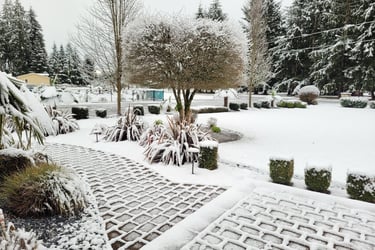
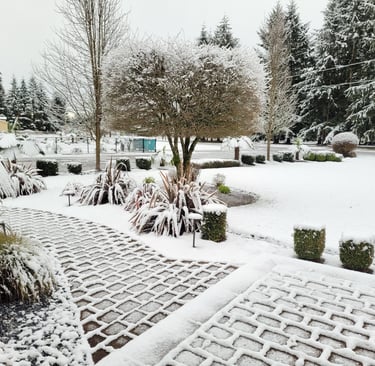
Paver Walkways
Concrete pavers are a more formal option but can still work well in tropical landscapes when paired with lush planting.
They are durable and ideal for areas that receive heavy foot traffic.
Stamped Concrete
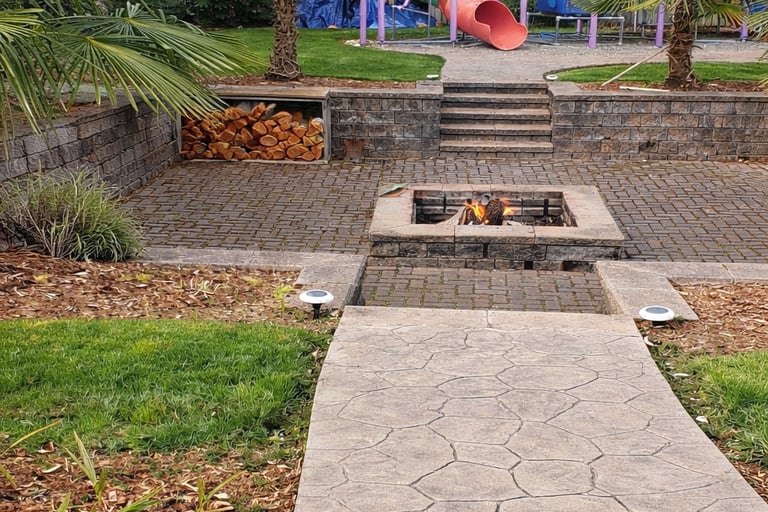
Non-Slip and continuous. We chose stamped concrete for most of our pathways.
Designing a Pathway That Feels Tropical
The goal is to create the feeling that plants are surrounding and framing the path rather than sitting beside it.
Use Curves Instead of Straight Lines
Curved pathways immediately feel more natural and inviting. They also allow planting beds to flow around the path and create layered tropical effects. Landscape Edging can help retain gravel and paver paths.
Plant Close to the Path
Tropical gardens feel immersive when foliage slightly overhangs the pathway.
Plants like banana palms and cannas create the feeling that the path is moving through dense vegetation.
Create Visual Destinations
Every pathway should lead somewhere interesting.
Examples include:
• A fire pit seating area
• A tropical seating bench
• A water feature
• A large focal palm
These destinations encourage people to explore deeper into the garden.
A Simple Tropical Pathway Layout
A design approach that works extremely well in Pacific Northwest yards is a loop pathway.
Instead of a single straight walkway, a looping path circles through planting beds and returns to the starting point.
This layout allows visitors to experience the garden from multiple angles while maximizing planting space.
Common Mistakes to Avoid
Paths That Are Too Narrow
Tropical plants grow large. A narrow path can quickly become crowded by foliage.
Aim for at least 3–4 feet wide.
Too Much Hardscape
The plants should remain the focus. Hardscape should frame the garden, not dominate it.
Ignoring Drainage
Standing water is a common issue in PNW yards.
Installing a compacted gravel base beneath pathways prevents sinking and improves longevity.
Final Thoughts
A tropical garden pathway is more than just a walkway. It becomes the backbone of the landscape, guiding visitors through layers of plants and creating moments of discovery.
In the Pacific Northwest, combining curved pathways with bold tropical foliage can transform an ordinary yard into something that feels lush, immersive, and surprisingly exotic.
With the right materials and thoughtful design, pathways help tropical plants look intentional rather than crowded.
For more landscape ideas see Tropical Living & Design and our Gallery
Contact Us
© 2025. All rights reserved.
Terms and Conditions
Affiliate Disclosure
Some links on this site may be affiliate links. As an Amazon Associate I earn from qualifying purchases.