
Windmill Palm vs Banana Plant for Pacific Northwest Gardens: Which One Should You Grow First?
Windmill palm vs banana plant in the Pacific Northwest: compare cold hardiness, care, growth, and tropical impact to choose the best plant for your yard.
4/10/20265 min read
If you want your yard to feel more tropical in the Pacific Northwest, two of the most tempting choices are windmill palms and banana plants. Both can create a bold, exotic look. Both stand out fast. But they do not perform the same way in our climate.
For most Pacific Northwest gardeners, the better first choice depends on one question: do you want year-round structure, or fast summer drama?
Windmill palms are usually the safer long-term backbone plant. Banana plants usually bring the bigger lush look faster, but they need more seasonal management and winter recovery.
This guide breaks down the real differences so you can choose the plant that fits your yard, your patience level, and the kind of tropical effect you want.
Quick answer
Choose windmill palm if you want:
Better cold tolerance
Year-round structure
A lower-maintenance tropical anchor plant
A plant that works well in front yards and long-term landscape design
Choose banana plant if you want:
Huge tropical foliage fast
A lush summer look
A softer, more jungle-style planting
A plant you do not mind cutting back and managing seasonally
Side-by-side comparison
1. Best for cold tolerance
Windmill palm wins.
In most Pacific Northwest gardens, windmill palms are the stronger choice for reliable year-round survival and structure. Once established, they are one of the best plants for creating a tropical look without rebuilding the planting every spring.
Banana plants can return well in many areas, but they are much more seasonal in appearance. Even when the root system survives, the top growth often gets damaged or dies back in winter.
2. Best for instant tropical impact
Banana plant wins.
If your goal is big, dramatic leaves and a fast lush look, bananas bring more visual punch during the growing season. They make a border or patio feel tropical much faster than a young palm.
Windmill palms create a cleaner, architectural effect. They still look tropical, but they usually build impact more slowly.
3. Best for low maintenance
Windmill palm wins.
Once planted in the right spot, windmill palms are usually the easier long-term plant. They do not ask for the same kind of annual reset that bananas often do.
Banana plants can be very rewarding, but they often need more cleanup, more seasonal watching, and more patience after winter.
Windmill Palm Care: The Ultimate Guide
4. Best for a front-yard landscape
Windmill palm wins.
A windmill palm usually looks more intentional and structured in a front-yard design. It works as a focal point, pairs well with other hardy tropical-looking plants, and keeps the landscape from looking empty in winter.
Banana plants are great in the right setting, especially in backyard borders or warm protected spots, but they can look more temporary depending on winter damage and spring recovery.
5. Best for a lush backyard border
Banana plant wins.
Bananas shine when you want a layered, leafy, summer-heavy look. They mix well with bold foliage plants and can quickly make a backyard feel more private and more tropical.
If you want your planting bed to feel full and oversized in midsummer, bananas usually do that faster.
Which plant is better for beginners?
For most beginners in the Pacific Northwest, windmill palm is the better first tropical plant.
Why?
It gives you a stronger chance of long-term success.
It keeps its value through all four seasons.
It teaches site selection and patience without the same level of seasonal setback.
That does not mean banana plants are a bad choice. It just means bananas are often better as your second tropical plant, once you already have some structure in the yard.
The real difference: backbone plant vs seasonal show plant
The easiest way to think about this comparison is:
Windmill palm = backbone plant
Banana plant = seasonal show plant
A windmill palm gives your garden a permanent tropical framework. A banana plant gives your garden a burst of lush energy during the warm season.
The strongest Pacific Northwest tropical gardens usually use both. The palm holds the structure. The banana adds the summer excitement.
For more insight to care and placement see our Plants and Growing page.
Which one should you buy first?
Buy a windmill palm first if:
You are just starting your tropical-style garden
You want one plant that does the most long-term work
You want better winter presence
You are planting in a more visible front-yard location
You want a plant that supports future layering
Buy a banana plant first if:
You want maximum summer impact quickly
You already have some structural plants in place
You like a lush, oversized, leafy look
You are willing to manage winter dieback and spring regrowth
You are focusing on a backyard or protected microclimate
For current pricing and inventory availability see our Plants for Sale section.
Best choice for different yard goals
Choose windmill palm for:
Front-yard focal points
Entry beds
Foundation-adjacent tropical accents
Permanent landscape structure
Low-maintenance tropical style
Choose banana plant for:
Backyard privacy planting
Pool or patio atmosphere
Soft jungle-style beds
Seasonal wow factor
Fast foliage impact
My practical recommendation for Pacific Northwest gardeners
If you are deciding between the two and only buying one plant right now, start with a windmill palm.
It is usually the better long-game plant. It helps the garden look established sooner. It supports more future design options. And it still gives you that tropical feeling even when the weather turns cold.
Then add bananas once you want more summer fullness and drama.
That is often the most satisfying order:
Build the structure with palms
Layer in seasonal bold foliage
Expand the tropical effect year by year
Common mistake to avoid
A common mistake is choosing only for summer appearance.
In the Pacific Northwest, the best tropical-looking gardens are not built only for July. They are built for how the planting looks in March, November, and after a rough winter stretch too.
That is why windmill palms often earn their place first. They keep the garden anchored when everything else is in transition.
Field notes
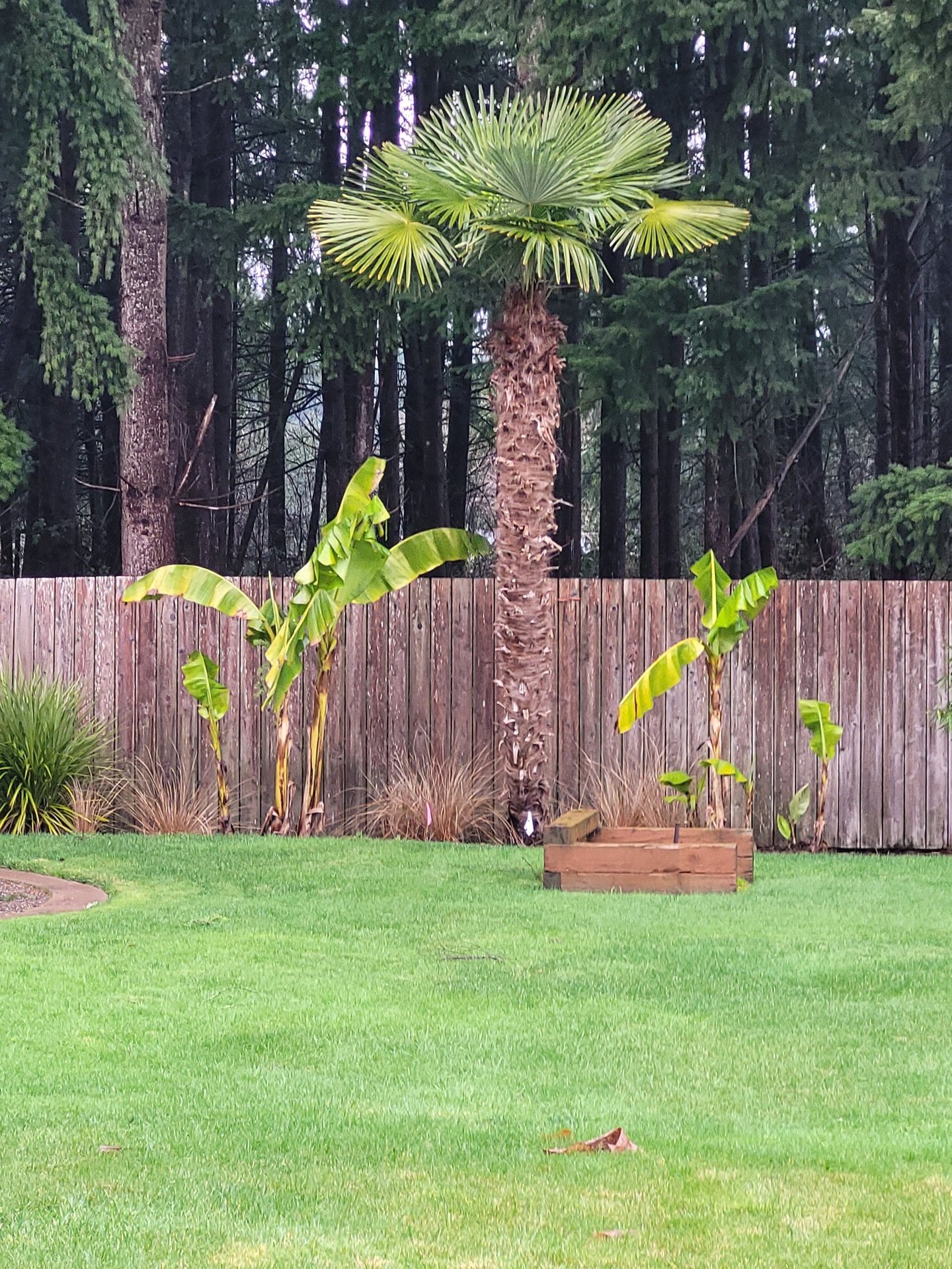
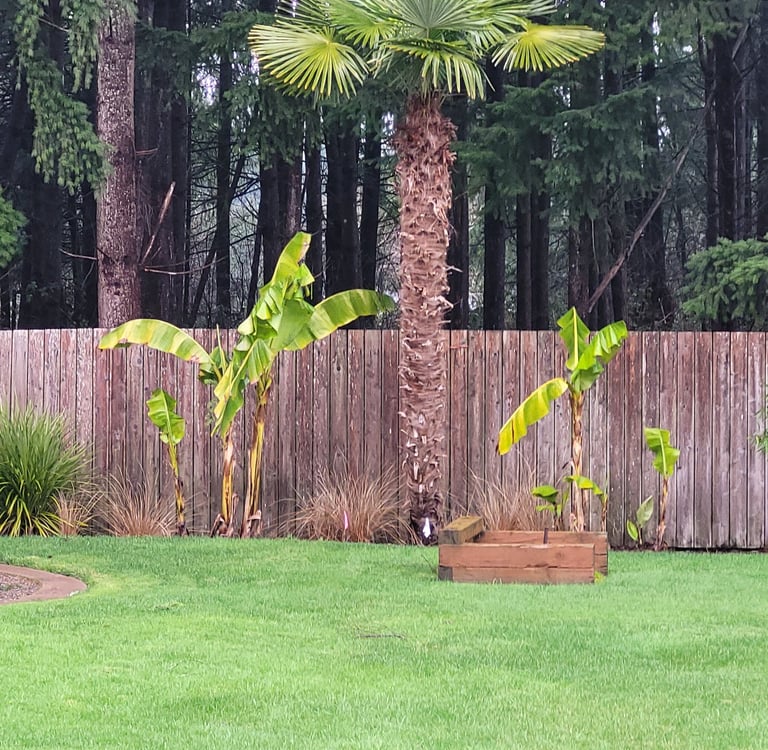
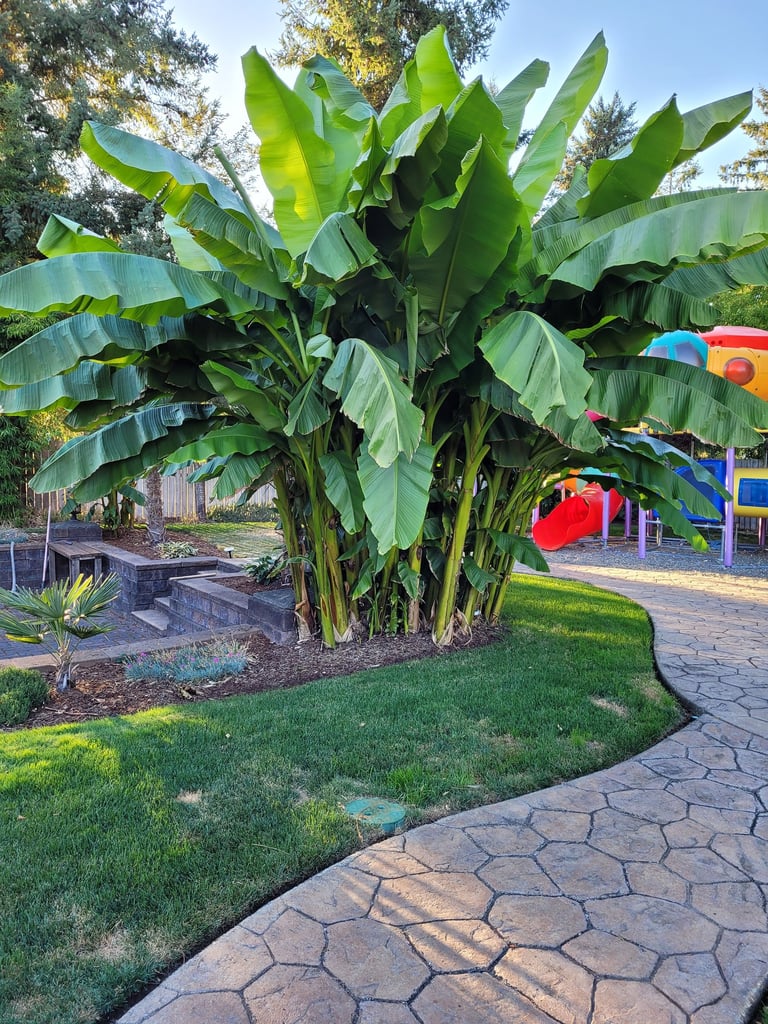
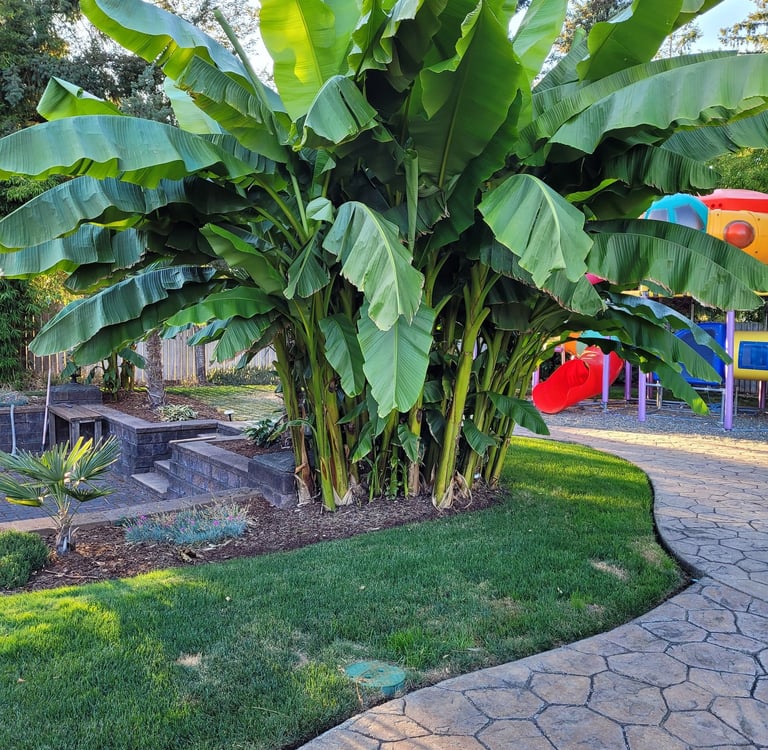
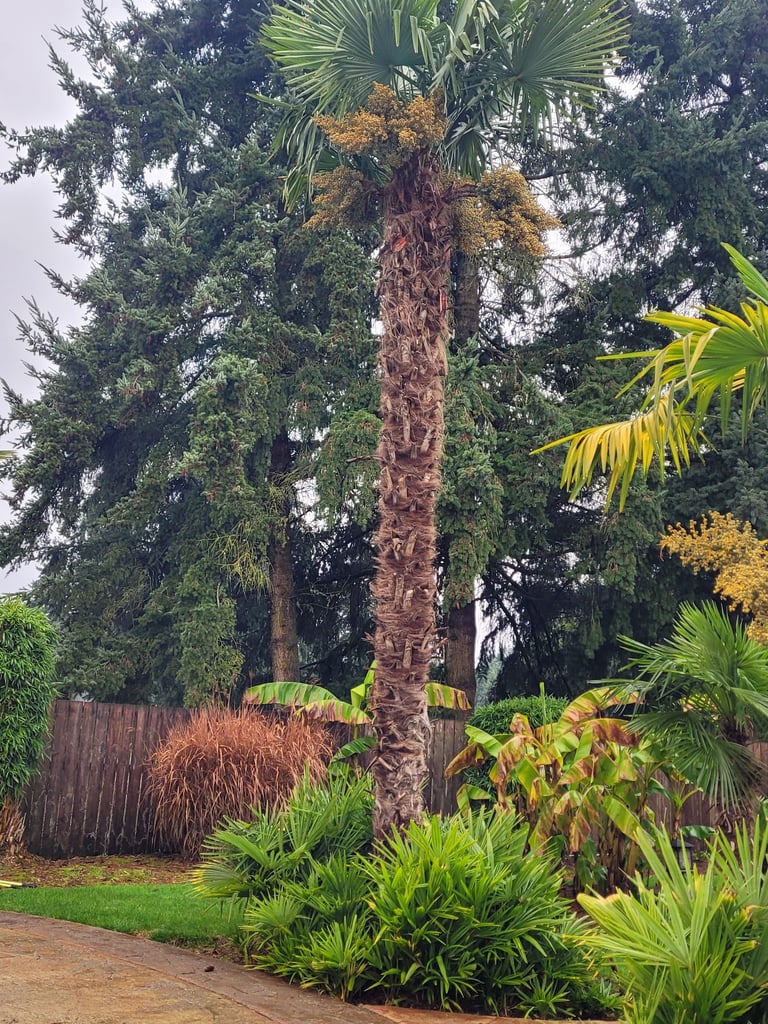
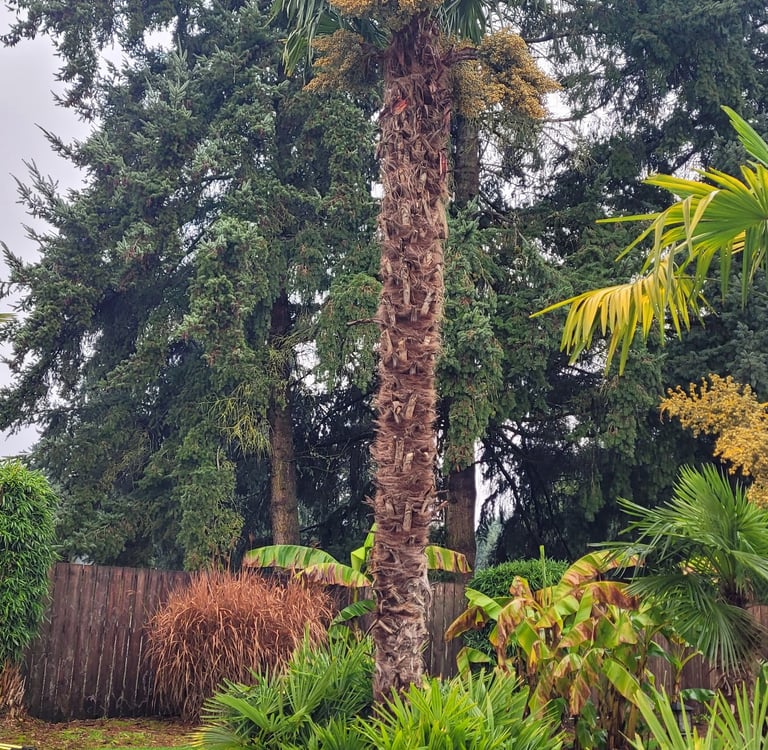
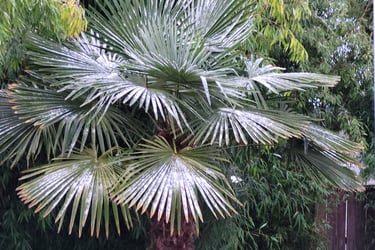
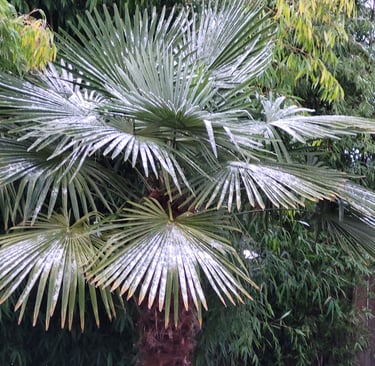
Our landscaping is anchored by 25 ten-to twenty-year-old Windmill Palms accented in the early spring through fall seasons by many well-placed Banana Palms. Accented by New Zealand Red Flax and other non-tropical evergreen bushes and plants. Windmill Palms weather the winters well, a slight yellowing of the fronds in particularly heavy rain winters, unaffected by snow. Two ways we handle Banana Palms: after the first major freeze they can be cut down to the ground or just the dead leaves removed before spring growth starts. See our Gallery for pictures of this landscaping in action.
Final verdict
If you want the best first tropical plant for a Pacific Northwest garden, choose windmill palm.
If you want the most dramatic summer foliage, choose banana plant.
If you want the best overall tropical garden, use both, but use them for different jobs.
Windmill palm gives you structure. Banana plant gives you lushness. Together, they create the layered tropical effect most Pacific Northwest gardeners are really after.
Contact Us
© 2025. All rights reserved.
Terms and Conditions
Affiliate Disclosure
Some links on this site may be affiliate links. As an Amazon Associate I earn from qualifying purchases.