
Astilbe vs. Carex: Which Is Better for a Pacific Northwest Shade Garden?
Compare astilbe and Carex for Pacific Northwest shade gardens, including flowers, foliage, moisture needs, winter interest, maintenance and the best uses for each.
7/16/20266 min read
Astilbe vs. Carex: Which Is Better for a Pacific Northwest Shade Garden?
Pacific Northwest shade gardens often need more than another broad-leaved plant. Hostas, fatsia and other large foliage plants provide mass, but a successful tropical-style planting also needs contrast.
Two useful options are astilbe and Carex, commonly called sedge.
Both grow well in shaded garden settings, but they perform very different jobs. Astilbe provides upright flower plumes and seasonal color. Carex contributes arching, grass-like foliage that can remain attractive for much of the year.
The right choice depends on whether your garden needs flowers, fine-textured foliage, winter structure or greater tolerance for variable conditions.
What Is Astilbe?
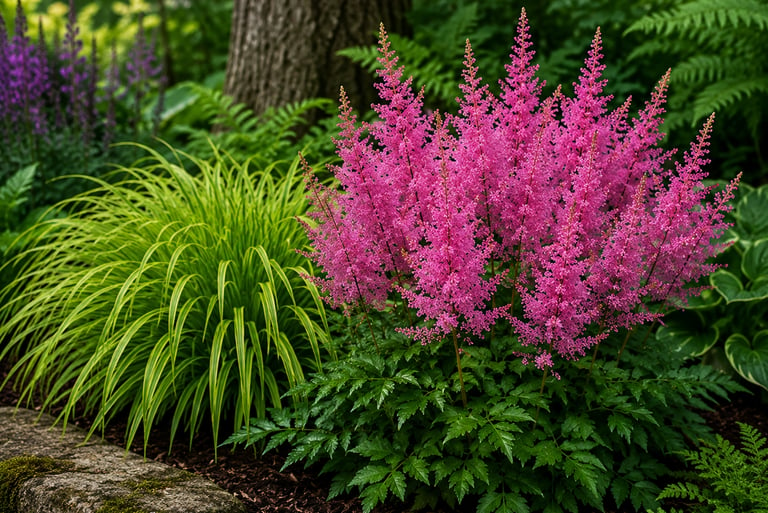
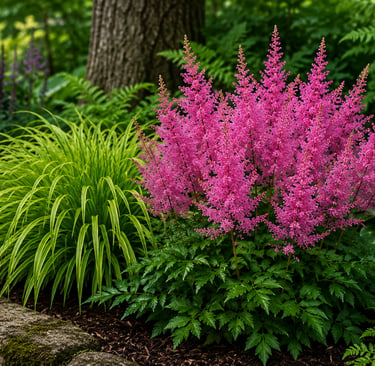
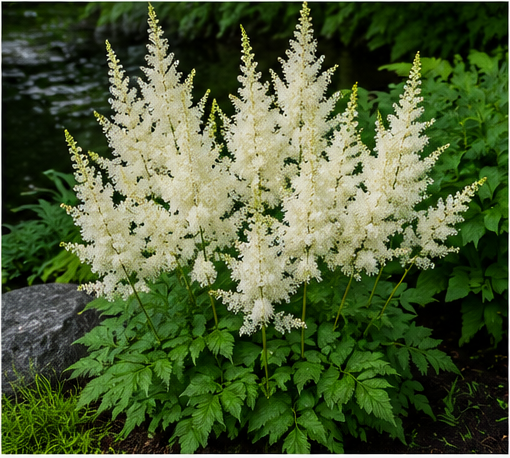
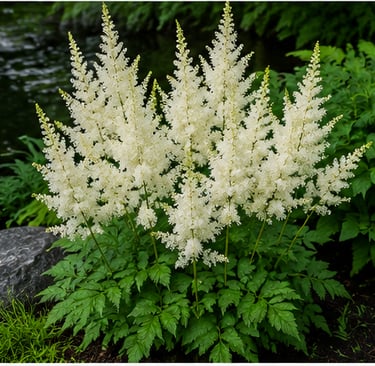
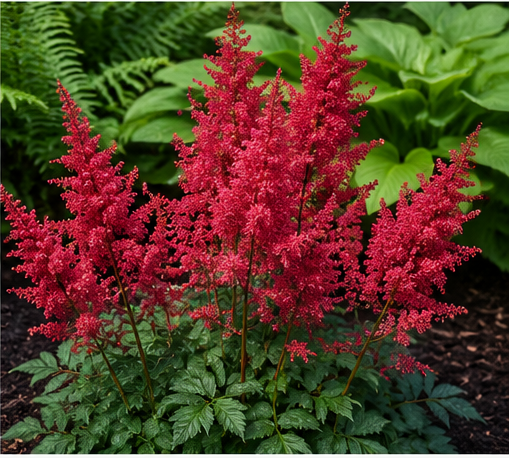
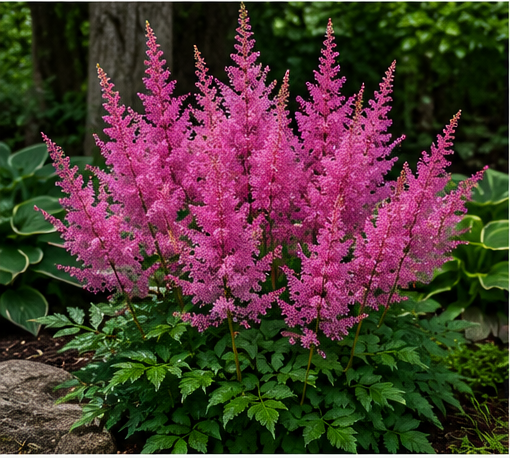
Astilbe is a clump-forming herbaceous perennial grown for its fern-like foliage and upright or arching flower plumes. Depending on the cultivar, the flowers may be white, pink, lavender or red.
Most astilbes grow best in partial to full shade with rich soil that remains consistently moist. Moisture is particularly important; dry conditions can cause browned leaf edges, curled foliage and premature decline.
Astilbe commonly blooms from late spring through summer, depending on the species and cultivar. Mature heights can range from approximately 12 inches for compact selections to 3 or 4 feet for taller forms.
What Is Carex?
Carex is a large genus of grass-like plants known as sedges. Although they resemble ornamental grasses, sedges belong to the Cyperaceae family and characteristically produce angular stems.
Carex varieties range from low groundcovers to larger arching clumps. Foliage may be green, gold, cream, bronze or variegated. Depending on the species, Carex can grow in deep shade, partial shade or sun, although moisture requirements vary considerably.
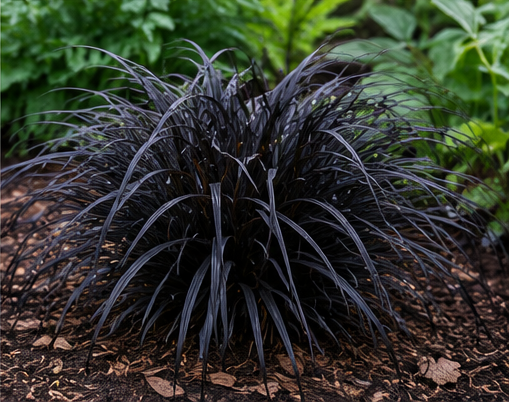
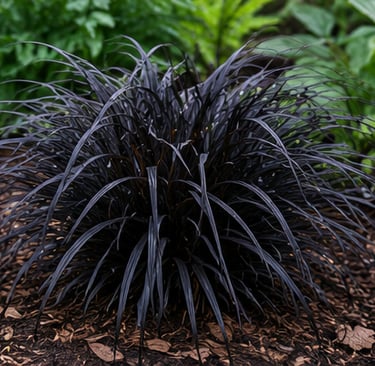
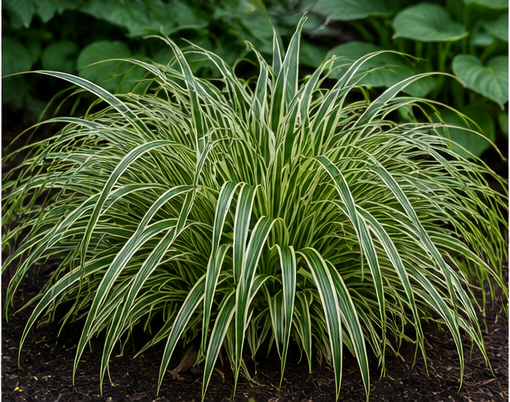
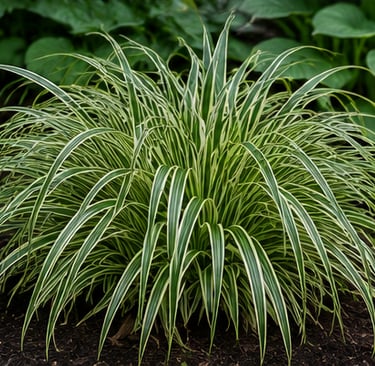
For Pacific Northwest ornamental gardens, Japanese sedges such as Carex oshimensis are especially useful. They form slow-growing clumps of narrow, flowing leaves and work well along paths, beneath shrubs and at the front of shaded borders. Carex oshimensis prefers rich, moist soil and can be divided in spring or fall.
Which Plant Produces Better Flowers?
Astilbe is the clear choice when flowers are the priority.
Its plume-like blooms rise above the foliage, introducing vertical movement and color into shaded areas where flowering choices can be limited. Planting several cultivars with different bloom periods can extend the display from late spring into summer.
Carex does flower, but its flowers are generally small, brown or green spikes. They are botanically interesting but rarely the main reason the plant is selected.
Winner for flowers: Astilbe
Which Has Better Foliage?
This decision depends on the kind of foliage effect you want.
Astilbe produces divided, fern-like leaves that create an airy texture beneath its flowers. The foliage looks especially effective beside broad hosta leaves, palms or other bold tropical-style plants.
Carex provides long, narrow leaves that arch outward from the crown. The flowing shape softens hard edges and contrasts with large leaves without competing with them.
Astilbe foliage is more intricate. Carex foliage is more linear and persistent.
Winner for delicate summer foliage: Astilbe
Winner for flowing, grass-like texture: Carex
Which Is Better for a Tropical-Style Garden?
Both can support a tropical appearance, but they do it differently.
Astilbe contributes lushness through fern-like foliage and colorful flower plumes. It works well in a woodland-style tropical garden where moisture is reliable.
Carex creates a layered, flowing understory. Its narrow leaves resemble miniature ornamental grasses and provide movement beneath palms, bananas, hostas and other architectural plants.
In most tropical-style Pacific Northwest gardens, Carex is the stronger structural plant. Astilbe is the stronger seasonal accent.
Best approach: Use Carex repeatedly through the planting and place astilbe in smaller groups where seasonal flowers will have the most impact.
Which Handles Dry Shade Better?
Astilbe is not a dependable dry-shade plant. Although it tolerates shade, its soil should not be allowed to dry out. Excessive sun or drought commonly causes browning and foliage decline.
Carex performance depends heavily on the species. Some sedges tolerate difficult shade and established tree-root competition better than others, while Japanese sedges such as Carex oshimensis still prefer moist soil and do not tolerate drought well.
This distinction is important. Buying a plant labeled only “Carex” does not guarantee dry-shade tolerance. Check the species and cultivar before planting.
Winner for adaptability: Carex, provided the correct variety is selected
Which Is Better for Wet Soil?
Both plants can perform well in moisture-retentive soil.
Astilbe is particularly effective near ponds, streams, rain-garden edges and irrigated shade beds, provided the crown is not sitting in stagnant water.
Many Carex species also tolerate moist conditions, and some accept temporary flooding. Carex oshimensis prefers rich, moist to wet soil and is listed for rain gardens and water gardens.
For a consistently moist but well-drained bed, either plant may work.
For a site that occasionally becomes wetter than expected, select a Carex species specifically suited to wet soil rather than assuming all sedges respond identically.
Winner for consistently moist ornamental beds: Tie
Which Offers Better Winter Interest?
Astilbe is herbaceous. Its foliage declines after frost, and the plant returns from the crown the following spring. Dried flower stalks may be left standing temporarily for texture, but the plant does not provide substantial winter foliage.
Many ornamental Carex varieties remain evergreen or semi-evergreen in mild climates. In a Western Washington Zone 8 garden, healthy clumps can provide useful foliage during the months when herbaceous perennials are dormant.
Winter performance varies by species, exposure and the severity of a particular winter.
Winner for winter interest: Carex
Which Requires Less Maintenance?
Astilbe is not difficult to grow, but it requires consistent moisture. During dry Pacific Northwest summers, plants beneath trees or roof overhangs may need regular supplemental watering even when the location appears shaded.
Faded flower stalks may be removed for appearance, although deadheading generally does not extend the bloom period. Crowded astilbe clumps may be divided every three or four years.
Carex is generally low-maintenance once established. Older or damaged foliage can be combed out or selectively trimmed. Avoid shearing every Carex automatically to the ground because evergreen types may take time to recover.
Winner for lower routine maintenance: Carex
Which Is Better Along a Path?
Carex is usually the stronger path-edge plant.
Its arching shape softens stone, gravel and concrete while remaining low enough to preserve visibility. Repeating the same cultivar along a path creates continuity through the garden.
Astilbe can also line a path, but it produces a more seasonal display. During winter dormancy, the border may disappear until new growth returns.
Use astilbe along a path when summer flowers are the objective. Choose Carex when year-round edging and repetition matter more.
Winner for path edging: Carex
for some tips on how to use Carex see How to create a tropical-looking garden path.
Which Is Better With Hostas?
Both make excellent hosta companions.
Astilbe contrasts with hostas through vertical flowers and delicate foliage. The combination works particularly well in moist, filtered shade.
Carex contrasts through narrow leaves and an arching form. It prevents a hosta bed from becoming a continuous mass of similarly rounded foliage.
For a layered planting:
Use large hostas as the broad-leaved foundation.
Repeat Carex near the front of the bed.
Place astilbe behind or between the hostas for seasonal flower height.
This uses each plant for a different function rather than forcing one to do everything.
For more information on Hostas see how to grow hostas in a Pacific Northwest shade garden
and When and how to divide an overgrown hosta.
Establishment and Division
Astilbe and clumping Carex can both be divided when mature.
Astilbe clumps are commonly divided when they become crowded, often after several years. Spring is an appropriate time, although early fall may also work where plants have enough time to establish before cold weather.
Carex oshimensis may be lifted and divided in spring or autumn. Separate the clump into rooted sections and replant at the original depth.
Keep both plants evenly moist after division.
Choose Astilbe When:
You want noticeable flowers in shade.
The soil remains consistently moist.
You need upright seasonal color.
You want fern-like texture beside hostas.
Winter foliage is not important.
You can provide supplemental summer water.
Choose Carex When:
You want fine-textured foliage.
You need a low edging or repeating plant.
Year-round structure is important.
You want a grass-like appearance in shade.
You prefer lower routine maintenance.
You are willing to select the species for the specific moisture conditions.
Can You Plant Astilbe and Carex Together?
Yes. In many gardens, combining them is better than choosing only one.
Carex can form the lower, persistent layer while astilbe rises through the planting with summer flowers. Both contrast effectively with hostas, ferns and large-leaved tropical-style plants.
The most important requirement is moisture. Select a Carex variety with needs compatible with astilbe and avoid placing the combination in dry soil beneath moisture-hungry tree roots unless irrigation is available.
Final Verdict
Choose astilbe when your main goal is colorful flowers and an airy woodland effect.
Choose Carex when you want dependable foliage, path edging, movement and stronger winter structure.
For the most complete Pacific Northwest shade garden, use both:
Carex for repetition and year-round texture.
Astilbe for seasonal height and flowers.
Hostas or other broad-leaved plants for mass.
The plants are not direct substitutes. They are complementary tools that solve different design problems.
Contact Us
© 2025. All rights reserved.
Terms and Conditions
Affiliate Disclosure
Some links on this site may be affiliate links. As an Amazon Associate I earn from qualifying purchases.