
Hardy Begonia: A Tropical-Looking Shade Plant for Pacific Northwest Gardens
Hardy begonia adds tropical foliage, pink blooms, and shade-garden texture to Pacific Northwest landscapes with rich soil and winter mulch.
5/27/20265 min read
Most gardeners think of begonias as tender annuals for summer containers. Hardy begonia is different.
Begonia grandis, commonly called hardy begonia, is a perennial begonia that can bring soft tropical texture, late-season flowers, and lush foliage into shaded Pacific Northwest gardens. It will not create the bold structure of a windmill palm or banana plant, but it does something just as useful: it fills the lower shade layer with color, movement, and tropical-looking leaves.
For gardeners working with woodland edges, north-facing beds, patio shade, or the protected side of a house, hardy begonia can be one of those plants that makes a shady space feel intentional instead of forgotten.
Quick Plant Profile
Common name: Hardy begonia
Botanical name: Begonia grandis
Plant type: Herbaceous perennial / tuberous perennial
Hardiness: Commonly listed around USDA Zones 6–9, depending on form and winter protection
Mature size: About 18–24 inches tall and wide
Light: Part shade to full shade
Soil: Moist, rich, well-drained soil
Bloom time: Summer into early fall
Flower color: Usually soft pink; some white forms exist
Best use: Shade borders, woodland gardens, tropical accent plantings, underplanting near larger foliage plants
Missouri Botanical Garden lists hardy begonia as a clump-forming perennial commonly reaching about 1.5–2 feet tall, while RHS describes Begonia grandis subsp. evansiana as a tuberous perennial with olive-green asymmetric leaves and nodding pink or white flowers in summer.
Why Hardy Begonia Works in a Pacific Northwest Tropical Garden
Hardy begonia is not a large architectural plant, but it has the right visual ingredients for a tropical-style shade garden.
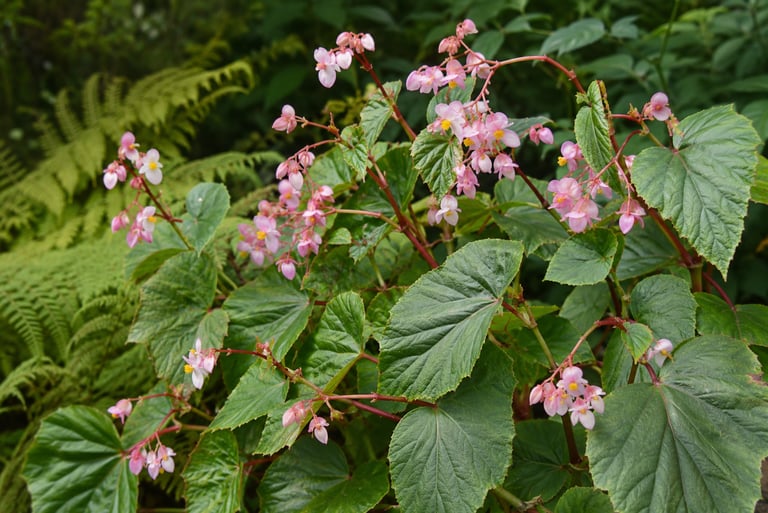
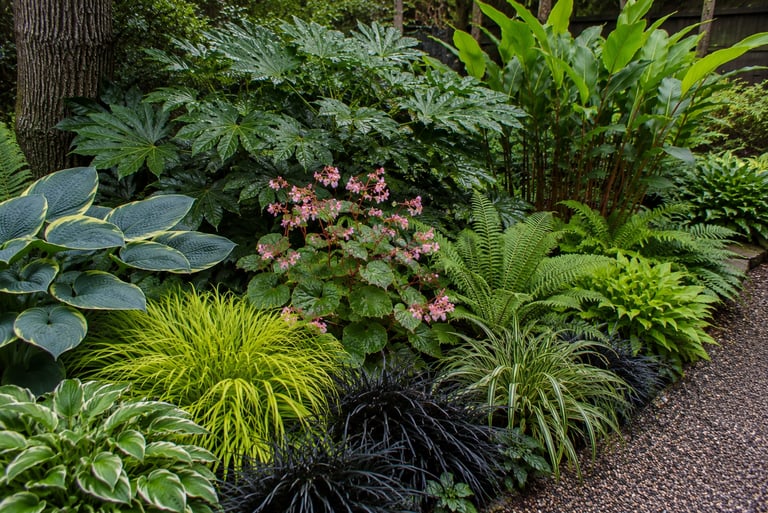
The leaves are broad, soft, and slightly uneven in shape. The stems often have a reddish cast. The undersides of the leaves can show red or pink tones, especially when light passes through them. In late summer, dangling clusters of small pink flowers appear above the foliage, giving the plant a delicate, layered look.
That combination makes hardy begonia especially useful in Pacific Northwest gardens because many of our tropical-looking plants are either large structure plants or bold evergreen foliage plants. Hardy begonia fills the space below them.
Use it where you want the garden to feel lush, layered, and alive without relying only on hostas or ferns.
If you are building a shade-focused tropical planting, pair this plant with our Fatsia japonica growing guide.
Where to Plant Hardy Begonia
Hardy begonia does best in protected shade with soil that stays evenly moist but does not sit waterlogged.
Good locations include:
Along the edge of a shaded patio
Under small ornamental trees
Near the north or east side of a house
Along a woodland path
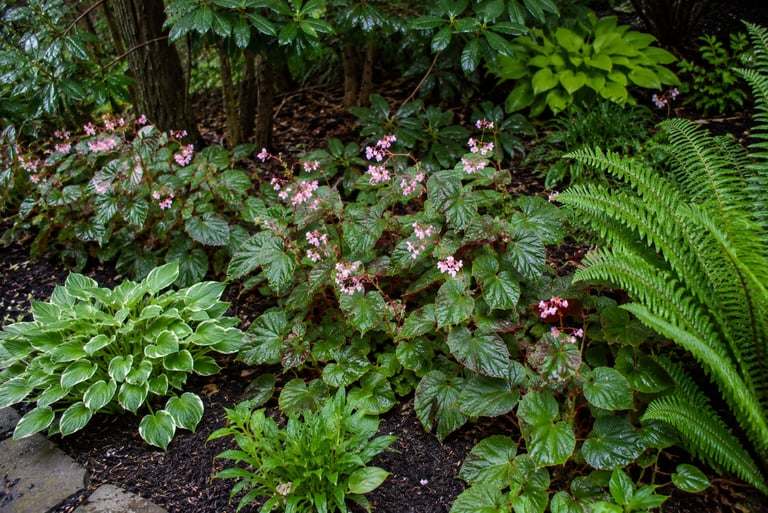
In a protected bed with ferns, hostas, Fatsia, or Japanese forest grass
Near containers where irrigation is already easy to manage
Avoid hot afternoon sun, dry root zones, and exposed windy sites. Like many begonias, the foliage looks soft and delicate because it is soft and delicate. A calm, shaded location helps it look better through the growing season.
For new shade beds, a simple soil moisture meter can help you learn whether the soil is staying evenly moist or drying out too quickly between waterings.
Soil and Watering Needs
Hardy begonia prefers soil that is rich, moisture-retentive, and well-drained. That combination matters.
Moist soil helps the plant keep its lush foliage. Good drainage prevents the crown and roots from sitting in stagnant winter wet. In the Pacific Northwest, that means the ideal planting area is not a dry dust pocket under cedar roots, but it also should not be a low spot that stays soggy all winter.
Before planting, improve the bed with organic compost or leaf mold. The goal is a woodland-style soil: loose, organic, and damp without being swampy.
During summer dry spells, hardy begonia may need occasional watering, especially during its first year. Once established, it can be fairly easygoing in the right shade location, but it is not a plant for hot, dry neglect.
NC State Extension specifically recommends moist, organically rich, well-drained soil and partial to deep shade for hardy begonia.
Winter Care in the Pacific Northwest
Hardy begonia dies back in winter and returns from the ground when conditions warm again. Do not assume it has failed if you do not see early spring growth. This plant can be late to emerge compared with many perennials.
In colder or more exposed gardens, winter mulch is helpful. A loose layer of leaves, compost, or fine bark can help protect the crown during cold snaps while still allowing the soil to breathe.
The key is not to bury it under heavy, wet material. Think light woodland mulch, not a suffocating pile.
In mild Pacific Northwest gardens, hardy begonia may settle in and slowly spread. In colder pockets, containers or extra mulch may be safer. NC State notes that it may need heavy winter mulch where hardiness is less reliable.
How to Use Hardy Begonia in a Tropical-Looking Shade Bed
Hardy begonia works best as a middle or front-of-border plant. It is not tall enough to be the main focal point, but it is excellent at softening the ground layer around stronger plants.
Try pairing it with:
Fatsia japonica for bold evergreen structure
Hostas for large-leaf contrast
Japanese forest grass for movement and gold foliage
Ferns for woodland texture
Black mondo grass for dark contrast
Carex for evergreen grassy texture
Hardy gingers for a stronger tropical effect in summer
The best combinations use contrast. Hardy begonia has soft stems, soft flowers, and rounded foliage. Pair it with plants that provide stronger shape, darker color, or vertical texture.
If you are planning a full shade border, start with our Japanese forest grass guide for movement and color contrast.
Common Mistakes With Hardy Begonia
Planting It in Too Much Sun
Hardy begonia is a shade plant. Morning sun may be fine in cool areas, but hot afternoon sun can scorch the foliage and make the plant look tired.
Letting the Soil Dry Out Completely
This plant wants consistent moisture. Dry shade under large trees can be difficult unless you improve the soil and water during summer.
Giving Up Too Early in Spring
Hardy begonia can emerge late. Mark the planting spot so you do not accidentally dig it up before it returns.
Simple plant markers can help you avoid digging up late-emerging perennials
Using Heavy Winter Mulch
Winter protection is helpful, but heavy wet mulch can create problems. Use a breathable layer of leaves, compost, or fine bark.
Treating It Like a Large Focal Plant
Hardy begonia is not a palm, banana, or Tetrapanax. It is a supporting tropical accent plant. Use it to enrich the shade layer.
Field Notes From a Pacific Northwest Garden
In a Pacific Northwest shade garden, I would treat hardy begonia as a protected-bed plant rather than a bulletproof landscape shrub. It belongs where the soil has been improved, the roots stay cool, and the plant is protected from afternoon sun and winter exposure.
Is Hardy Begonia Right for Your Garden?
Hardy begonia is a good choice if you have shade, decent soil moisture, and want something more unusual than the standard shade-garden lineup.
It is especially useful if your tropical garden already has larger foliage plants and needs a softer lower layer. The pink flowers are a bonus, but the real value is the combination of foliage, texture, and seasonal interest.
Skip it if your garden bed is hot, dry, exposed, or difficult to water. Choose it if you have a protected shade pocket where plants like hostas, ferns, Fatsia, or Japanese forest grass already do well.
Final Thoughts
Hardy begonia is not the loudest plant in a tropical-style garden, but it can be one of the most surprising.
In the Pacific Northwest, where shade is common and lush planting combinations work well, Begonia grandis gives gardeners another way to build a layered tropical look without relying only on palms and bananas.
Use it as a soft, flowering shade accent around stronger foliage plants, give it rich soil and steady moisture, and protect it lightly in winter. In the right spot, hardy begonia can make a shaded corner feel much more tropical.
For more garden design ideas see our Tropical Living & Design section.
For quick information on other tropical plants see our Database.
Contact Us
© 2025. All rights reserved.
Terms and Conditions
Affiliate Disclosure
Some links on this site may be affiliate links. As an Amazon Associate I earn from qualifying purchases.