
How to Create a Tropical Front Porch in the Pacific Northwest
Learn how to design a tropical front porch in the Pacific Northwest with bold plants, layered containers, lighting, and simple styling ideas.
4/8/20265 min read
Create a Tropical Front Porch That Still Works in the Pacific Northwest
A front porch is one of the easiest places to create a tropical look without redoing your whole yard. In the Pacific Northwest, the goal is not to copy a Florida-style entry. It is to build a porch that feels lush, bold, and warm while still working with our cooler temperatures, wet seasons, and lower light.
The best tropical front porches in the Pacific Northwest usually rely on five things: one strong structural plant, one or two broadleaf plants, bold containers, warm lighting, and a clean color palette that does not compete with the foliage. When those pieces work together, even a small porch can feel like a destination instead of just a pass-through area.
Quick Plan Box
If you want the fast version, here is the simplest formula:
Use one tall structural plant near the door or corner
Add one broadleaf foliage plant for a lush tropical look
Repeat container colors so the space looks intentional
Add warm lighting for evening mood
Keep decor minimal so the plants do the work
PNW Design Rules for a Tropical Front Porch
1. Build around foliage, not flowers
Flowers come and go, but foliage carries the tropical look. In the Pacific Northwest, broad leaves, bold form, and layered greens usually hold up better visually over a longer season than trying to depend on nonstop bloom.
2. Use fewer plants with stronger presence
A tropical porch looks better with a few bold plants than a crowded collection of small, unrelated pots. Aim for visual weight, not clutter.
3. Repeat materials
If every pot, lantern, and accessory is different, the porch starts to feel messy. Repeating black, charcoal, natural wood, or warm terracotta helps the whole space feel finished.
4. Plan for the wet season
Porch styling in the Pacific Northwest has to survive damp weather. Choose containers with drainage, avoid decor that looks ruined when wet, and keep fabrics limited unless the porch is well covered.
5. Think about the view from the street
A front porch is seen from a distance first. Strong shapes matter more than tiny details. Big leaves, upright form, and clean contrast read better than small accessories.
Step 1: Start with One Structural Plant
Every tropical front porch needs an anchor plant. This is the plant that gives the arrangement height and presence.
Good options for a Pacific Northwest tropical look include:
Windmill palm in a large container
Cordyline australis in a protected porch setting
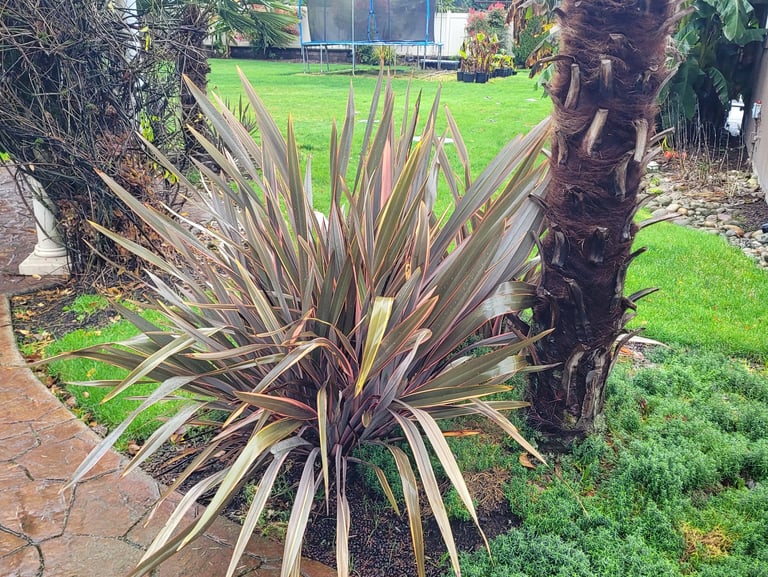
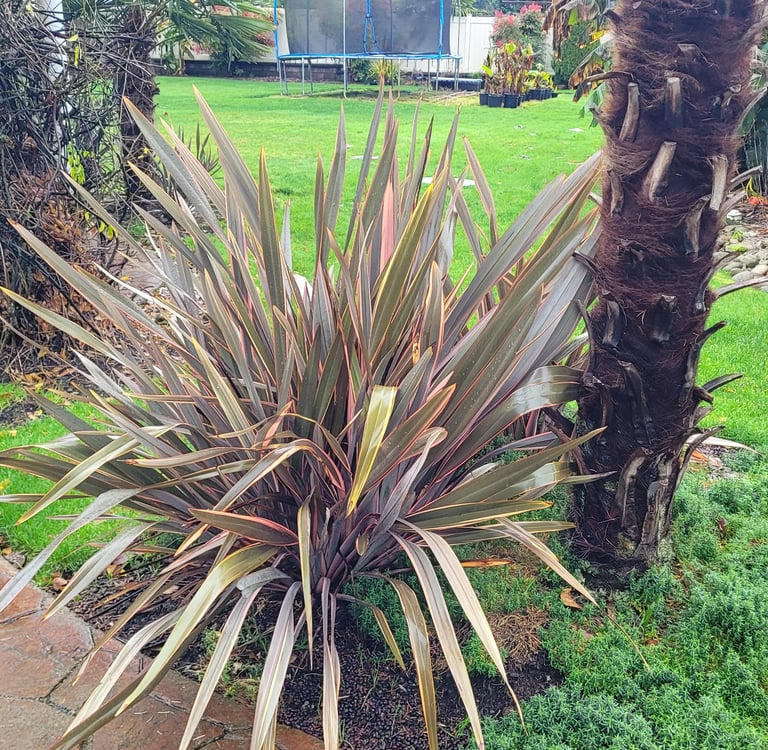
New Zealand flax for bold strappy form
A tree fern lookalike or large upright foliage plant if the porch is shaded
If the porch is small, one strong plant in the right pot is better than two weak ones. Place it where it frames the entry instead of blocking it.
Step 2: Add One Broadleaf Plant for the Tropical Effect
Once you have height, you need leaf contrast. This is where the tropical feeling starts to show up.
Good broadleaf choices include:
Fatsia japonica for glossy, bold leaves
Elephant ear in a summer container display
Hardy hibiscus for oversized foliage and seasonal bloom
Banana plant in a warm-season porch display if you want a dramatic look
Use this second layer to soften the base of the taller plant and make the arrangement feel lush instead of stiff.
Step 3: Use Bold Containers That Look Intentional
Containers can make a tropical porch look high-end or make it look pieced together. The easiest upgrade is to choose fewer pots in larger sizes.
The best look for this style is usually:
Dark charcoal containers
Natural textured planters
Warm terracotta if the house color supports it
Try to repeat the same planter finish at least twice. That repetition makes even a simple porch look professionally styled.
Step 4: Layer the Heights
A common mistake is putting every planter at the same level. Tropical design looks better when heights are staggered.
Ways to do that:
Use one tall floor planter
Add one medium container
Use a plant stand for one smaller accent pot
Hang a basket only if it does not make the space feel crowded
You want the eye to move up and down naturally. That layered look gives a small porch more depth.
Step 5: Add Warm Lighting for Evening Mood
Lighting is what takes a tropical porch from plant display to destination space.
The best choices are usually:
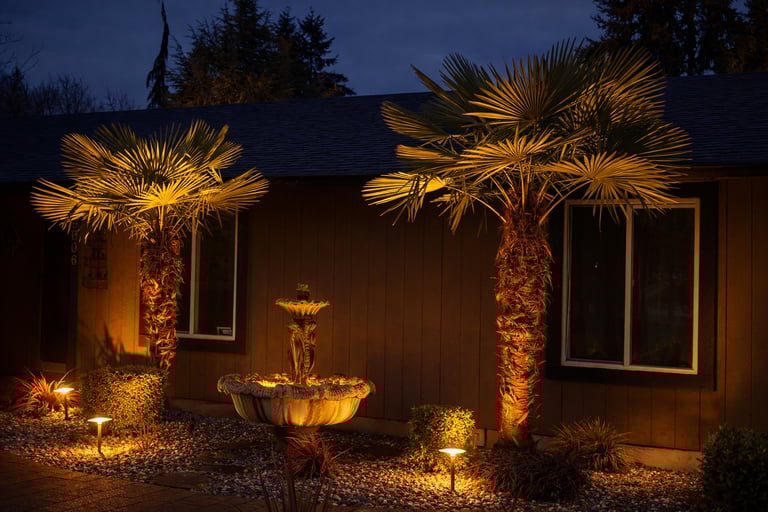
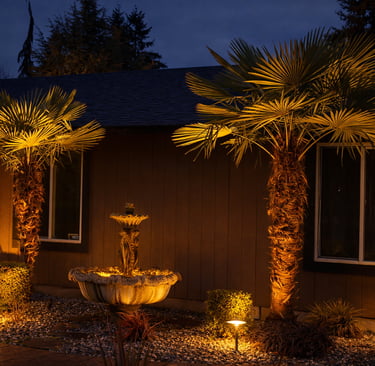
Uplighting aimed at one specimen plant
Soft wall sconces
String lights only if they fit the style of the house
Avoid harsh blue-white lighting. Warm light makes green foliage feel richer and gives the space that resort-like feeling people are actually after.
Step 6: Keep Decor Simple
A tropical front porch does not need much decor if the plants are doing their job. Too many small signs, seasonal items, and accessories can weaken the look.
A better formula is:
One clean doormat
One or two lanterns
One bench or chair if space allows
One accent pillow in a deep green, black, or warm neutral
Minimal clutter
This keeps the focus on the foliage and makes the porch easier to maintain.
Budget / Mid-Range / Premium Build Options
Budget Tropical Porch
Best for: quick upgrade without rebuilding the whole space
One bold planter with one structural plant
One secondary broadleaf plant
Simple doormat
One lantern or solar light
Result: enough to change the feel of the entry without overspending
Mid-Range Tropical Porch
Best for: homeowners who want a more polished look
Two matching large containers
One structural plant and one broadleaf plant grouping
Warm porch lighting
One bench, stool, or layered accessory
Repeated planter finish and color palette
Result: cleaner and more intentional, with stronger visual impact from the street
Premium Tropical Porch
Best for: a full design statement
One anchor specimen plant
Layered foliage with accent lighting
Upgraded seating or architectural accessory
Consistent materials throughout the porch
Result: a front porch that feels styled, memorable, and highly pinnable
Common Mistakes to Avoid
Using too many small pots
Small pots usually disappear visually and make the porch look busy instead of tropical.
Mixing too many styles
If you combine farmhouse signs, bright plastic pots, rustic decor, and tropical plants, the porch starts fighting itself.
Ignoring winter structure
Even if your most tropical-looking plants are seasonal, keep one evergreen or architectural element so the porch still looks designed in the off-season.
Choosing weak lighting
Good tropical mood depends on warm, soft evening light. Cool bulbs flatten the look.
Overfilling the porch
Leave breathing room. Tropical style should feel lush, not cramped.
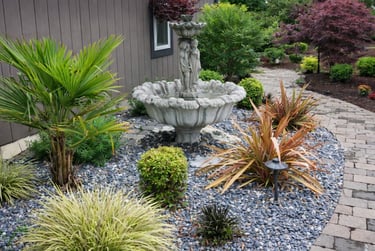
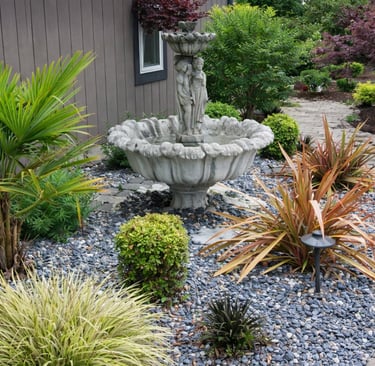
On my own Pacific Northwest property, I’ve found that the best tropical-looking spaces are usually the simplest ones. One strong plant, one broadleaf companion, and warm light tend to look better than trying to pack every tropical-style plant into one small area, the use of the water feature adds a nice touch.
Final Takeaway
If you want a tropical front porch in the Pacific Northwest, do not start with decor. Start with structure, foliage, and repetition. One tall anchor plant, one bold companion plant, large containers, and warm lighting will usually get you much farther than a long shopping list of accessories.
A good tropical porch should feel calm, bold, and easy to maintain. When you get those basics right, the whole front entry starts to feel warmer and more inviting.
Contact Us
© 2025. All rights reserved.
Terms and Conditions
Affiliate Disclosure
Some links on this site may be affiliate links. As an Amazon Associate I earn from qualifying purchases.