
How to Wake Up Your Patio for a Tropical Spring in the Pacific Northwest
Refresh your Pacific Northwest patio for spring with tropical plants, containers, cleanup, mulch, lighting, and cold-hardy foliage.
5/6/20266 min read
Early spring in the Pacific Northwest is one of the best times to reset your patio.
The sun starts showing up more often, the days feel longer, and the garden begins shifting out of winter mode. But the patio usually tells the truth about the season: wet containers, tired mulch, browned leaves, algae on hard surfaces, empty pots, and plants that need a little cleanup before they look tropical again.
This is not the time to pretend it is July. It is the time to prepare.
A good tropical spring patio refresh should do three things: clean up winter damage, bring back structure, and add enough fresh foliage to make the space feel alive again.
You do not need to rebuild the whole patio. A few smart changes can make it feel warm, clean, and tropical before summer fully arrives.
Start With a Spring Patio Walkthrough
Before buying anything, walk through the patio and look closely.
Check:
Which containers survived winter?
Which plants have brown, broken, or mushy leaves?
Where did water sit too long?
Is the patio surface slick or dirty?
Are any pots cracked?
Does the seating area still feel inviting?
Is there one blank corner that needs a strong plant?
Early spring is the best time to catch these issues before the patio gets crowded with summer growth.
In my own yard, I like to do a spring patio walkthrough on the first stretch of sunny days. It is usually obvious which plants are ready to push new growth and which areas still look tired from winter. I always start with my bamboo, they seem to sprout first, raining them in is a priority. A good pressure wash of all hard scape is next.
Clean First, Then Decorate
A tropical patio looks better when the hard surfaces are clean.
Start with the basics:
Sweep leaves and needles
Rinse off muddy pots
Scrub algae from slick areas
Remove broken stakes, dead stems, and old labels
Pull weeds from cracks and container edges, start early with Roundup.
Refresh mulch where it has washed thin
This step is not exciting, but it makes every plant look better.
If the patio still looks messy after adding plants, the problem is usually not the plants. It is the unfinished background.
Cut Back Winter Damage Carefully
Many tropical-looking plants look rough in early spring. That does not always mean they are dead.
Before cutting everything down, check for new growth.
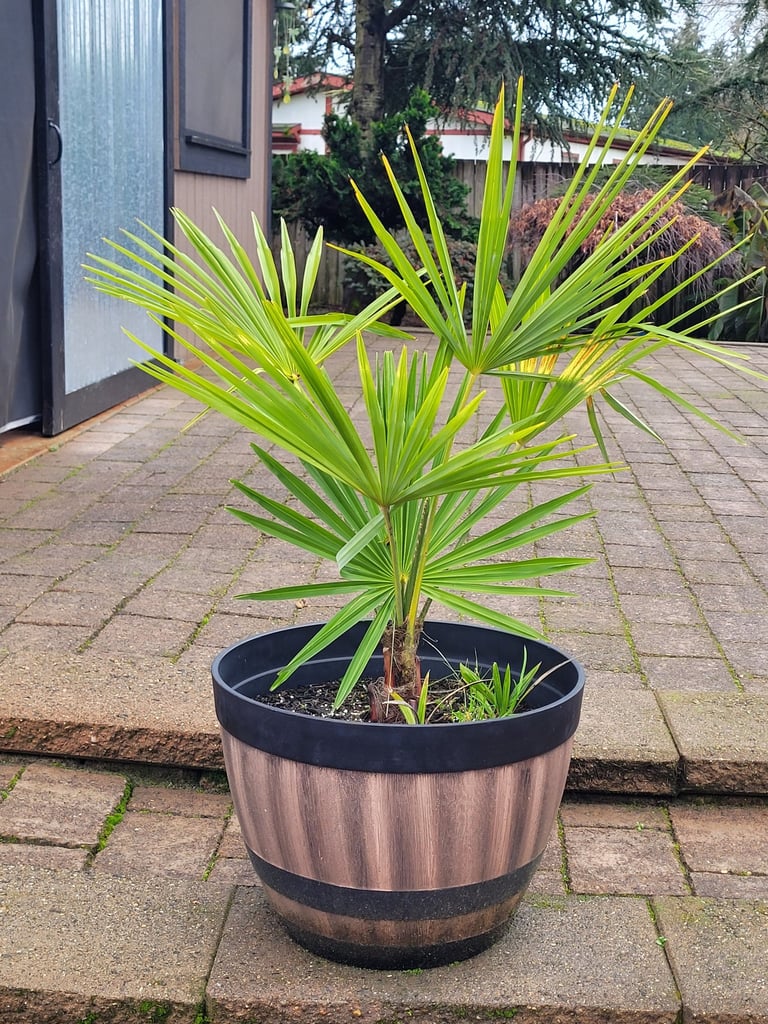
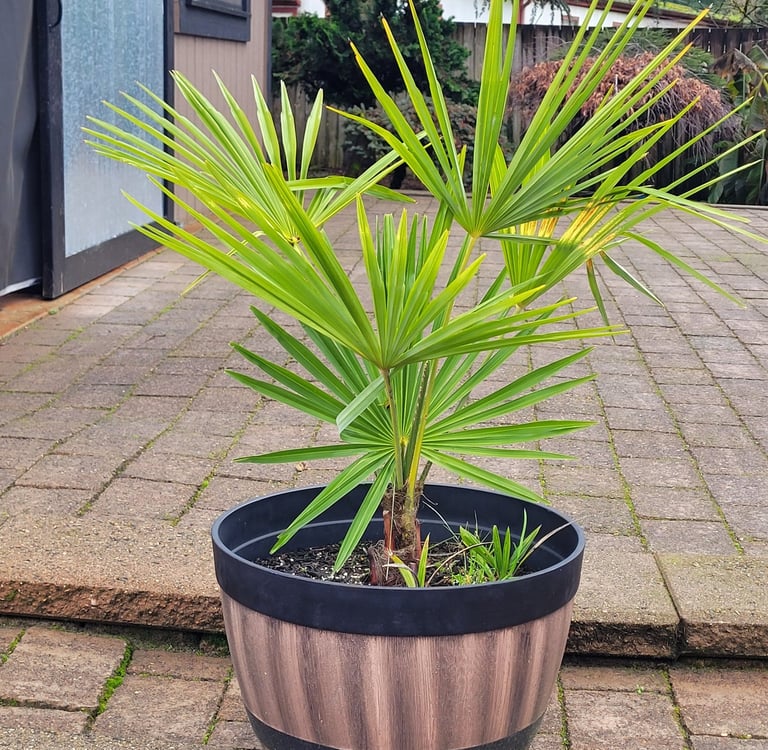
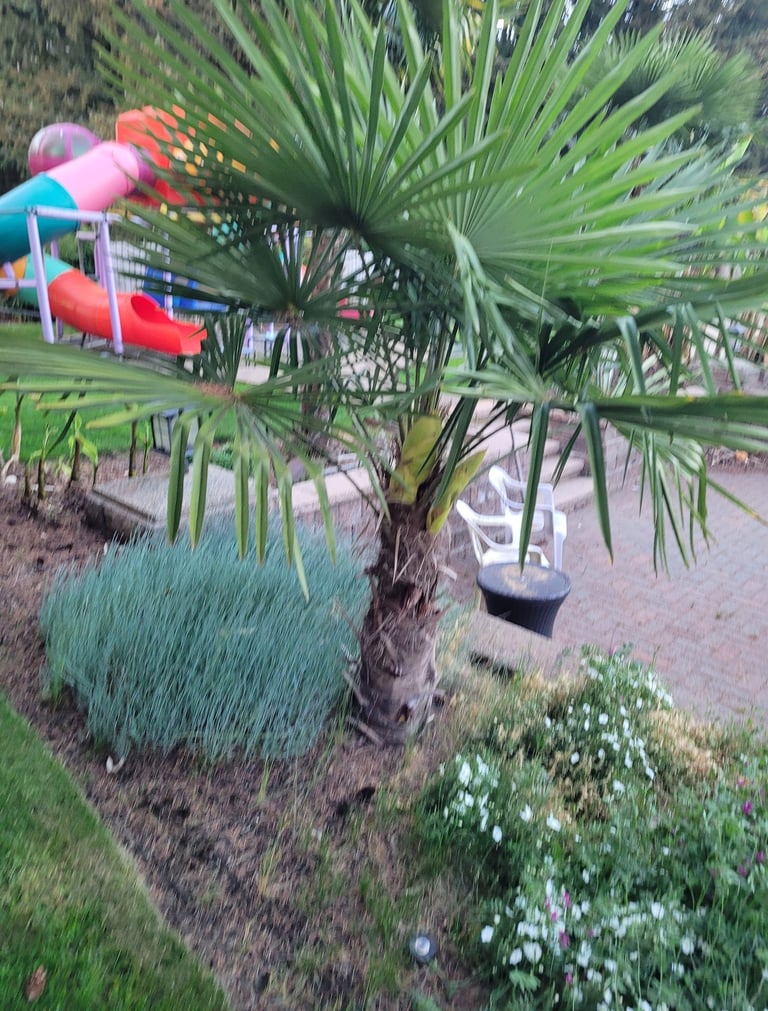
For palms, remove only fully dead or badly damaged fronds. Avoid over-pruning green fronds because the plant still uses them for energy. I do my first trim just after Memorial Day
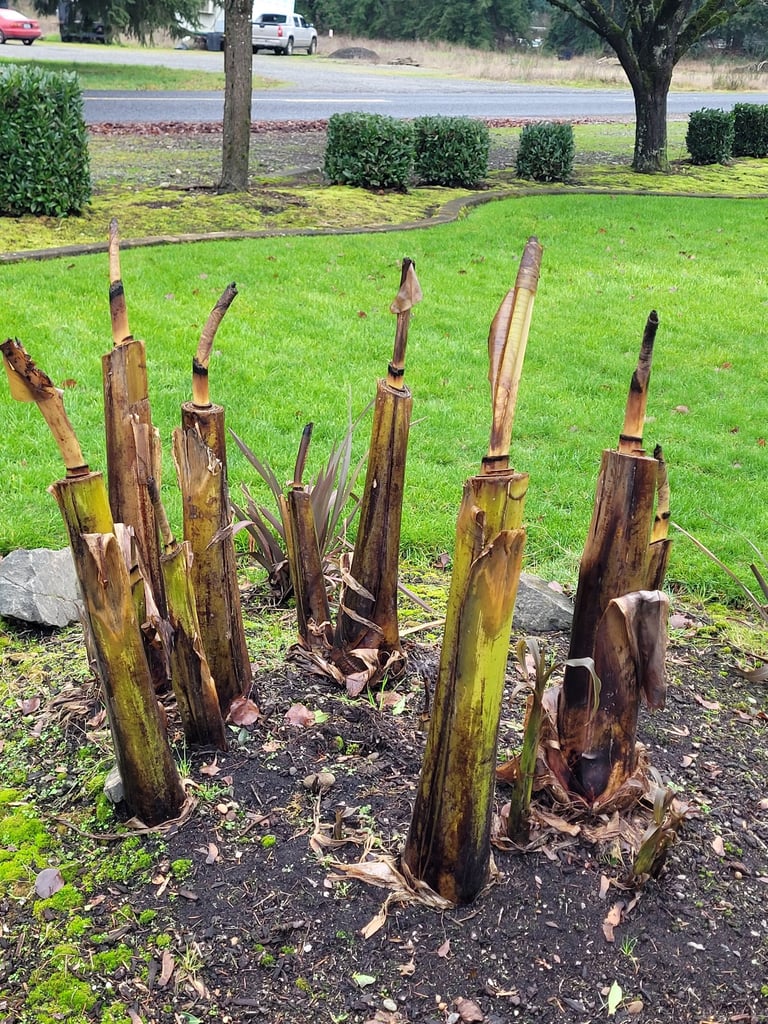
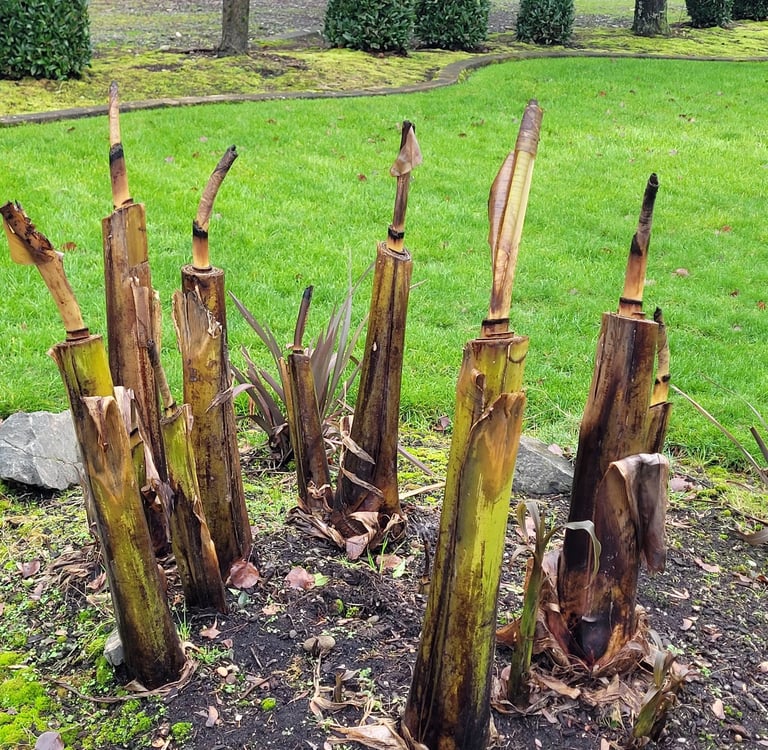
For bananas, wait until the worst freeze risk has passed before cleaning them too aggressively. If the main stem is soft or collapsed, cut back to firm tissue and watch for new growth from the base.
For Fatsia, remove damaged leaves and let the clean foliage carry the spring look.
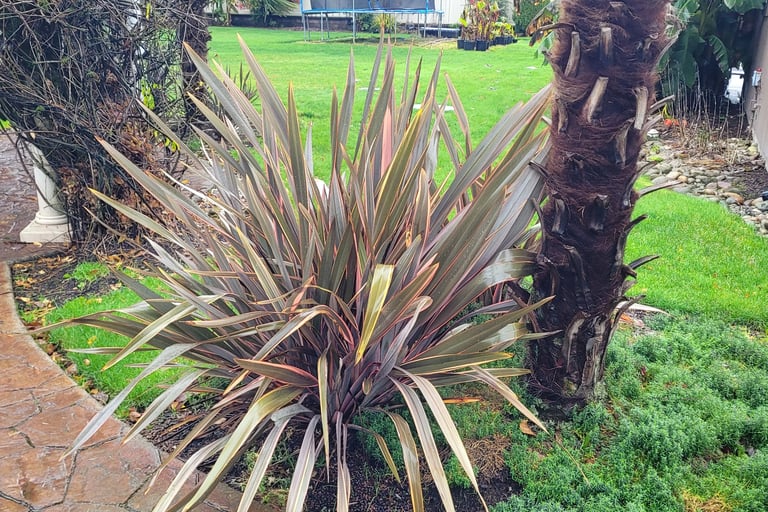
For Phormium, pull or trim dead blades carefully so the plant keeps its shape.
[AMAZON LINK]
A simple pair of bypass pruners makes spring cleanup easier when removing damaged leaves, old stems, and winter-browned growth.
Bring Back One Strong Tropical Anchor
Every patio needs one plant that sets the mood.
In early spring, the best anchor plants are the ones that already have structure before summer heat arrives.
Good choices include:
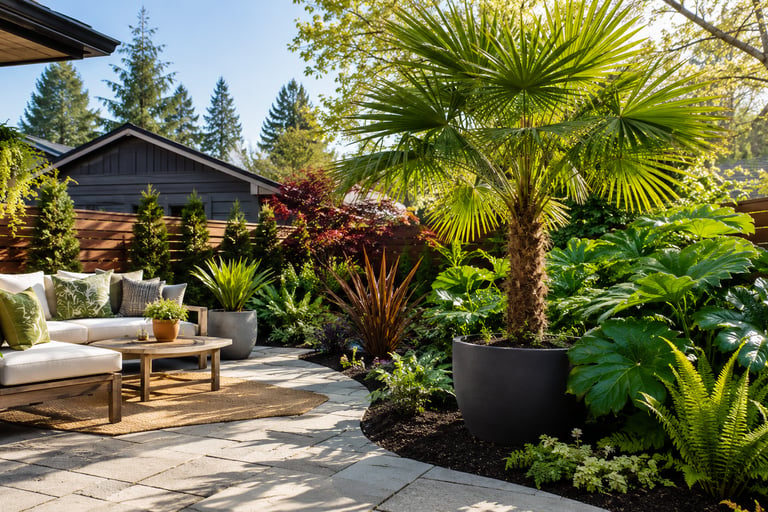
Windmill palm
Fatsia japonica
Phormium
Hardy banana returning from the base
Large evergreen shrub with tropical-style foliage
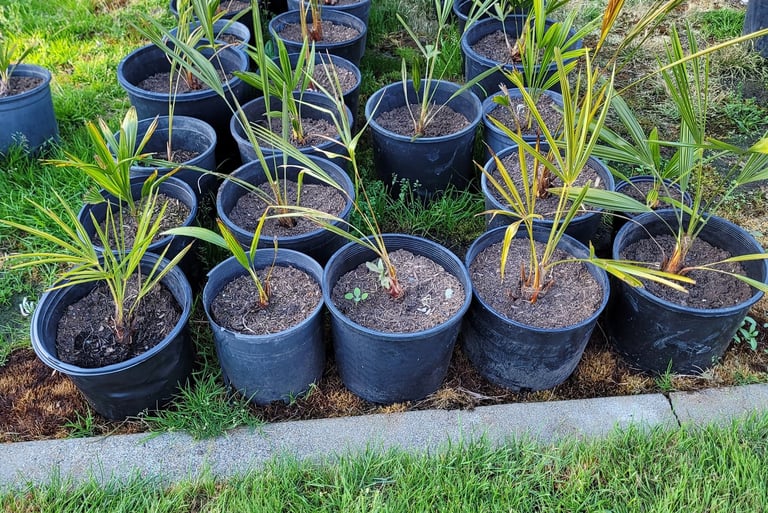
A container palm in a protected spot
One strong anchor is better than five small scattered plants.
Place it where it can be seen from the patio door, seating area, or walkway. That gives the space an immediate focal point.
If your patio needs a strong tropical anchor, start with our Windmill Palm Care guide before choosing a container or in-ground palm.
Refresh Containers for Early Spring Impact
Containers are the easiest way to make a spring patio feel tropical before the rest of the yard wakes up.
Start by removing dead annuals, weeds, old roots, and compacted topsoil. If the potting mix has collapsed or stayed too wet all winter, replace it.
Use a simple spring container formula:
Tall plant
Use a small palm, Cordyline, Phormium, canna start, or overwintered banana.
Bold foliage
Use Fatsia, Heuchera, fern, or large-leaf seasonal plants.
Soft edge
Use trailing plants, low sedum, creeping Jenny, or seasonal annuals once temperatures are safe.
Fresh outdoor potting mix helps container plants start strong after a wet Pacific Northwest winter.
A large weather-resistant planter is one of the fastest ways to add spring tropical impact without digging up the yard.
Use Foliage Before Flowers
In early spring, foliage is more reliable than flowers.
A tropical patio should not depend only on blooms. Use leaf shape, color, and texture to create the look.
Try combining:
Palm fronds
Glossy Fatsia leaves
Fern texture
Upright Phormium blades
Dark mulch
Large ceramic or dark containers
A few seasonal flowers only as accents
This gives the patio a tropical feel even before summer annuals are ready.
[INTERNAL LINK]
For a bold foliage plant that wakes up early in spring, Fatsia japonica is one of the best tropical-looking choices for shaded patio edges.
Reset the Mulch and Edges
Fresh mulch is one of the fastest visual upgrades in spring.
Dark mulch makes green foliage stand out and gives the patio a clean background. It also helps hide bare soil while plants are still filling in.
Use mulch around:
Patio planting beds
Palm bases
Fatsia and fern groupings
Container clusters
Walkway edges
Avoid piling mulch against plant crowns or palm trunks. Keep it slightly pulled back so the base of the plant can breathe.
Add Warmth Before Summer Arrives
Spring evenings can still be cool, but the right patio details make the space feel usable earlier.
Add warmth with:
Outdoor cushions
A small side table
Warm string lights
Solar uplights
A fire bowl where safe and allowed
Dark containers
Natural wood or bamboo accents
The goal is to make the patio feel inviting even before the garden is fully grown in.
Warm solar or low-voltage patio lights can make the first sunny spring evenings feel more inviting.
Feed Lightly as Growth Starts
Early spring is not the time to force tropical plants too hard, but once you see active growth, you can begin feeding lightly.
For containers, use a balanced slow-release fertilizer or a mild liquid feed once temperatures are warming. For in-ground palms and foliage plants, wait until the plant is actively growing before feeding.
Do not fertilize plants that are still cold-stressed or sitting in wet soil.
A slow-release outdoor plant fertilizer can help palms, bananas, and container foliage push healthy new growth as temperatures warm.
Budget, Mid-Range, and Premium Spring Refresh
Budget Refresh
Best for a fast weekend improvement.
Use:
Spring cleanup
Fresh mulch
One bold container
One tropical-looking anchor plant
One warm light
Clean seating area
Mid-Range Refresh
Best for most patios.
Use:
Two or three large containers
One palm or Fatsia anchor
Fresh potting mix
Updated mulch
Warm lighting
A few spring annuals
Clean patio furniture
Premium Refresh
Best for a patio that functions like an outdoor room.
Use:
Oversized matching containers
Windmill palm or large foliage anchor
Layered planting bed
Low-voltage lighting
Outdoor rug
Coordinated cushions
Side table or fire feature
Fresh mulch, gravel, or edging
Simple Tropical Spring Patio Checklist
Use this as a quick spring reset:
Sweep and wash the patio
Remove dead leaves and winter debris
Check containers for cracks and poor drainage
Cut back only clearly dead growth
Refresh potting mix where needed
Add one strong tropical anchor plant
Group containers instead of scattering them
Add fresh mulch around planting areas
Use warm lighting for evenings
Feed only when plants are actively growing
This simple reset can make the patio feel dramatically better before summer.
Final Thoughts
A tropical spring patio in the Pacific Northwest is not about rushing the season. It is about getting the space ready.
Clean first. Cut back carefully. Refresh containers. Add one strong tropical anchor. Use foliage for structure, mulch for contrast, and warm lighting for atmosphere.
By the time summer growth arrives, the patio will already have the shape and structure it needs.
That is how you turn the first sunny stretch of spring into the start of a better tropical outdoor season.
If you want to refresh a larger outdoor space, pair this spring patio checklist with our tropical patio design guide.
Contact Us
© 2025. All rights reserved.
Terms and Conditions
Affiliate Disclosure
Some links on this site may be affiliate links. As an Amazon Associate I earn from qualifying purchases.