
How to Add a Small Water Feature to a Tropical Pacific Northwest Garden
A tropical-looking garden is not only about plants. The sound of water, the shine of wet stone, and the movement of a small fountain can change the entire feel of an outdoor space.
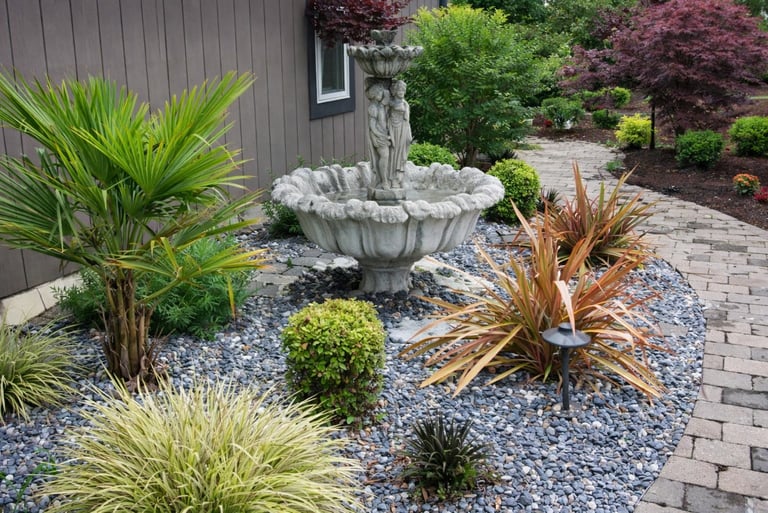
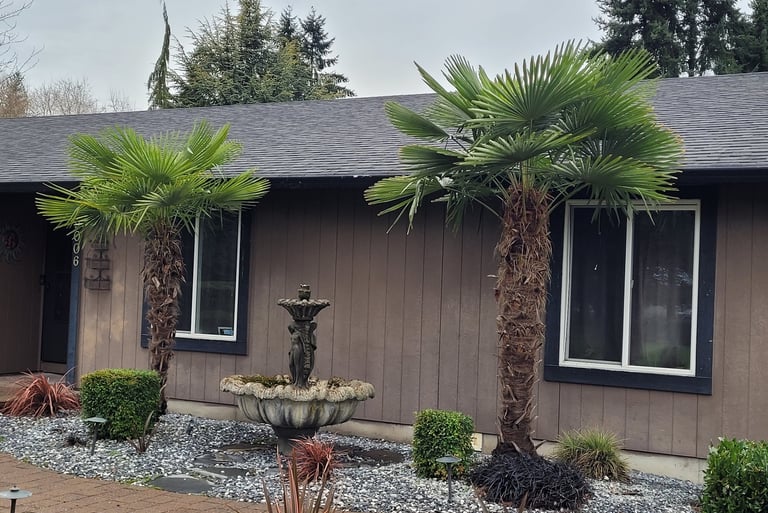
In the Pacific Northwest, a water feature can make a tropical-style garden feel more finished, more relaxing, and more intentional. It does not have to be large. You do not need a full pond, expensive waterfall, or complicated hardscape project. Even a small bubbling urn, container pond, or low fountain can add the feeling of a lush outdoor retreat.
The key is choosing the right type of water feature for the space, placing it where it actually gets noticed, and designing it so it does not become a maintenance problem.
Quick Plan
For a tropical-style water feature in the Pacific Northwest:
Choose a small feature before building a large pond.
Place it where you can see or hear it from the patio, seating area, or main garden path.
Use bold foliage around the water to create the tropical effect.
Keep water moving to reduce stagnation.
Avoid placing it where falling leaves, needles, or debris will constantly clog it.
Make it easy to clean, refill, and winterize.
A water feature should improve the garden, not become another unfinished project.
Why Water Works So Well in a Tropical Garden
Tropical design is about atmosphere. Large leaves, layered planting, shade, humidity, texture, and enclosure all help create that feeling. Water adds another layer.
It gives the garden movement.
It reflects light.
It softens noise.
It makes a seating area feel cooler and more relaxing.
It gives birds and wildlife a reason to visit.
Most importantly, water makes the space feel alive.
In a Pacific Northwest garden, where summer can be dry and winter can be gray, a water feature helps bridge the seasons. In summer, it adds movement and sound. In winter, the structure can still look intentional even when some plants are dormant or cut back.
Start Small Before Building Big
A full pond can be beautiful, but it is not the right starting point for every yard.
Large ponds require planning, excavation, liners, pumps, filtration, electrical access, and ongoing maintenance. If the goal is simply to add a tropical feel near a patio, entryway, or garden seating area, a smaller feature may work better.
Good starter options include:
A bubbling urn
A ceramic fountain
A basalt column fountain
A container pond
A small recirculating bowl fountain
A wall fountain
A stock tank-style water garden
A hidden basin fountain with rocks over the top
These smaller features can still create a strong design impact without taking over the garden.
The Best Places to Put a Water Feature
Placement matters more than size.
A water feature hidden in the far back corner of the yard may not do much for the garden experience. The best location is usually somewhere you already spend time or somewhere you pass often.
Good locations include:
Near a patio seating area
Beside a garden path
Near the entrance to a tropical garden area
Outside a kitchen or living room window
Near a shaded sitting spot
At the end of a short view line
Beside bold foliage plants
Think of the water feature as a focal point. It should pull the eye through the garden or reward you when you enter the space.
Avoid placing it where it blocks movement, creates a tripping hazard, or competes with too many other focal points.
Use Plants to Make the Water Feature Feel Tropical
The water itself is only part of the design. The surrounding plants create the tropical look.
A plain fountain sitting alone on a patio can look decorative but disconnected. A fountain surrounded by bold foliage feels like part of the garden.
Good plants to use around a small water feature include:
Fatsia japonica for glossy evergreen structure
Hostas for large leaves in shade
Ferns for soft woodland texture
Japanese forest grass for movement
Carex for evergreen grassy texture
Hardy begonias for shade and seasonal interest
New Zealand flax for sword-like structure
Canna lilies for bold summer foliage
Banana palms for fast seasonal height
Windmill palms for year-round tropical structure
Hardy ginger for summer lushness
Colocasia or elephant ear for dramatic foliage in warm protected spots
You do not need all of these plants. The best design usually comes from repeating a few strong textures.
A simple combination could be:
One vertical plant
One large-leaf plant
One fine-textured plant
One trailing or low plant
That is enough to make the water feature feel planted into the space instead of placed on top of it.
See our Database and Plants & Growing sections for more plant knowledge and ideas.
Match the Water Feature to the Style of the Garden
A tropical-style Pacific Northwest garden usually looks best when the water feature feels natural, simple, and grounded.
Good material choices include:
Dark ceramic
Basalt
Natural stone
Concrete
Weathered steel
Black or charcoal resin
Wood-framed stock tank features
Avoid overly bright plastic fountains or highly ornate pieces that do not match the rest of the garden. The goal is not to create a theme park look. The goal is a realistic Pacific Northwest tropical garden.
A simple dark bowl surrounded by fatsia, ferns, and hostas can look better than a large decorative fountain that feels out of place.
Keep the Water Moving
Still water can become a problem if it sits too long.
For most small tropical-style water features, moving water is the better choice. A small pump keeps the water circulating, creates sound, and reduces the chance of the feature becoming stagnant.
Good movement options include:
A bubbling stone
A spillway
A recirculating urn
A short waterfall drop
The movement does not have to be dramatic. In fact, a soft bubbling sound often works better in a small garden than a loud waterfall.
If you want a quieter space, choose a gentle bubbler. If you want to mask road noise or neighborhood sound, choose a slightly stronger water movement.
Make Maintenance Easy
The most successful water feature is the one you will actually maintain.
Before installing it, think about how you will clean it, refill it, and access the pump.
Ask yourself:
Can I reach the pump easily?
Can I remove leaves and debris without taking the whole feature apart?
Is there a nearby hose?
Will falling leaves, fir needles, or cedar debris constantly land in it?
Can I drain or protect it before a freeze?
Is it close enough to enjoy but not in the way?
In the Pacific Northwest, evergreen needles, leaves, moss, and algae can build up quickly. A simple feature that is easy to clean is usually better than a complicated feature that looks great for one month and then becomes a chore.
Avoid the Mosquito Problem
A water feature should not become a mosquito nursery.
The easiest way to prevent that problem is to keep water moving, remove debris, and avoid shallow stagnant pockets where water sits undisturbed.
Small container ponds and fountains should be checked regularly during warm weather. If the pump stops, fix it quickly. If leaves collect in the basin, remove them. If the water level drops, refill it before the pump runs dry.
For water features that cannot stay moving all the time, use a design that is easy to empty, clean, and refresh.
A good tropical garden should feel relaxing, not buggy.
Think About Wildlife Safety
Water attracts birds, frogs, insects, and other wildlife. That can be a good thing, but the feature needs to be safe.
If the water feature has deep or steep sides, add a way for small animals to get out. This can be as simple as a sloped stone, a textured branch, or a shallow landing area.
For container ponds, avoid smooth vertical sides with no escape route. A bird, frog, or small animal can fall in and struggle to climb out.
If the feature is near pets or children, keep the water shallow or use a covered basin style where the reservoir is hidden below rock.
Container Pond vs. Fountain
A container pond and a fountain are not the same thing.
A fountain is mostly about sound and movement. It usually has a pump and recirculating water. It works well near patios, seating areas, and entries.
A container pond is more about stillness, reflection, and plants. It may include aquatic plants, stones, and wildlife access. It can be beautiful, but it needs more attention to prevent stagnant water.
For most Pacific Northwest tropical gardens, a fountain is the easier first choice.
A container pond is a better choice if you want a quiet wildlife-friendly feature and are willing to manage plants, water level, and mosquito prevention.
Good Planting Combinations Around Water
Here are several realistic combinations that work with a tropical Pacific Northwest style.
For shade:
Fatsia japonica
Ferns
Japanese forest grass
Hardy begonias
For part shade:
Carex
Hardy ginger
Ferns
New Zealand flax in brighter edges
For sun:
Canna lilies
Banana palm with regular water
Dark foliage accents
For a small patio corner:
One ceramic fountain
One fatsia in the background
Two hostas or ferns nearby
One pot of Japanese forest grass
Dark mulch or gravel top dressing
For a bold summer look:
One bubbling urn
Banana palm behind it
Canna lilies nearby
New Zealand flax for structure
Low foliage around the base
Use Stone and Mulch to Tie It Together
The area around the water feature matters.
If the base looks unfinished, the whole feature can look temporary. Use stone, gravel, mulch, or edging to make the water feature feel built into the garden.
Good finishing materials include:
Dark bark mulch
Basalt chips
Small gravel
Flat stepping stones
Natural boulders
Dark mulch creates a clean backdrop for bright green foliage. Stone works well around water because it feels natural and helps hide hoses, cords, and pump basins.
Avoid too many different materials in one small area. Pick one main ground finish and repeat it nearby.
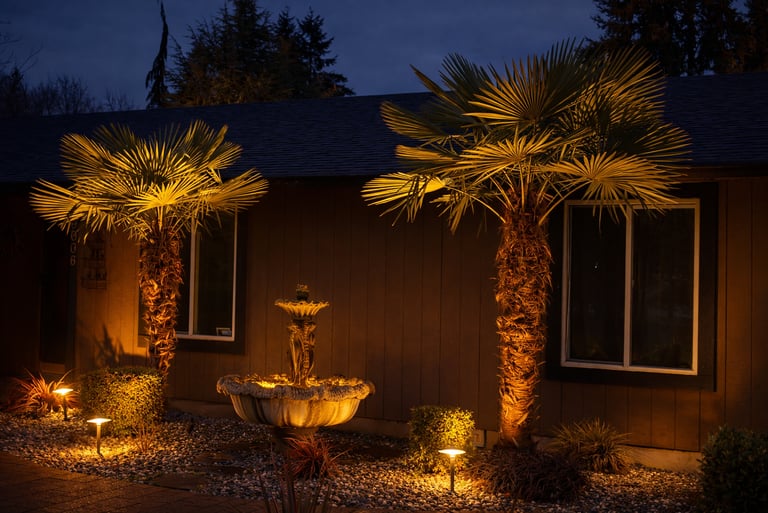
Add Lighting for Evening Impact
A small water feature becomes much more useful if you can enjoy it in the evening.
Low-voltage or solar lighting can highlight the water movement, reflect off wet stone, and make the surrounding foliage stand out after sunset.
Good lighting options include:
A small spotlight aimed at the water
Path lights leading toward the feature
Low uplighting behind large leaves
A soft light under nearby foliage
Solar lights for a simple no-wiring setup
Keep lighting subtle. The goal is not to flood the area with brightness. The best tropical garden lighting feels soft, warm, and indirect.
How to Use Landscape Lighting to Create a Tropical Look
Budget, Mid-Range, and Premium Options
A water feature can fit different budgets.
For a budget setup, use a large ceramic bowl, a small recirculating pump, stones, and a few shade plants around it. This can create a strong tropical feel without major construction.
For a mid-range setup, use a bubbling urn, hidden reservoir, and planted border around the feature. Add dark mulch, river rock, and simple lighting.
For a premium setup, build a larger recirculating stone feature with a hidden basin, planted backdrop, permanent electrical access, and integrated lighting.
The best option is not always the most expensive one. The best option is the one that fits the space, looks intentional, and stays easy enough to maintain.
Common Mistakes to Avoid
The first mistake is going too big too soon. A large pond sounds appealing until excavation, liner work, pumps, algae, and maintenance become overwhelming.
The second mistake is hiding the feature where nobody sees it. Put it where it adds to daily life.
The third mistake is ignoring debris. A fountain under messy trees may need constant cleaning.
The fourth mistake is using too many decorative pieces around it. Let the water and plants do the work.
The fifth mistake is forgetting winter. Pumps, ceramic bowls, and shallow basins may need protection before hard freezes.
The sixth mistake is using water without plants. A tropical-style water feature needs foliage around it to feel connected to the garden.
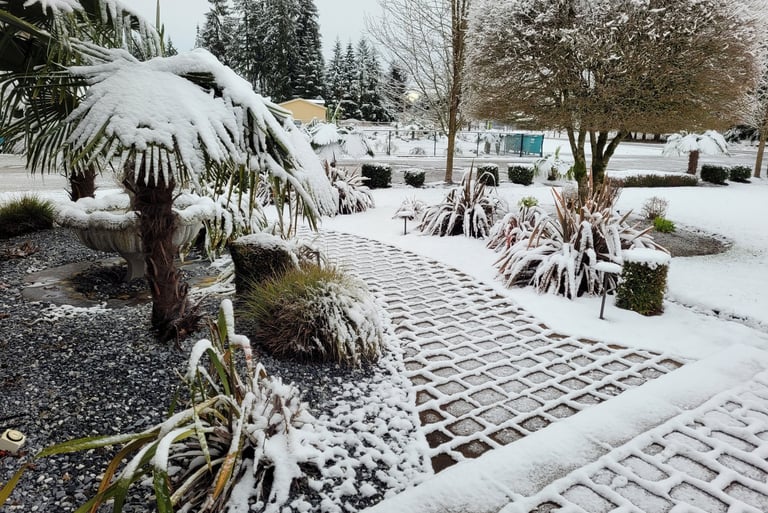
Winter Considerations in the Pacific Northwest
Winter planning is important.
Small pumps may need to be removed, cleaned, and stored if freezing weather is expected. Ceramic containers can crack if water freezes inside them. Shallow bowls may need to be drained before hard freezes.
For permanent features, make sure the basin, pump, and plumbing are rated for outdoor use and can handle seasonal conditions.
If the feature is near evergreen plants, check it during winter storms. Needles and leaves can clog pumps even when the garden is not actively growing.
A simple winter routine can prevent most problems:
Clean out debris in fall.
Remove or protect small pumps before severe freezes.
Drain ceramic bowls if needed.
Keep cords and connections safe.
Check the feature after storms.
Final Thoughts
A small water feature can make a Pacific Northwest tropical garden feel more complete without turning the yard into a major construction project.
Start with a simple design. Put it where you can enjoy it. Surround it with bold foliage. Keep the water moving. Make maintenance easy. Plan for winter before cold weather arrives.
Done well, a small fountain, bubbling urn, or container pond can add sound, reflection, wildlife interest, and a stronger tropical atmosphere to the garden.
It is one of the easiest ways to make a planted space feel like a retreat.
How to Add a Small Water Feature to a Tropical Pacific Northwest Garden
Create a tropical feel in a Pacific Northwest garden with a small water feature, fountain, container pond, or bubbling urn designed for easy maintenance, wildlife, and year-round structure.
7/1/20268 min read
Contact Us
© 2025. All rights reserved.
Terms and Conditions
Affiliate Disclosure
Some links on this site may be affiliate links. As an Amazon Associate I earn from qualifying purchases.