
How to Build a Tropical Patio Corner in the Pacific Northwest
Create a tropical patio corner in the Pacific Northwest with layered plants, lighting, containers, and simple design moves that add warmth fast.
4/1/20265 min read
Why a Tropical Patio Corner Works So Well in the Pacific Northwest
A tropical patio corner is one of the easiest ways to create a lush, resort-style feel in a Pacific Northwest yard without reworking the whole landscape. Instead of trying to make every part of the yard feel tropical, focus on one intentional zone near a seating area, patio edge, deck, or fence line. That smaller footprint is easier to design, easier to maintain, and easier to make look polished.
In the Pacific Northwest, this works especially well because many tropical-looking plants thrive with our mild temperatures, cool nights, and long growing season. The key is not chasing true tropicals that struggle here. The better strategy is to combine cold-hardy structural plants, oversized foliage, warm materials, and simple lighting so the space feels tropical even in a regional climate.
Start With the View From the Chair
The best patio corners are designed from the seated view, not from the property line. Sit where you would actually drink coffee or relax in the evening and look outward. That is the angle you are building.
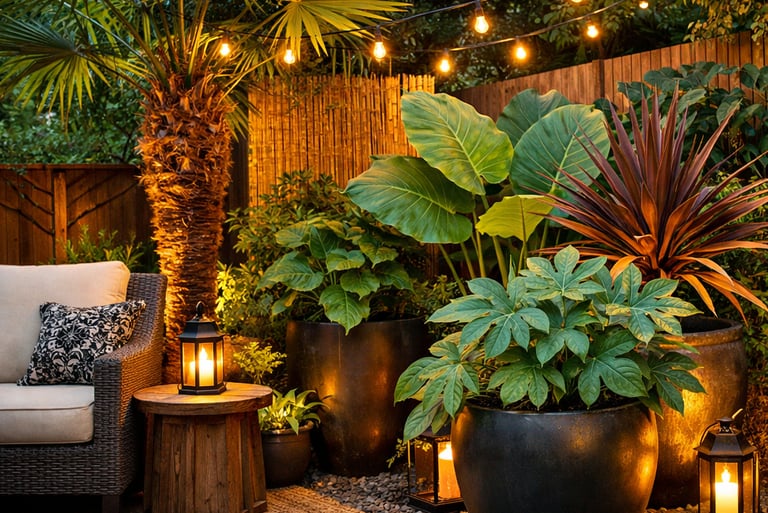
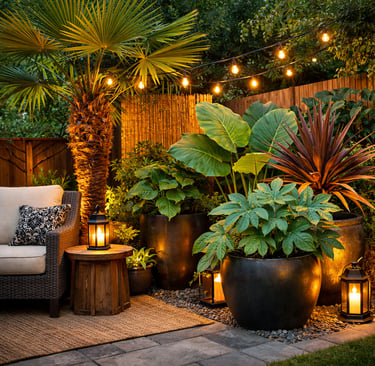
A successful tropical patio corner usually needs only five things: height, bold foliage, a warm base layer, soft lighting, and one visual focal point. Height gives privacy and enclosure. Bold foliage creates the tropical effect. A warm base layer such as wood, gravel, dark mulch, or an outdoor rug makes the space feel finished. Lighting extends the usefulness of the area into the evening. A focal point keeps the design from looking accidental.
The Fastest Layout That Usually Works
A simple three-layer layout works in most Pacific Northwest patio spaces.
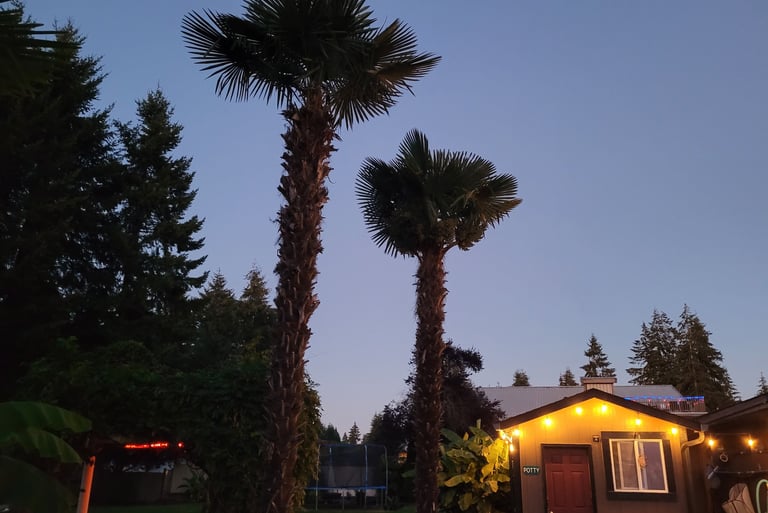
Use the back layer for height and screening. This could be windmill palms, tall cordylines, tall banana palms in season, bamboo in containers where appropriate, or a fence softened with climbing greenery.
Use the middle layer for broad, dramatic foliage. This is where fatsia, phormium, hardy hibiscus in season, tetrapanax where space allows, Colocasia in protected summer containers, or bold mixed pots do most of the visual work.
Use the front layer for finish and softness. Low planters, trailing foliage, lanterns, gravel, dark mulch, or an outdoor rug can make the space feel intentional instead of plant-staged.
This layered approach gives you a tropical look even if you are only using a small number of plants.
Best Plant Choices for a PNW Tropical Patio Corner
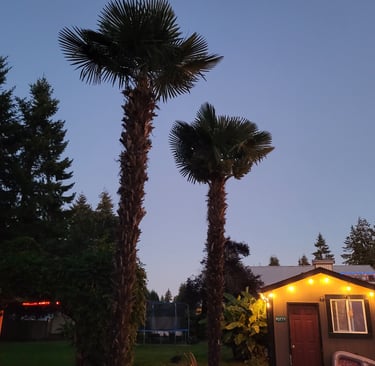
For structure, windmill palms are one of the strongest anchors because they instantly communicate a tropical look while still fitting the Pacific Northwest climate. Cordyline australis can also add height and color contrast, especially if used near hardscape or containers.
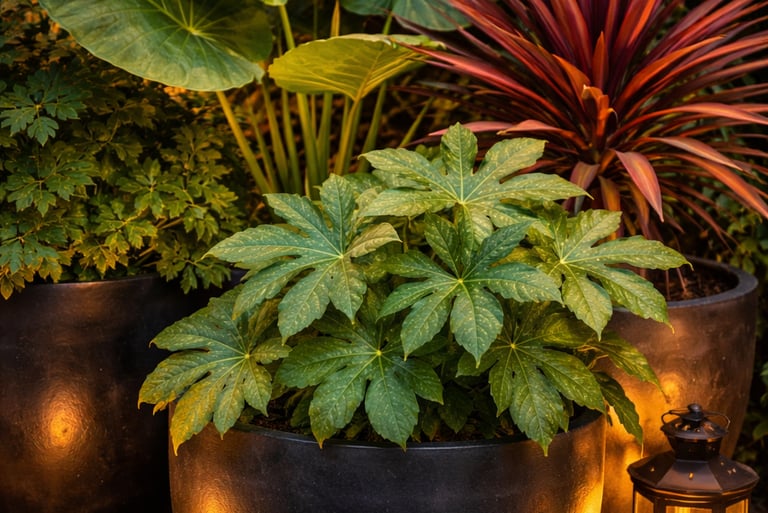
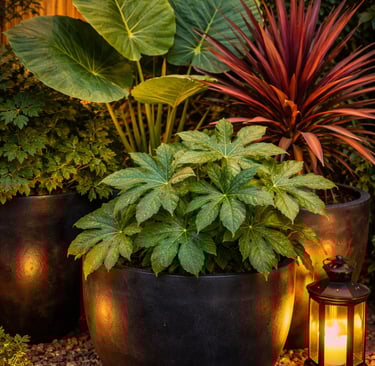
For foliage impact, fatsia japonica is hard to beat in part shade. In brighter spots, phormium can add strong lines and color. Bananas give fast summer drama and help soften fences, sheds, and patio edges. If the area is sheltered and warm, elephant ears in containers can work as a seasonal accent even if they are not the backbone of the design.
The smartest mix is usually one structural plant, one large-leaf plant, one strappy or spiky contrast plant, and one or two containers that can be rotated seasonally.
Design Rules That Keep It Looking High-End
The biggest mistake is using too many small pots with too many different plant styles. A tropical patio corner looks better when the planting feels bold and simplified.
Use fewer, larger containers instead of many small ones. Repeat materials instead of mixing everything. Keep your color palette warm and restrained. Black, charcoal, deep brown, natural wood, matte ceramic, and muted greens tend to look more expensive than bright plastic or highly mixed finishes.
Also pay attention to leaf shape contrast. A tropical look becomes much stronger when fan shapes, broad leaves, and strappy upright foliage are layered together. That contrast creates the visual richness people respond to.
Quick Plan Box: Build It in One Weekend
Step one: identify the main viewing angle from the patio or seating area.
Step two: place one tall anchor plant at the back or outer edge of the corner.
Step three: add one or two bold foliage plants in the mid-layer.
Step four: use two matching or coordinated containers to create weight and symmetry.
Step five: add a grounding element such as dark mulch, gravel, pavers, or an outdoor rug.
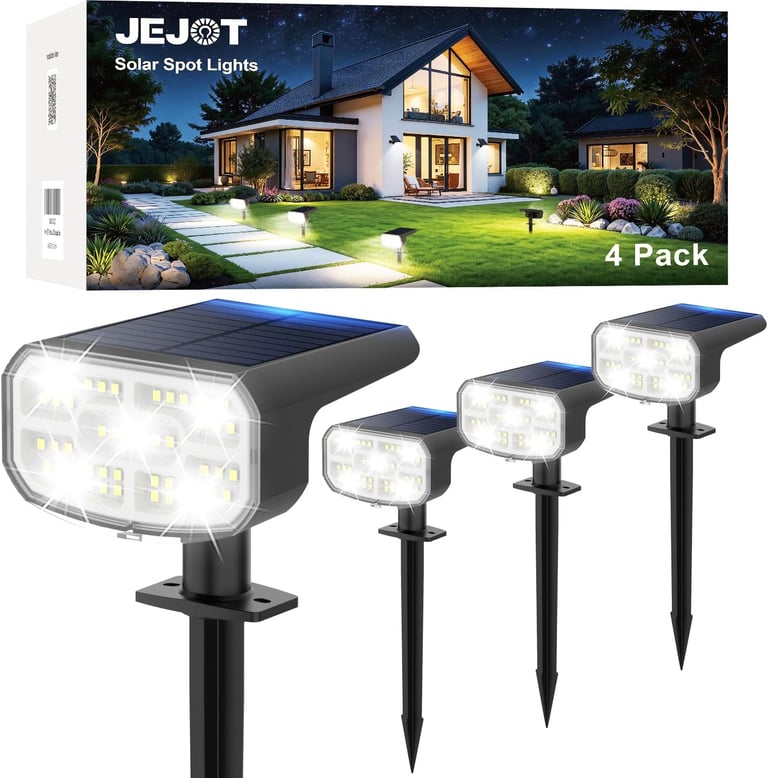
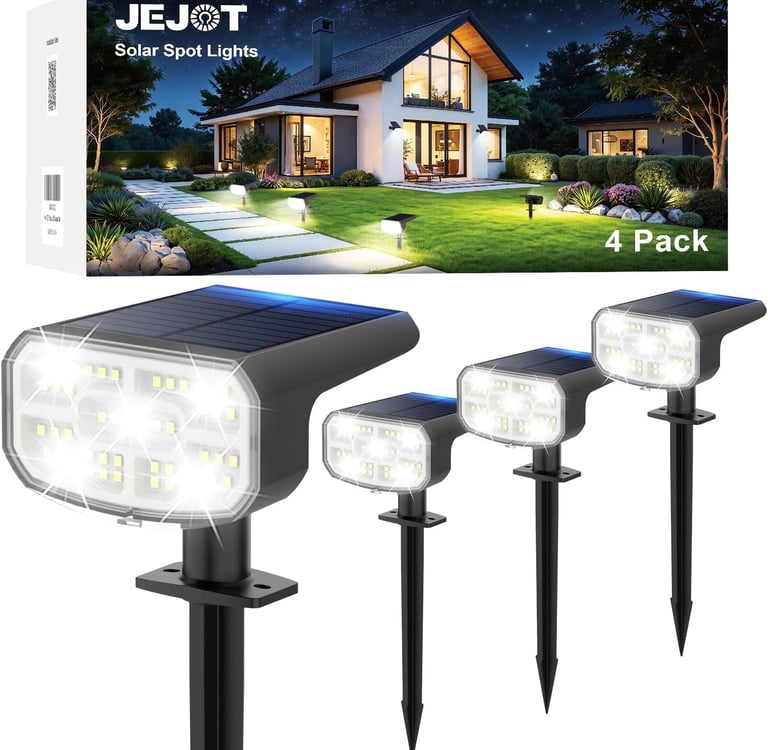
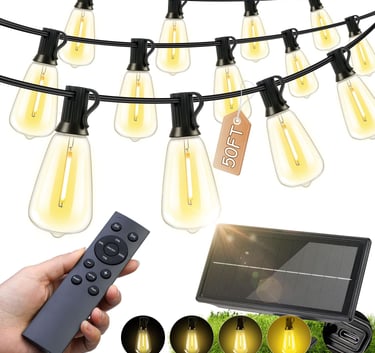
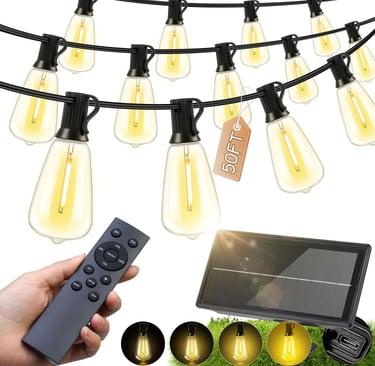
Step six: finish with lighting such as solar uplights, string lights, or lantern-style fixtures.
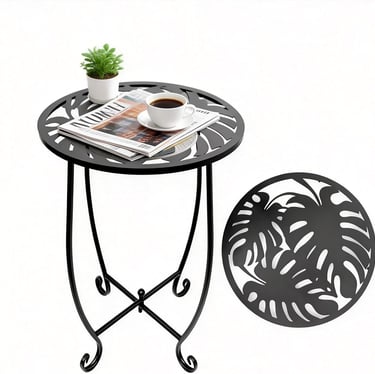
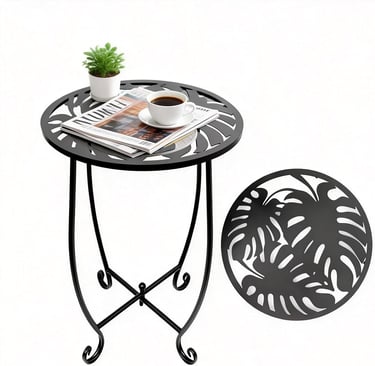
If the space still feels flat, add one focal piece such as a bench, ceramic pot, side table, or sculptural planter.
Budget, Mid-Range, and Premium Versions
A budget version can be built with existing patio furniture, one larger planter, one structural plant, dark mulch, and simple solar lights. This approach still works if the layout is clean and the foliage is bold.
A mid-range version usually includes two to three coordinated planters, one stronger anchor plant such as a windmill palm, one broadleaf companion plant, improved lighting, and a more intentional surface treatment like gravel or an outdoor rug.
A premium version layers privacy, plant mass, hardscape texture, and evening ambiance. That could include larger statement pots, better-quality 120v lighting, a teak or resin seating piece, a fire feature or side table, and a more finished background such as slatted screening or an upgraded fence section.
Common Mistakes to Avoid
One common mistake is placing tropical-style plants randomly around a patio instead of grouping them into one visual zone. Grouping creates impact. Scattering weakens it.
Another mistake is ignoring winter structure. In the Pacific Northwest, a patio corner should still look composed when summer foliage is reduced. Evergreen structure, strong containers, and clean hardscape lines help the space hold up year-round.
A third mistake is choosing plants based only on novelty. For this type of design, shape matters more than rarity. A simple planting that holds its form and reads clearly from a distance will usually outperform a collection of unusual plants that do not work together.
Final Takeaway
A Pacific Northwest tropical patio corner does not need to be large or expensive to work. The biggest win comes from focusing the effect into one visible zone and using the right combination of structure, foliage, and warmth. If you build around one anchor plant, one bold foliage layer, and one finished base, the space will feel far more intentional and far more inviting than a scattered collection of pots ever will.
For smaller patios, decks, and entryways, see our guide to building a tropical container garden in the Pacific Northwest.
Contact Us
© 2025. All rights reserved.
Terms and Conditions
Affiliate Disclosure
Some links on this site may be affiliate links. As an Amazon Associate I earn from qualifying purchases.