
How to Create a Tropical Container Garden in the Pacific Northwest
Create a lush tropical container garden in the Pacific Northwest with bold foliage, smart pot choices, seasonal layers, and easy design rules.
5/27/20267 min read
Introduction
You do not need a large yard to create a tropical garden feeling in the Pacific Northwest. A few well-planned containers can completely change the look of a patio, deck, porch, entryway, or small backyard.
Container gardens work especially well in the PNW because they give you control. You can improve drainage, move sensitive plants during cold snaps, add seasonal color, and create a lush tropical look without redesigning the entire landscape.
The key is not just filling pots with random tropical-looking plants. A good tropical container garden needs structure, contrast, moisture control, and a strong focal point.
This guide explains how to build a tropical container garden that looks intentional, handles Pacific Northwest weather, and fits naturally into your outdoor space.
Why Containers Work So Well in the Pacific Northwest
Pacific Northwest gardens are often cool, damp, and shaded for much of the year. That can be a challenge for tropical-looking plants, especially in heavy native soil.
Containers solve several common problems.
They let you control the soil mix, improve drainage, place plants where they get the right amount of light, and move borderline plants into a protected spot when needed. Containers also warm up faster than the ground in spring, which helps many foliage plants start growing earlier.
For small spaces, containers are one of the fastest ways to create a tropical look without committing to a full landscape renovation.
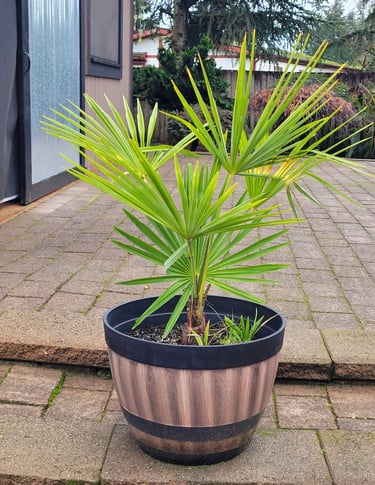
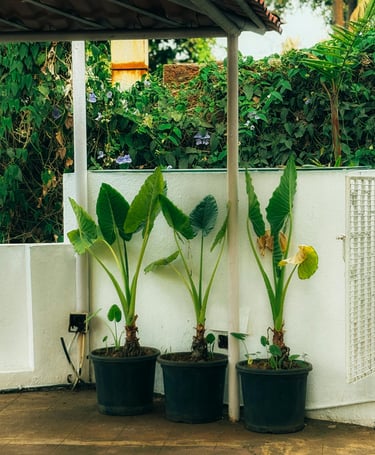
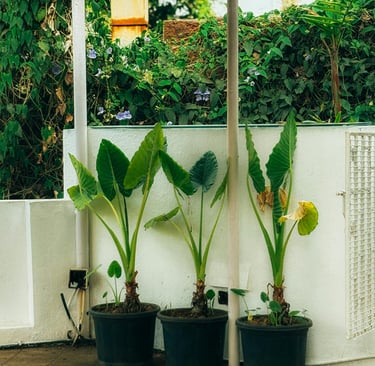
In my own Pacific Northwest garden, containers are one of the easiest ways to test a tropical design idea before planting anything permanently. We are experimenting on using containers to bring color into our yard.
Start With One Strong Focal Point
Every good tropical container arrangement should begin with one main plant.
This is the plant that gives the container height, structure, and identity. Without a strong focal point, a container garden can start to look cluttered instead of designed.
Good focal-point plants for a Pacific Northwest tropical container include:
Canna
Large ornamental grass
Dwarf bamboo in a container
For most patios and entryways, one tall structural plant is enough. The goal is to create a clear shape first, then build around it with texture and color.
If you are considering a palm as your main container plant, read our Windmill Palm Care guide before choosing the final location.
Use the Thriller, Filler, and Spiller Rule
One of the easiest ways to design a tropical-looking container is to use the classic thriller, filler, and spiller method.
The thriller is the tall focal plant. This gives the container height and drama.
The filler plants sit around the middle of the container. These add volume, leaf contrast, and color.
The spiller plants soften the edge of the pot by trailing or spreading over the sides.
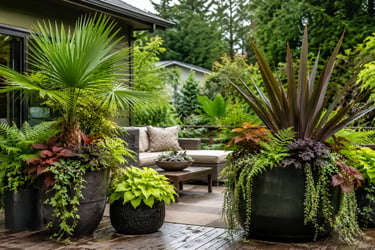
For a tropical container in the Pacific Northwest, the goal is usually bold foliage first and flowers second.
A simple example:
Thriller: Windmill palm, banana palm, cordyline, or New Zealand flax
Filler: Coleus, heuchera, hosta, carex, begonias, or ferns
Spiller: Creeping Jenny, trailing vinca, sweet potato vine, or ivy
This formula works because it gives the container a full, layered look without becoming messy.
For more options see our Database for more info.
Choose Containers That Look Substantial
Small pots rarely create a strong tropical effect. They dry out too fast, restrict root growth, and often look out of proportion next to bold foliage.
For a tropical container garden, larger pots usually work better.
Look for containers that are wide enough to support layered planting and heavy enough to stay stable in wind. This is especially important if you are using palms, bananas, or tall grasses.
Good container choices include:
Large glazed ceramic pots
Tall fiberglass planters
Lightweight resin planters
Half-barrel-style containers
Large modern square planters
Dark charcoal or black planters for strong foliage contrast
Warm terracotta-style planters for a softer patio look
Avoid using too many different pot styles in the same area. A container garden looks more intentional when the pots share a similar color, shape, or material.
Drainage Matters More Than People Think
Pacific Northwest container gardens fail most often from poor drainage, not lack of watering.
Many tropical-looking plants enjoy moisture, but they do not want to sit in cold, soggy soil all winter. A pot with no drainage hole can quickly become a problem during long rainy periods.
Use containers with drainage holes and avoid letting pots sit directly in standing water.
A good container mix should hold some moisture but still drain freely. For large tropical containers, a blend of quality potting mix plus added perlite, pumice, or bark can help prevent the soil from becoming heavy and compacted.
For large patio containers, a simple moisture meter can help you avoid overwatering during cool spring and fall weather.
Pot risers or planter feet can also help containers drain better during the wet season.
Build the Look With Leaf Contrast
The tropical feeling comes from contrast.
You want large leaves next to narrow leaves, upright plants next to arching plants, and dark foliage next to bright green or gold foliage.
Strong combinations include:
Windmill palm with black mondo grass and golden Japanese forest grass
Banana plant with coleus and trailing sweet potato vine
New Zealand flax with heuchera and carex
Fatsia japonica with ferns and hostas
Cordyline with begonias and creeping Jenny
The goal is not to use every plant possible. The best containers usually use three to five plant types that work well together.
Too many plants can make the container look busy. Too few can make it look unfinished.
Use Containers to Frame Outdoor Spaces
Tropical containers are most effective when they are used to define an area.
Instead of scattering single pots randomly around the yard, use containers to frame a space or guide the eye.
Good places to use tropical containers include:
On both sides of a patio entrance
Around a seating area
Along a garden path
Near a front porch
Beside a gate
Around a fire pit area
At the edge of a deck
Near outdoor lighting
Two matching containers can create a strong entrance. Three containers of different heights can make a patio corner feel finished. A row of large pots can create privacy without building a fence.
If you are placing containers near a walkway, pair this idea with our guide on building a tropical garden path in the Pacific Northwest.
Think Seasonally
A tropical container garden in the Pacific Northwest should look good for more than one month.
Some plants shine in summer, while others carry the container through spring, fall, or mild winter periods. The best designs mix seasonal impact with dependable structure.
For spring, use hardy foliage, cool-season annuals, and evergreen structure.
For summer, add bananas, cannas, coleus, begonias, and other lush plants that respond to warmth.
For fall, use darker foliage, ornamental grasses, and containers that still look good after flowers fade.
For winter, rely on hardy structure such as windmill palms, fatsia, carex, flax, and evergreen accents.
This is where container gardening becomes flexible. You can keep the permanent backbone and change only the seasonal plants.
Plant caddies with wheels for moving heavy containers before cold snaps
Good Tropical Container Plant Combinations
Here are a few simple combinations that work well for Pacific Northwest patios and small spaces.
Palm and Shade Texture Container
Use a windmill palm as the main plant, then add ferns, carex, and dark foliage around the base.
This combination works well in part shade and gives a calm, lush look.
Bold Patio Color Container
Use a banana plant or canna as the focal point, then add coleus, begonias, and trailing sweet potato vine.
This works best in warmer, brighter locations.
Evergreen Tropical Structure Container
Use Fatsia japonica or New Zealand flax with carex, heuchera, and black mondo grass.
This is a good choice where you want the container to look attractive for more of the year.
Entryway Statement Container
Use two matching large pots with upright plants such as windmill palms, cordyline, or flax.
This gives a clean, designed look near a front porch, gate, or patio entrance.
Common Mistakes to Avoid
The biggest mistake is using containers that are too small. Tropical-looking plants need room, and large foliage looks better when the pot has enough visual weight.
Another mistake is mixing too many unrelated colors. Bright foliage can be beautiful, but too many competing colors can make the design feel chaotic.
Poor drainage is another common issue. Even moisture-loving plants can struggle in cold, wet, airless soil.
Also avoid placing every container in a straight line unless you are intentionally creating a formal screen. Most tropical designs look better with slight layering and varied heights.
Finally, do not depend only on flowers. In a Pacific Northwest tropical garden, foliage is usually the main show.
Budget, Mid-Range, and Premium Container Approaches
Budget Approach
Start with one large container and one strong focal plant. Add two or three lower-cost filler plants around the base.
This is a good way to test the look without spending too much.
Mid-Range Approach
Use three coordinated containers in one patio corner. Choose one tall focal plant, one medium foliage container, and one lower trailing container.
This creates a finished look without needing to redesign the whole yard.
Premium Approach
Use large matching containers to frame a seating area, path, or entryway. Add outdoor lighting, high-quality potting mix, and a mix of permanent and seasonal plants.
This approach can make a patio feel like a designed outdoor room.
Final Thoughts
A tropical container garden is one of the easiest ways to bring a lush Pacific Northwest tropical look to a patio, deck, porch, or small backyard.
Start with one strong focal plant. Use bold foliage contrast. Choose containers that are large enough to feel intentional. Pay close attention to drainage. Then place the containers where they define and improve the outdoor space.
You do not need to transform the entire yard at once. A few well-built containers can create a strong tropical feeling right away, while still giving you the flexibility to change plants with the seasons.
For more design ideas see our Tropical Living & Design section.
For updated plant inventory see our Plants For Sale section.
Contact Us
© 2025. All rights reserved.
Terms and Conditions
Affiliate Disclosure
Some links on this site may be affiliate links. As an Amazon Associate I earn from qualifying purchases.